 Credit: Universal
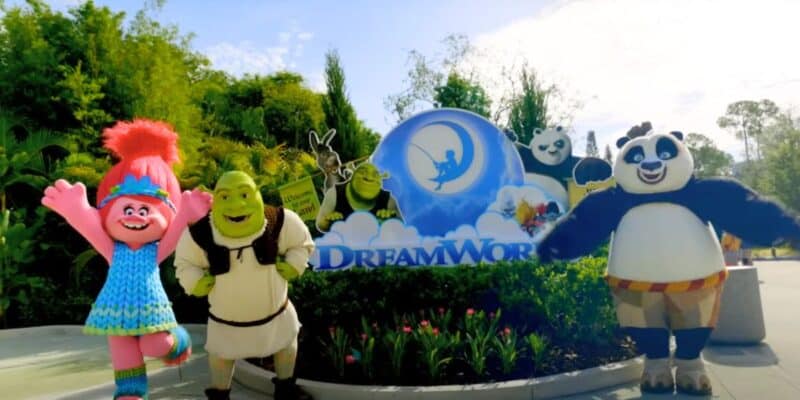
For years, Shrek 4-D was one of those attractions that felt uniquely Universal. It wasn’t the biggest ride in the park, and it certainly wasn’t the most technologically advanced, but it became a tradition for countless guests visiting Universal Studios Florida. The attraction blended motion seats, practical effects, and characters from the Shrek franchise into a short adventure that many fans considered a must-do.
Even so, nostalgia can only carry an attraction so far.
When Universal permanently closed Shrek 4-D, the reaction from longtime fans was immediate. Many questioned why the resort would remove a beloved experience that had entertained guests for nearly two decades. The answer, however, is far less dramatic than some people would like to believe.
The reality is that Shrek 4-D had simply reached the end of its lifespan.
A Popular Attraction That Was Showing Its Age
When Shrek 4-D debuted in 2003, it was an impressive addition to Universal Studios Florida. The combination of 3D effects, moving seats, water sprays, and physical effects helped create an experience that felt cutting-edge at the time.
The problem was that theme park technology continued to evolve.
Over the years, Universal introduced increasingly ambitious attractions featuring trackless ride systems, advanced animatronics, projection mapping, and highly immersive environments. Compared to newer experiences, Shrek 4-D began to feel like a relic from a different era of theme park design.

Even fans who loved the attraction often admitted that much of the experience felt dated. The animation reflected an earlier generation of the franchise, and many younger guests were less connected to the original Shrek films than visitors had been during the attraction’s peak years.
That doesn’t mean guests stopped enjoying it. It simply meant the attraction no longer carried the same relevance it once did.
The Franchise Had Changed
Another challenge involved the intellectual property itself.
While Shrek remains one of DreamWorks Animation’s most recognizable brands, the franchise was no longer dominating popular culture the way it did in the early 2000s. The attraction largely existed as a continuation of storylines that casual guests often didn’t fully understand.
For dedicated fans, that wasn’t a problem.
For the average family visiting Universal Orlando Resort, however, the attraction became increasingly disconnected from the entertainment landscape around it.
Theme parks constantly evaluate how effectively attractions connect with modern audiences. As years passed, Shrek 4-D increasingly felt like a time capsule rather than a major draw.
Why Universal Chose Minions
When Universal announced that Minion Land would replace the former Shrek area, many fans viewed the decision as a straightforward swap of one animated franchise for another.
In reality, the move was about much more than intellectual property.
The Minions brand remains one of Universal’s strongest family-focused franchises. The characters are instantly recognizable across multiple generations and continue to receive support through films, merchandise, and marketing campaigns.

More importantly, Minion Land allowed Universal to create a more cohesive section of the park rather than relying on a standalone attraction.
The area now connects several experiences under a single theme, giving families another destination to explore beyond simply riding an attraction and moving on.
Villain-Con Minion Blast Serves a Different Purpose
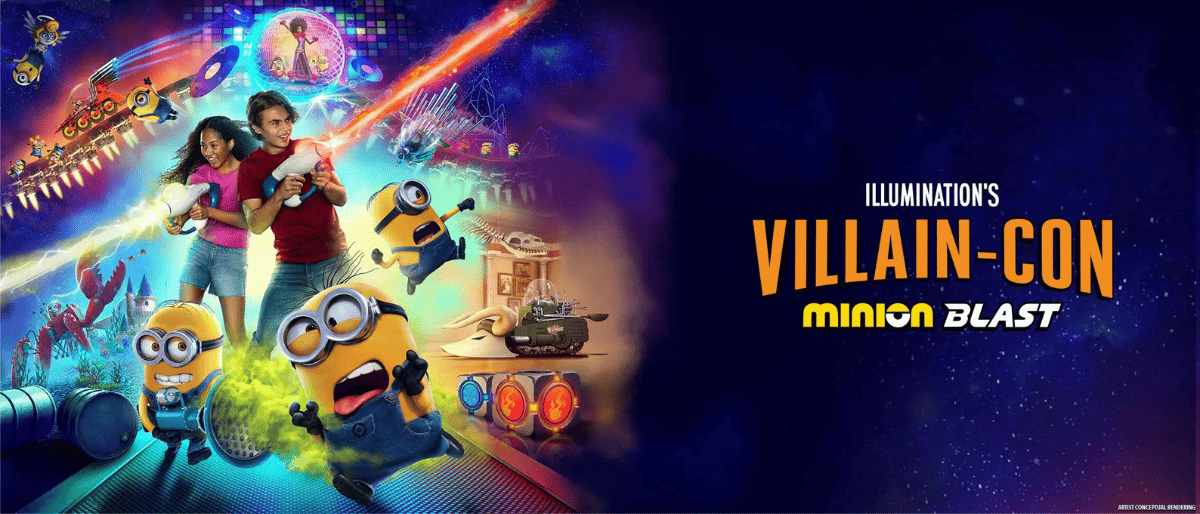
One criticism often directed toward the replacement is that Illumination’s Villain-Con Minion Blast has never generated the same level of excitement as some of Universal’s headline attractions.
That criticism is fair to a point.
Unlike major rides that routinely post lengthy waits, Villain-Con Minion Blast often maintains relatively modest queue times. On many days, waits remain surprisingly manageable compared to other attractions throughout the park.
But that doesn’t mean the attraction is unsuccessful.
Villain-Con Minion Blast was designed differently. The moving walkway system continuously feeds guests through the experience, allowing the attraction to process large numbers of visitors throughout the day. Instead of creating a massive queue, the ride focuses on throughput.
That approach helps absorb crowds while giving families another attraction that doesn’t require a significant time commitment.
From an operational standpoint, that’s extremely valuable.
A Better Fit for Modern Universal
The closure of Shrek 4-D still stings for many longtime fans, and it’s easy to understand why. The attraction represented a specific era of Universal Studios Florida and carried a level of charm that newer experiences sometimes struggle to replicate.
At the same time, theme parks are constantly evolving.
Universal didn’t remove Shrek 4-D because guests hated it. The attraction remained popular among many visitors until its final day. The bigger issue was that it no longer aligned with where the resort was headed.
Today, Minion Land provides a stronger family presence, Villain-Con Minion Blast helps move large numbers of guests efficiently, and Universal has another themed area built around a franchise that continues to generate new content and consumer interest.
Fans may never fully agree with the decision, but the reason behind Shrek 4-D’s closure wasn’t complicated.
It simply became an attraction from another era trying to survive in a park that had moved on.