2
2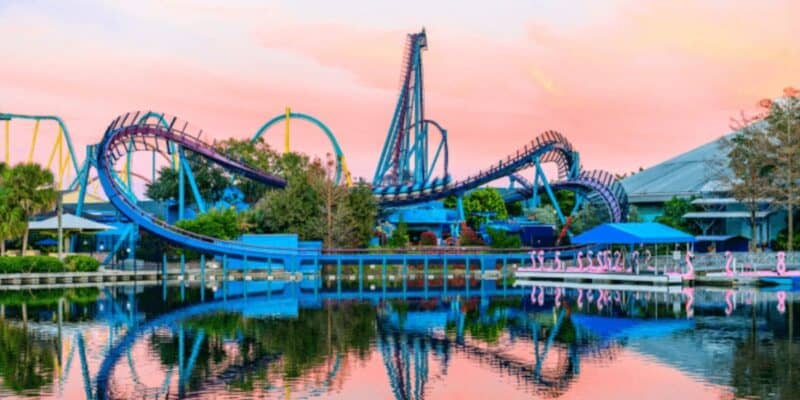
 Credit: SeaWorld
A lawsuit that began with one of the strangest incidents ever reported at a Florida theme park has officially moved forward — and a trial date has now been set.
An Orange County woman is suing SeaWorld Orlando after what her attorneys describe as a freak accident involving wildlife and one of the park’s fastest roller coasters. According to a civil complaint filed in Orange County Circuit Court, Hillary R. Martin claims she was struck in the face by a duck while riding Mako, SeaWorld’s 200-foot-tall steel coaster that reaches speeds up to 73 miles per hour. The impact allegedly knocked her unconscious and caused lasting injuries.
The latest court documents confirm that the case will proceed to trial on November 8, 2027, with a pretrial conference scheduled for October 28, 2027 — marking the first concrete timeline for a dispute that has attracted both legal and theme-park attention.
A Lawsuit Rooted in a Mid-Ride Collision
Martin’s lawsuit recounts that the incident took place in March 2024, when she visited SeaWorld Orlando and chose to ride Mako, the park’s hypercoaster named for the world’s fastest shark. While the coaster train was in motion, the complaint states that a “duck flew into the path of the roller coaster,” striking Martin “in the face and knocking her unconscious.”
Mako, designed by Swiss coaster manufacturer Bolliger & Mabillard, propels riders through open-air track sections above the park’s central lagoon. Martin’s attorneys argue that SeaWorld’s decision to locate the ride so close to a large body of water created an unsafe “zone of danger” where bird strikes could occur.
Her complaint, filed against SeaWorld Orlando and its parent company United Parks & Resorts, contends that the resort “failed to keep its premises in a ‘reasonably safe condition’ and didn’t warn guests … about dangerous conditions,” including the possibility of “potential rogue ducks.”
What Happened After the Incident
According to Martin’s filing, she sustained “permanent physical injuries, disfigurement, and mental pain and suffering” as a result of the collision. She alleges the force of the impact caused her to lose consciousness during the ride and that she continues to experience medical complications.
Notably, the event was not included in the Florida Department of Agriculture and Consumer Services’ quarterly incident report, which records theme-park injuries requiring hospitalizations of 24 hours or more. That absence has raised questions about whether Martin’s medical treatment qualified for reporting or if the park failed to log the incident in the same manner as other major injuries.
Despite the lack of state documentation, the lawsuit insists that the incident was serious enough to merit long-term damages. Martin is seeking more than $50,000 in damages, a threshold that allows the case to proceed in circuit court rather than small claims.
UPDATE: A trial date for this case has been set for Nov. 8, 2027, according to court documents. A pretrial conference is scheduled for Oct. 28, 2027: https://t.co/bgOcLJDtrs pic.twitter.com/yI4o1lyOfd
— Ashley Carter (@AshleyLCarter1) October 29, 2025
SeaWorld Responds
SeaWorld Orlando issued a brief statement following the filing, maintaining its standard position on pending litigation. “The safety of [its] guests and employees is a top priority and [it takes] these situations seriously,” the company said. “We will not be commenting beyond that as this is pending litigation.”
While the park declined to elaborate, the statement echoes similar responses from SeaWorld in previous injury cases, emphasizing that guest well-being remains the company’s foremost concern.
An Unusual Claim in Theme-Park Litigation
Lawsuits involving wildlife are rare in the amusement-park industry, particularly when they occur mid-ride on a high-speed roller coaster. Typically, injuries stem from mechanical malfunctions, falls, or human behavior within park boundaries. Bird-related incidents, while uncommon, have occasionally appeared in other industries such as aviation or outdoor sports but seldom within controlled entertainment environments.
Mako’s layout — swooping over open water and past artificial rockwork — adds a dramatic aesthetic that complements SeaWorld’s marine-life theme. However, Martin’s lawyers argue that the ride’s proximity to natural and man-made lagoons increases the potential for birds to cross its path. The suit claims SeaWorld “created a zone of danger for bird strikes by positioning Mako near a body of water, which could disorient nearby birds and increase the risk of similar incidents” (via Fox 35 Orlando).
Whether such environmental factors constitute negligence will be a central question once the case reaches trial in late 2027.
A Multi-Year Legal Timeline
The newly confirmed trial date of November 8, 2027, sets the stage for what could be a closely watched courtroom showdown. The court’s pretrial conference on October 28, 2027, will determine the final witness list, expert testimony parameters, and any remaining discovery issues before jury selection begins.
That lengthy timeline — nearly three years after the initial filing — reflects the complexity of personal-injury cases against large corporations. Both sides are expected to engage in extensive expert analysis, including biomechanics, ride engineering, and avian-behavior studies, to determine how the collision occurred and whether SeaWorld could have reasonably prevented it.
Context Within SeaWorld’s Broader Safety Record
SeaWorld Orlando, which draws millions of visitors annually, has rarely faced high-profile personal-injury lawsuits involving its coasters. The company maintains that its attractions undergo daily safety inspections and comply with state regulations enforced by the Florida Department of Agriculture.
Since opening in 2016, Mako has been promoted as one of the tallest and fastest roller coasters in Florida. It has consistently received praise from coaster enthusiasts for its smoothness and airtime, and until Martin’s claim, no major injury lawsuits tied to the ride had surfaced publicly.
The case, however, could test the boundaries of liability when natural wildlife intersects with human-made attractions. Attorneys for the plaintiff are expected to argue that SeaWorld’s theming choices — particularly constructing thrill rides near lagoons populated by ducks, herons, and other native birds — inherently raise the risk of unpredictable encounters.

The Broader Debate on Park Safety and the Natural Environment
The lawsuit also highlights an ongoing conversation about how Florida’s theme parks manage coexistence with local wildlife. Situated amid lakes, wetlands, and conservation areas, major resorts like SeaWorld, Disney World, and Universal Orlando frequently implement wildlife-management programs designed to deter animals from entering guest zones.
If Martin’s case proceeds to trial, legal experts say it may prompt a broader review of how attractions positioned near open water mitigate wildlife interference. Questions could include whether SeaWorld used deterrent devices, environmental barriers, or staff procedures to prevent birds from flying into ride paths.
Looking Ahead
As the court date approaches, the case of Martin v. SeaWorld Orlando is poised to join a short list of theme-park injury lawsuits that hinge on environmental hazards rather than mechanical failure. The lengthy lead-up to 2027 ensures that both sides will have ample time to prepare, but it also means the incident — which began with a split-second collision on a spring afternoon — will linger in the headlines for years to come.
For now, SeaWorld maintains that its focus remains on safety and guest experience, while Martin’s legal team pursues a claim that may redefine how parks evaluate the line between themed realism and real-world risk.
Should the case reach a jury as scheduled in November 2027, it will not only determine whether Martin is entitled to damages exceeding $50,000 but could also set new precedent for how Florida’s theme-park giants handle the unpredictable forces of nature within their meticulously engineered worlds.