1
1
 Credit: SeaWorld
SeaWorld Orlando has been rapped by the U.S. Department of Agriculture after a “blatant violation” regarding one of its captive dolphins.
Since 1973, SeaWorld Orlando has been the East Coast’s prime destination for marine entertainment. While today it’s a combo of animal exhibits, shows, and roller coasters, its main attraction has always been its collection of orcas (AKA killer whales).

But this has also been its biggest controversy. Ten years ago, the documentary Blackfish (2013) triggered backlash when it shared the story of Tilikum, an orca held by SeaWorld since 1992. During the course of his time at the Park, he was involved in two deaths – as well as another at his previous home of Sealand of the Pacific in Victoria, British Columbia – which the documentary attributes to the psychological damage inflicted by captivity.
Following Blackfish, SeaWorld has toned down the presence of killer whales in its Parks. Trainers no longer perform with the creatures, and its latest location, SeaWorld Abu Dhabi, opened in May totally orca-free. However, that hasn’t stopped calls to free the animals still in captivity – including its many dolphins.

As Inside the Magic previously reported, there were multiple incidents involving SeaWorld Orlando’s resident dolphins in 2022. This sparked further online debate over the ethics of dolphin captivity.
Now, a report from National Geographic has added more fuel to the fire after revealing that SeaWorld was issued a warning by the United States Department of Agriculture earlier this year.
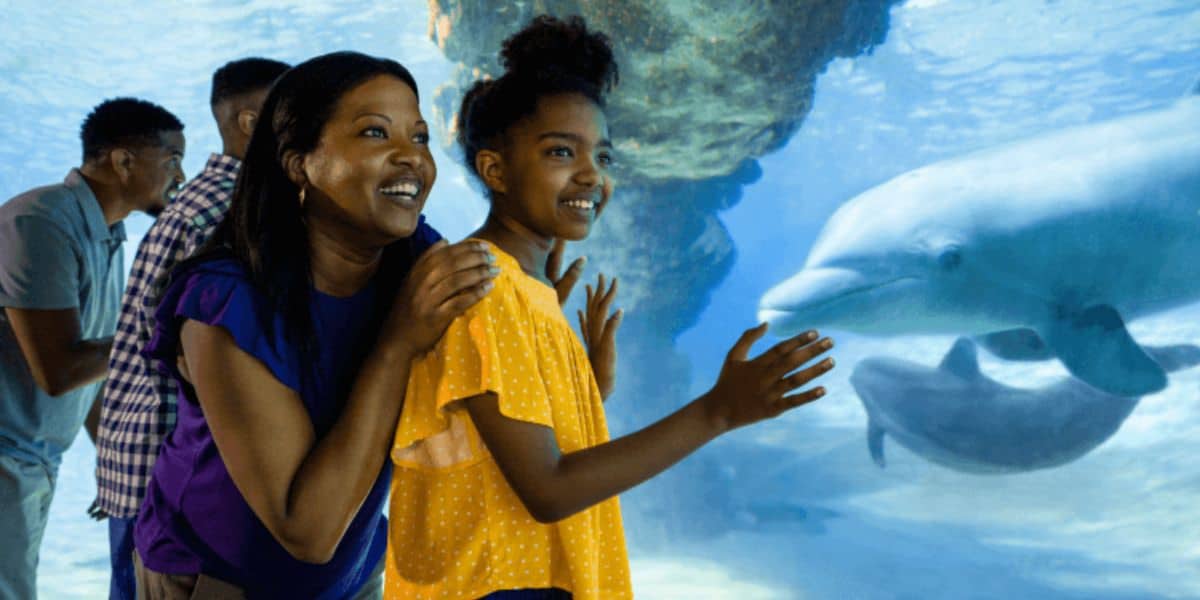
Rascal the dolphin was attacked repeatedly by other Atlantic bottlenose dolphins at SeaWorld Orlando throughout 2022. According to a December report unearthed by the publication, he was prescribed pain medication after an attack in October but not separated from the pod.

Three days later, Rascal was subsequently discovered with “many deep rake marks” that were “warm to the touch” across his face, fins, and body.
Inspectors from the USDA – which enforces the Animal Welfare Act – later visited the Park in December for an announced inspection. They cited SeaWorld for this incident, as well as excessive chlorine readings, and demanded more information about the animals, including their medical records and daily logs.
However, National Geographic reports that SeaWorld failed to hand over the information, leading to an official warning from the governmental department in January. The publication also questioned how the Park was later issued an animal exhibitor license, considering that doing so without being in “full compliance” with the Animal Welfare Act is a “blatant violation.”

A statement issued to the publication by SeaWorld claims that the Park did, in fact, hand over the records, with spokesperson Ken Fields adding: “We meet or exceed regulatory, accrediting, and industry standards. With respect to the USDA, we are and have always been licensed [and] in good standing and have a strong and important relationship with the USDA.”
Another statement from the USDA corroborates SeaWorld’s defense, stating that SeaWorld “completed all relicensing requirements, which include a relicense inspection to demonstrate full compliance with the [Animal Welfare Act] and associated regulations.”
The report goes on to question why SeaWorld would refuse to hand over its animal records in the first place, with Eric Kleiman – a researcher at the nonprofit Animal Welfare Institute – telling National Geographic that “what’s in those records must be so bad” if the Park didn’t want the details shared with the USDA.
Another Florida Park, Miami Seaquarium, recently moved to release one of its most famous residents – Lolita the Orca – after 53 years. However, this has raised counter questions about the ethics of freeing animals back into the wild after long periods of captivity, with many citing the case of Keiko, the whale famous for portraying the title character in Free Willy (1993), who failed to integrate back into the wild and died just over a year after his release.