Credit: Universal Pictures / Miramax / Blumhouse Productions
If there’s one thing Halloween has become notorious for besides Michael Myers (AKA The Shape) terrorizing the residents of Haddonfield every year on October 31, it’s that the long-running franchise spans multiple timelines, thanks to an anthology sequel, retcons, and remakes.
What started as a very straightforward premise — an ambiguous deranged figure returning to his hometown after being institutionalized for murder, to kill babysitters on Halloween night — devolved into a series that had about the same sense of direction as the Star Wars sequel trilogy.

As such, fans now refer to Halloween as a “choose-your-own-adventure” franchise, with many often picking what timeline they’d prefer to sit through rather than just binging all 13 films (which, in all fairness, is a lot to get through if you’re planning to watch them all on Halloween).
The franchise also preserves two great mysteries: Is Michael Myers human or supernatural? And secondly, just how many timelines are there? At first glance, most fans will say five, which is reasonable if you count the first five films with Michael Myers, Halloween III: Season of the Witch (1982), the H20/Resurrection timeline, the Rob Zombie films, and the Blumhouse trilogy.
However, we count 12 distinct “viewing paths”. While these aren’t universally recognized, separate continuities including alternate cuts change how certain entries connect to the rest of the franchise.
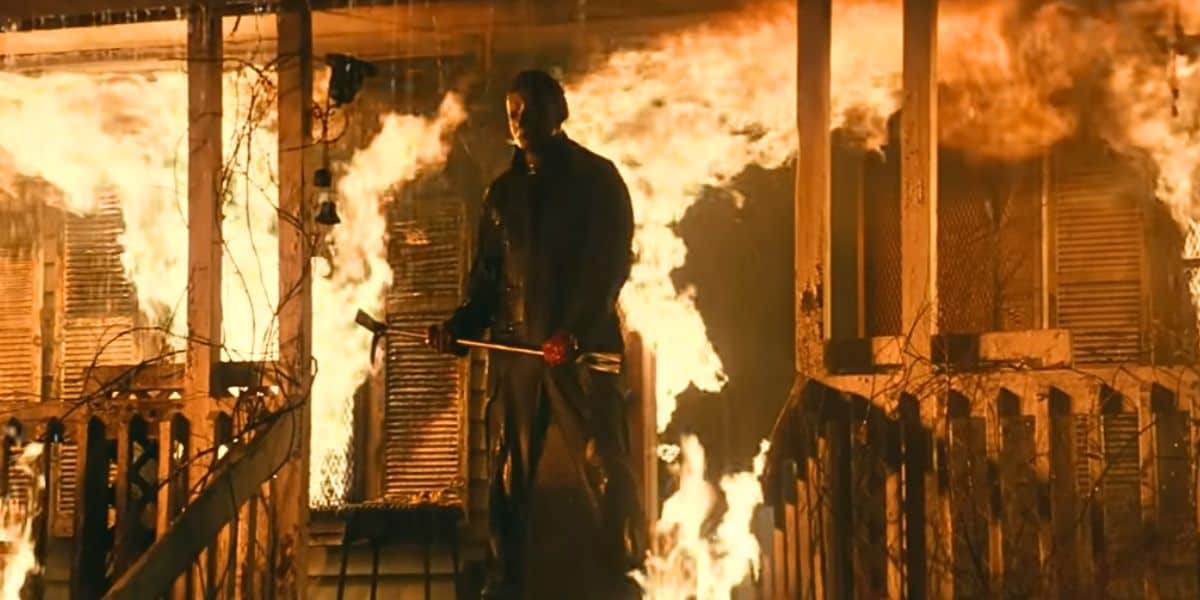
1. Halloween (1978)
John Carpenter’s Halloween (1978) exists as its own standalone timeline. As is the case with any film franchise, all sequels, prequels, and spinoffs are purely optional. It helps that this franchise has done nothing but (inadvertently) encourage viewers to imagine what happens after Dr. Sam Loomis (Donald Pleasence) shoots Michael Myers (Nick Castle) over the balcony for themselves.
Halloween II (1981) is one continuation, while the Blumhouse trilogy ignores that film to tell a different series of events, as highlighted through Halloween Kills‘ 1978 flashback sequences.
2. The Original Duology
Of course, if you wish to include the original Halloween II, then that gives us a second timeline.

3. Halloween III: Season of the Witch
Season of the Witch is an anthology film that not only excludes Michael Myers, but doesn’t even take place in the same universe. As such, it’s a completely standalone timeline and the third one.
4. The Cult of Thorn Trilogy
Although Season of the Witch was intended to take the series in an anthology direction, the Thorn trilogy — Halloween 4: The Return of Michael Myers (1988), Halloween 5: The Revenge of Michael Myers (1989), and Halloween: The Curse of Michael Myers (1995) — continued the Michael Myers storyline established by the earlier films.
Still, Halloween (1978) and its 1981 sequel reached a natural conclusion before those films ever came about, meaning Thorn counts as yet another timeline in addition to that one.
5. The Cult of Thorn Trilogy With the Producer’s Cut
Though it’s almost impossible to get hold of the Halloween: The Curse of Michael Myers (Producer’s Cut) these days, the film depicts a substantially different version of events from the theatrical cut. As such, there’s no argument to be made here — this is yet another timeline.
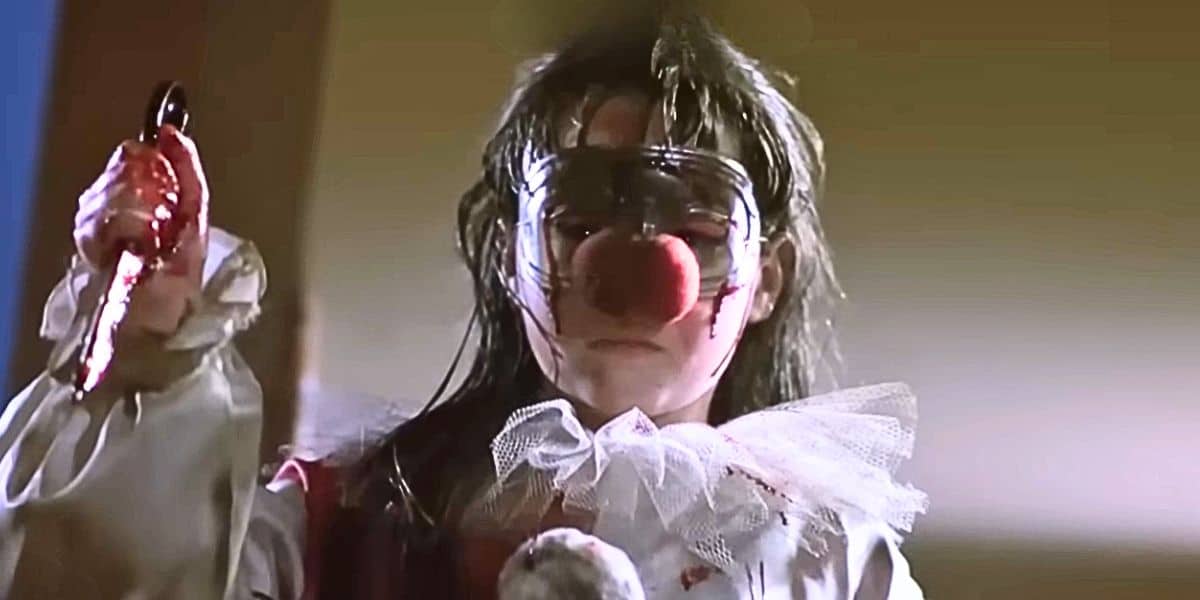
Related: Confirmed: ‘Halloween’ Trilogy Gets Official Follow-up Ahead of October 31, Trailer Revealed
6. Halloween H20: 20 Years Later
Halloween H20: 20 Years Later (1998), which brought back Jamie Lee Curtis as Laurie Strode, became the first film (with Michael Myers in it) to ignore several sequels. In this case, it was the Thorn films that were abandoned, with H20 acknowledging only the 1978 film and its 1981 sequel.
7. Halloween: Resurrection
This is where the whole timeline situation can get complicated. The divisive Halloween: Resurrection (2002) remains a bone of contention among fans, not only because it’s very bad, but also because of how it retcons H20‘s ending, revealing that Laurie actually killed a paramedic who had been wearing Michael’s mask, rather than Michael himself.
This almost forces a split between the two films, leaving Resurrection as purely optional viewing for those who believe that the conclusion of the 1998 film was legitimately canon at the time that film was made.
8. Rob Zombie’s Duology
This one is pretty straightforward — Rob Zombie directed two Halloween movies, one in 2007 and then a sequel in 2009. As such, they exist in their own timeline. But things get a bit messy.
9. Rob Zombie’s Duology With the Halloween (2007) Director’s Cut
It’s easy to forget that there’s an alternate version of Rob Zombie’s Halloween (2007), which features a number of different scenes. The most notable is when Michael Myers (Tyler Mane) escapes Smith’s Grove. In the theatrical cut, Michael breaks free during a prisoner transfer and kills the guards, but in the Director’s Cut (also known as the Unrated Director’s Cut), the Smith’s Grove escape sequence involves a highly disturbing scene with two guards and a female inmate.

10. Rob Zombie’s Duology With the Halloween II (2009) Director’s Cut
Like The Curse of Michael Myers (Producer’s Cut), the director’s cut of Halloween II (2009) is, for all intents and purposes, a different film altogether. For instance, Laurie Strode (Scout Taylor-Compton) is practically a separate character to her theatrical counterpart, and the story unfolds differently and reaches a different conclusion from the main cut.
11. Rob Zombie’s Duology — Director’s Cut Combo
For those who want to experience both films in their alternate versions, you can also watch the Halloween (2007) Unrated Director’s Cut, followed by the Halloween II (2009) Director’s Cut.
12. David Gordon Green’s Trilogy
The latest trilogy — Halloween (2018), Halloween Kills (2021), and Halloween Ends (2022) — directed by David Gordon Green, follow the H20 approach and ignore a whole bunch of sequels. This time, however, everything is wiped off the table except for Carpenter’s original 1978 film.
It’s worth noting that other films in the series also have alternate cuts, including a television version of the original 1978 film with additional scenes and a television version of Halloween II (1981) featuring an extended ending. However, these versions don’t necessarily create the kind of distinct viewing paths we’ve explored in this list.
Which is your favorite timeline in this franchise? And which films in the series will you be watching on October 31? Let us know in the comments below!