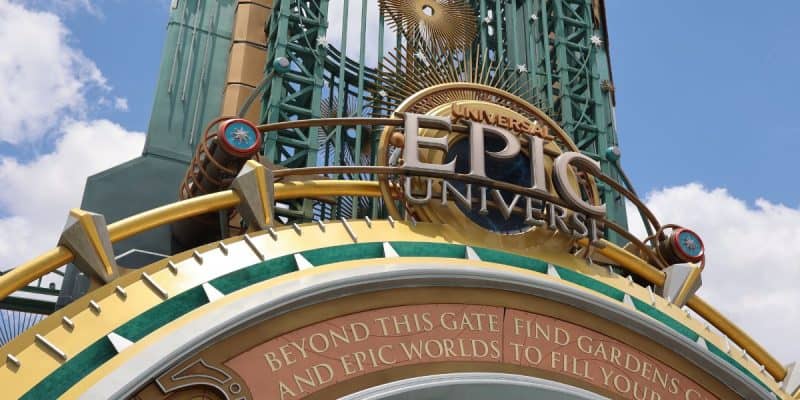
 Credit: Andrew Boardwine, Inside the Magic
There’s a strange tension building around Universal’s newest theme park. On paper, everything sounds like a success story. Executives are smiling. Revenue is up. Guests are showing up in droves.
But beneath that optimism sits a quieter admission that has sparked a very different kind of conversation among fans: Epic Universe isn’t running at full capacity — and it might never truly get there.
That’s not coming from rumor boards or social media speculation. It’s coming straight from Comcast leadership, who recently acknowledged that while the park is making progress, it is still not operating at its intended “run-rate” capacity. They emphasized meaningful improvements in ride throughput and promised continued scaling in the coming quarters. At first glance, that sounds like a natural part of opening a brand-new park. But the reality on the ground tells a more complicated story.
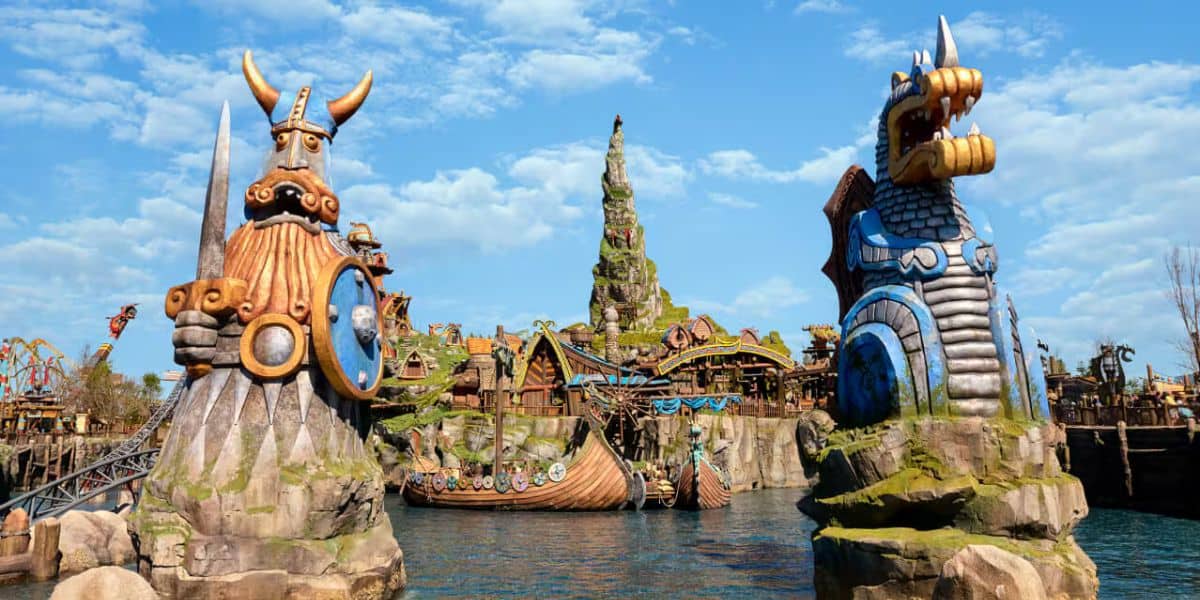
Epic Universe has already been welcoming large crowds. Even with reduced operational levels, many areas of the park feel packed. Wait times climb quickly. Walkways fill fast. And certain attractions are already pushing the limits of what their designs can handle. That’s where the question begins to form — what happens when the park tries to increase capacity further?
The Epic Universe Problem No One Can Ignore
Comcast executives framed their update in optimistic terms, pointing to progress and long-term scaling goals. The park has clearly driven strong financial performance and has already shifted attendance patterns across Orlando. Even before reaching what leadership considers full operational potential, Epic Universe has proven it can draw visitors and encourage higher per-guest spending.
Yet the concept of “scaling further” assumes something important: that the infrastructure can support it.
Comcast execs say they’re really pleased with what they’re seeing at Epic Universe. Says park not yet operating at full run-rate capacity, but they’ve made “meaningful progress in expanding ride throughput” and “remain focused on scaling further over the next several quarters…” pic.twitter.com/eEEj9yXs5R
— Ashley Carter (@AshleyLCarter1) January 29, 2026
Many of Epic Universe’s attractions are technologically ambitious and deeply immersive, but they are not built for speed. Several rides rely on complex loading systems, elaborate pre-shows, and smaller ride vehicles. That creates a natural bottleneck. Even with optimized operations, there’s only so much guest flow these designs can sustain. Increasing hourly throughput isn’t as simple as adding more staff or tightening dispatch intervals. It would require structural changes, not just operational tweaks.
Right now, the park is operating at a reduced capacity level that already feels intense to many visitors. The idea that Epic Universe could significantly increase attendance without creating guest experience issues seems increasingly unlikely. In some ways, the current crowd level may already be the practical ceiling for daily operations.
There’s also the broader park layout to consider. Epic Universe was designed differently from older Universal parks. Its hub-and-spoke structure creates visually stunning transitions between lands, but it also funnels large numbers of guests through shared spaces. When crowds surge, those transition zones quickly become congestion points. Expanding ride throughput alone would not solve that.
And that’s not even talking about rainy days when lightning can play a factor and shut down more than half the park.

Why “Full Capacity” Might Not Be the Goal
Universal may find itself balancing two competing priorities: maximizing revenue versus preserving guest satisfaction. Pushing the park to its theoretical maximum capacity could risk longer waits, tighter walkways, and diminished immersion. That’s not the experience Universal wants associated with its most ambitious project to date.
Another factor shaping this conversation is timing. Epic Universe is still in its early chapters. New parks often take years to fully stabilize operations. Staffing, maintenance cycles, guest behavior patterns, and seasonal demand all evolve over time. Comcast’s emphasis on scaling “over the next several quarters” suggests they are approaching this cautiously, not aggressively.
That caution may be less about operational hurdles and more about recognizing the park’s real-world limits. Universal has invested heavily in creating attractions that feel cinematic and layered. Those qualities naturally reduce ride turnover rates. Unlike high-capacity rides built purely for efficiency, Epic Universe’s lineup leans toward depth rather than speed.
There’s also the guest expectation factor. When visitors enter a brand-new park marketed as cutting-edge, they anticipate a certain level of comfort and access. If attendance expands too quickly, the perception of value can shift. No one wants their first visit to feel like an exercise in navigating crowd congestion.
So when Comcast says Epic Universe is not yet at full capacity, it may be technically accurate. But it raises a more interesting possibility: what if the park’s current level is already its most sustainable operating point?
That wouldn’t necessarily be a failure. In fact, it could signal a shift in how theme parks define success. Instead of chasing maximum headcounts, operators might begin prioritizing experience quality and spending efficiency. If guests stay longer, spend more, and return more often, the need for higher daily attendance becomes less critical.
Epic Universe may ultimately prove that smaller capacity, paired with higher guest engagement, creates stronger long-term performance. The park is already showing signs that it can drive revenue growth without pushing attendance to the brink.
For now, Universal remains focused on incremental improvements. Ride throughput adjustments, operational refinements, and staffing expansions will continue. But those changes have limits, especially considering the design of many attractions.
The bigger question isn’t whether Epic Universe can scale further. It’s whether scaling further would actually benefit Epic Universe at all.