Credit: Circuit of the Americas
An alarming mechanical failure on a thrill ride in Texas has drawn national attention after two riders were left stranded more than 100 feet in the air, suspended at a near-vertical angle, for more than half an hour before emergency crews were able to bring them back to safety.
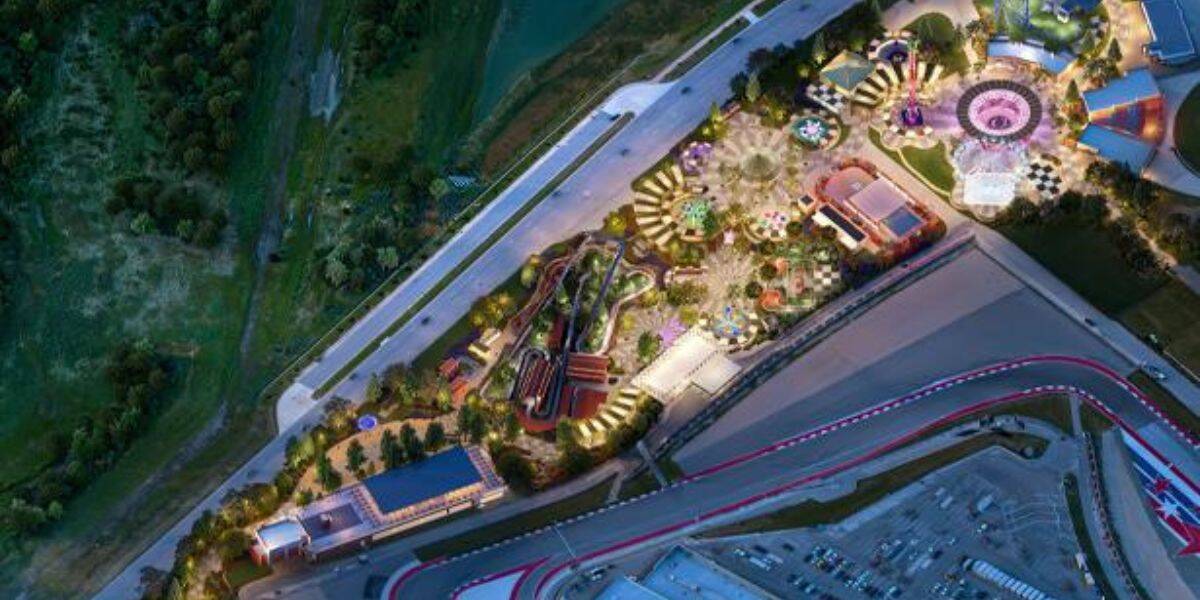
The incident unfolded Wednesday night at an amusement attraction located within Austin’s Circuit of the Americas sports complex, a venue better known for hosting major motorsports events than heart-stopping roller coaster emergencies.
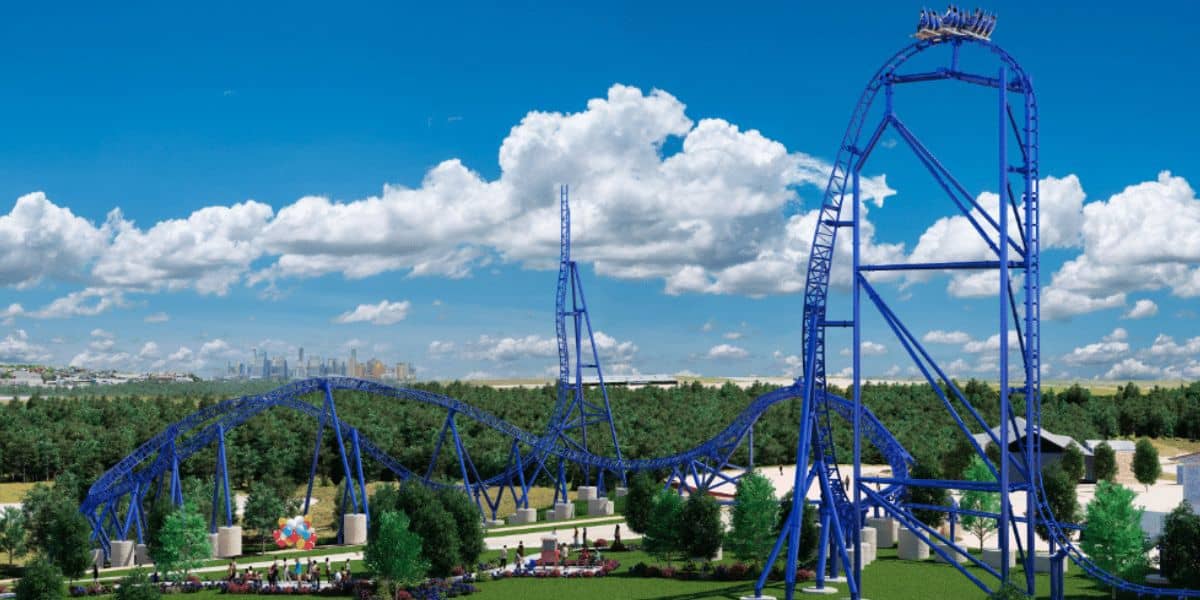
According to multiple reports, the ride involved was a so-called “tilt” roller coaster, designed to heighten suspense by holding riders in a fixed position before releasing them into a steep drop. In this case, however, that dramatic pause turned into a prolonged ordeal when the coaster malfunctioned at its highest point, leaving the riders hanging at a 90-degree angle while facing straight down toward the ground.
A Startling Incident
The coaster, known as Circuit Breakers, had climbed roughly 130 feet before abruptly stopping at the first drop. Matthew Cantu, 24, and Nicholas Sanchez, 20, were the only riders affected during the incident.
Their publicist later confirmed that the two men remained stuck for 36 minutes before a relative placed a 911 call, prompting emergency responders to intervene. First responders reportedly arrived about 10 minutes later and worked to safely retrieve the stranded riders.
A spokesperson for the park attributed the frightening delay to a technical issue with the ride’s safety systems. “A sensor triggered a ride delay,” the representative told Fox News Digital in a statement.
“It was resolved, and the ride proceeded without incident. As with all amusement attractions of this sort, delays occasionally occur. We regret the inconvenience and are glad that out of the 25,000 people that have ridden the coaster, only two have this badge of courage.”
While the park’s statement emphasized that the issue was ultimately resolved and framed the incident as an unusual but manageable delay, accounts from the riders and their representatives paint a more troubling picture of what it felt like to be suspended in place for such an extended period.
SCARY SIGHT: Two men were spotted holding on for dear life at the peak of a 130-foot drop after a roller coaster malfunctioned in Texas. The pair was suspended at a terrifying 90-degree angle facing straight toward the ground.
A frantic relative called 911 as the riders hung… pic.twitter.com/BbaPrIlcvQ
— Fox News (@FoxNews) December 22, 2025
Riders Share Experience
KXAN reported that Cantu experienced “lightheadedness and symptoms consistent with blood pooling” as a result of being held in the vertical position, a known physiological risk when the body remains inverted or upright without movement for prolonged periods. Sanchez, meanwhile, allegedly experienced “numbness in his upper leg,” raising further concerns about circulation and nerve compression during the ordeal.
The riders’ spokesperson also described confusion and a lack of clear communication during the emergency. “For more than 30 minutes after the ride stopped, family members reported receiving no clear updates, while witnesses said staff provided conflicting explanations, including comments that the riders ‘weren’t strapped in correctly,’” the spokesperson told the outlet via email.
Those claims, if accurate, add another layer of unease to an already unsettling scenario. Theme park safety protocols typically stress clear communication during ride stoppages, particularly when guests are visibly stuck in high-risk positions. Conflicting explanations, especially suggestions of rider error, can intensify panic for both those stranded and their loved ones watching from the ground.
Is the Coaster Safe?
Circuit Breakers is designed to deliver a controlled sense of danger. Tilt coasters are engineered with multiple redundancies, including sensors that monitor positioning, restraints, and mechanical systems. When a sensor detects something outside of safe operating parameters, the ride is programmed to stop. From an engineering standpoint, that kind of automatic shutdown is intended to prevent catastrophic outcomes.
From a guest perspective, however, the difference between a safety pause and a crisis can blur quickly when time stretches on and gravity does its work.
Being held at a 90-degree angle, facing the ground, for more than half an hour is not a scenario most riders anticipate when boarding a thrill attraction. Even in parks with strong safety records, prolonged evacuations from elevated ride vehicles carry inherent risks, particularly when guests begin to experience physical symptoms.
The fact that a relative ultimately called 911 underscores how dire the situation appeared to observers. Emergency responders were able to access the ride structure and free the riders, bringing the incident to a close without reported long-term injuries. Still, the psychological impact of the experience is likely to linger, both for the riders themselves and for witnesses who watched the scene unfold.
Incidents like this tend to resonate far beyond the park where they occur. Videos and firsthand accounts often circulate rapidly online, fueling broader conversations about ride safety, maintenance practices, and emergency response procedures across the amusement industry. Even when parks emphasize that such events are rare, the visual of guests stuck high above the ground can shake public confidence.
Moving Foreward
From an operational standpoint, the park’s acknowledgment that a sensor triggered the delay is significant. Sensors are meant to err on the side of caution, and their activation does not necessarily indicate a mechanical failure in the traditional sense. However, the length of the delay and the physical symptoms reported by the riders raise questions about evacuation timing and guest welfare during extended stoppages.
Circuit of the Americas has not announced whether the ride will undergo additional inspections or changes following the incident. As with many amusement park investigations, any internal reviews or third-party assessments may take place out of public view. What remains visible is the account provided by those directly affected and the official statements attempting to contextualize what went wrong.
For Cantu and Sanchez, the experience transformed a night of entertainment into a medical and emotional ordeal. While the park spokesperson described the moment as a “badge of courage,” that framing may ring hollow to riders who endured dizziness, numbness, and uncertainty while suspended in midair.
As thrill attractions continue to push boundaries in height, speed, and design, incidents like this serve as stark reminders of the fine line between excitement and danger. Even when systems function as designed by stopping a ride in response to a sensor, the human experience of being trapped can expose gaps between technical safety and guest comfort.
The incident ended without fatalities or confirmed serious injuries, but it is unlikely to fade quickly from public memory. For many observers, the image of two riders frozen at the edge of a 130-foot drop for more than half an hour is enough to prompt renewed scrutiny of how amusement parks prepare for the moments when thrills stop being fun.