
 Credit: Andrew Boardwine, Inside the Magic
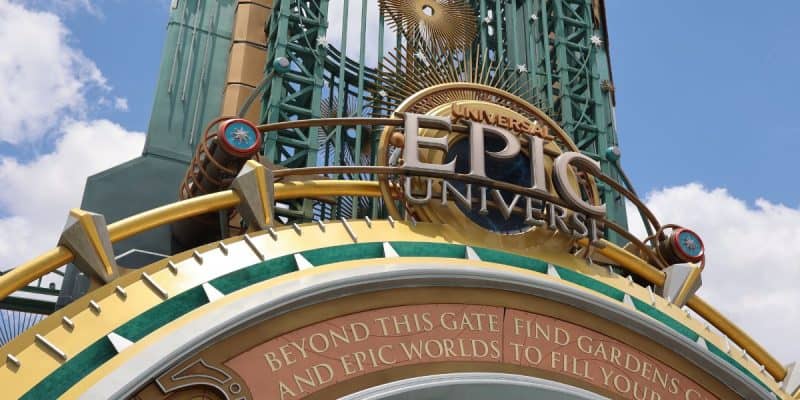
When Epic Universe opened in May 2025, it instantly changed the conversation around Universal Orlando Resort. The new park brought next-level theming, ambitious attractions, and entire lands that felt more immersive than anything Universal had attempted before. It also brought massive crowds.
Nearly a year later, one question continues to pop up among frequent visitors: Where are the Annual Pass options?
For a resort that has long leaned on its robust Annual Passholder base at Universal Studios Florida and Islands of Adventure, the absence of a true Epic Universe Annual Pass product feels intentional. And the deeper you look at the park’s operational realities, the more it seems like that decision may not change anytime soon.

Capacity Is the Real Story
Earlier this year, Comcast leadership described Epic Universe as a “great success” that is driving strong metrics not only inside the park but across the entire Universal Orlando complex. That’s an important detail. Epic Universe isn’t struggling with demand. If anything, demand remains extremely strong.
The issue isn’t popularity. It’s throughput.
Many of Epic Universe’s headline attractions are slow-loading, highly immersive experiences. They prioritize storytelling, complex ride systems, and elaborate preshows over raw hourly capacity. That works beautifully from a guest experience standpoint, but it limits how many people can cycle through in a single day.
When you combine high demand with lower ride throughput, you get a park that feels full very quickly.
Slow Boarding, Big Ambitions
Let’s talk about the type of rides Epic Universe built.
Several attractions rely on advanced ride systems that move in smaller groupings. Others incorporate detailed loading procedures, synchronized elements, or preshow components that can’t simply be rushed to increase flow. Even the roller coasters in the park haven’t been immune to operational challenges.
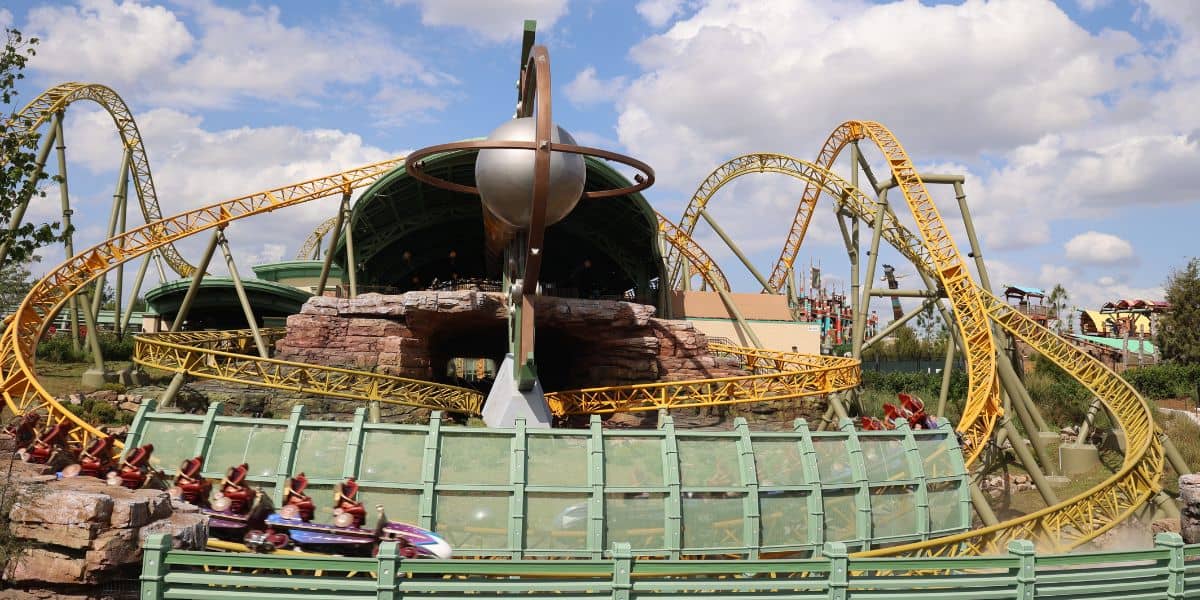
Stardust Racers, one of the park’s signature coasters, has dealt with extended downtime since mid-February, with its reopening date pushed back at least once. While downtime happens at every theme park, extended closures hit harder when your ride lineup is still relatively compact compared to legacy parks.
When one major attraction goes down in a park that already runs tight on capacity, wait times elsewhere spike. That creates a ripple effect.
And ripple effects are not what you want when considering unlimited or semi-unlimited Annual Pass access.
Annual Passes Change the Math
Annual Passholders are incredibly valuable. They generate steady revenue, fill slower days, and often spend heavily on food, merchandise, and special events. Universal knows this. It has built a loyal base at its existing parks.
But Annual Passholders also change attendance patterns.
Unlike multi-day ticket holders on vacation, Passholders can visit frequently and spontaneously. They might pop in for a few hours after work. They might drop by on a Saturday just to grab lunch and ride a coaster. That flexibility increases repeat traffic.
At Universal Studios Florida and Islands of Adventure, the infrastructure exists to absorb that traffic. Those parks have decades of expansion behind them. They feature large attraction lineups, high-capacity rides, and refined operational systems.
Epic Universe, by contrast, is still in its infancy.
Until ride flow and capacity reach their maximum potential, attendance expansion remains limited. And attendance expansion is exactly what Annual Pass access represents.

The One-Year Mark Doesn’t Guarantee Anything
Some fans speculated that Epic Universe’s one-year anniversary might be the moment Universal introduces a Pass product. It’s a logical assumption. Milestones often bring new offerings.
But nothing in recent comments suggests a firm timeline. Leadership has acknowledged operational improvements while also admitting there is still room to grow.
That phrasing matters.
If reliability and ride flow are still improving, then opening the gates to thousands of additional frequent visitors would feel premature. From a business standpoint, it makes more sense to protect the guest experience for high-paying ticket holders than to flood the park with discounted repeat visits.
Multi-Day Tickets Are Filling the Gap
Instead of Annual Passes, Universal has leaned heavily into multi-day ticket packages that bundle Epic Universe with the other parks. In fact, some longer-duration tickets effectively reduce the per-day cost of visiting Epic Universe to a surprisingly manageable figure.
That strategy accomplishes two things.
First, it keeps Epic Universe positioned as a premium experience without opening the door to unlimited access. Second, it drives guests to spend time at the entire resort, not just the new park.
From a revenue management perspective, that’s smart. It spreads crowds across properties and maximizes hotel stays.
Annual Passes, on the other hand, could concentrate traffic inside Epic Universe, especially if Passholders prioritize the newest and most immersive park.
Expansion May Be the Only Real Solution
Here’s the uncomfortable truth: Epic Universe might not be physically ready for full Annual Pass access until it expands.
Every major Orlando theme park eventually grows beyond its opening footprint. New lands add attractions. Capacity increases. Crowd pressure distributes more evenly.
Until Epic Universe adds significant new rides — particularly high-capacity attractions — the math simply may not work.
If interest in the park were to drop sharply, Universal could pivot and introduce Pass options to boost attendance. But there’s no sign of that happening. By all accounts, Epic Universe continues to perform well.
So the more likely scenario is this: Universal waits.
It refines ride reliability. It optimizes operations. It potentially adds expansions. And only then does it consider opening the door to full Annual Pass access.
A Difficult Reality for Loyal Fans
For longtime Universal Annual Passholders, this situation feels frustrating. Epic Universe is part of the resort. It feels natural to expect access similar to the other parks.
But Epic Universe was designed differently. It was built as a destination park from day one, not as an incremental addition. That means its operating model may need to evolve before it can mirror its older siblings.
Universal isn’t ignoring its Passholder base. It’s protecting a delicate balance.
Overcrowding a new park that already struggles with ride flow could damage guest satisfaction quickly. Long waits, frequent downtime, and limited mobility inside tightly themed lands would create backlash. And that backlash would likely be louder than complaints about the lack of a Pass option.
Could It Truly Never Happen?
Saying Epic Universe may “never” offer Annual Pass access sounds dramatic. But it’s worth considering.
If Universal decides the park functions best as a controlled-capacity, premium add-on to the broader resort, it could maintain a hybrid model indefinitely. That might mean limited seasonal Pass upgrades, blackout-heavy tiers, or separate premium pricing far above current Universal Annual Pass structures.
Or it could mean no traditional Pass at all.
Theme parks evolve. Business models shift. And Epic Universe already operates differently than the parks built before it.
Until ride reliability stabilizes at consistently high levels and capacity increases meaningfully, the risk of opening unlimited access remains high.
For now, Epic Universe remains a high-demand, tightly managed experience. And unless something changes — whether through expansion or a noticeable dip in attendance — Annual Passholders may need to adjust expectations.
Because the reality is simple: if a park is already near capacity on most days, there’s very little incentive to invite even more guests through an open-ended access program.
And that’s a business reality Universal may not be willing to compromise.