

 Credit: Tokyo Disney Resort
For the Disney “purist,” stepping into Tokyo Disneyland in 2026 feels less like a vacation and more like a journey through a temporal rift. While Walt Disney World in Florida and Disneyland Resort in California have undergone a decade of rapid social evolution—systematically removing scenes deemed culturally insensitive or outdated—the Tokyo Disney Resort remains a strikingly preserved snapshot of 20th-century Imagineering.
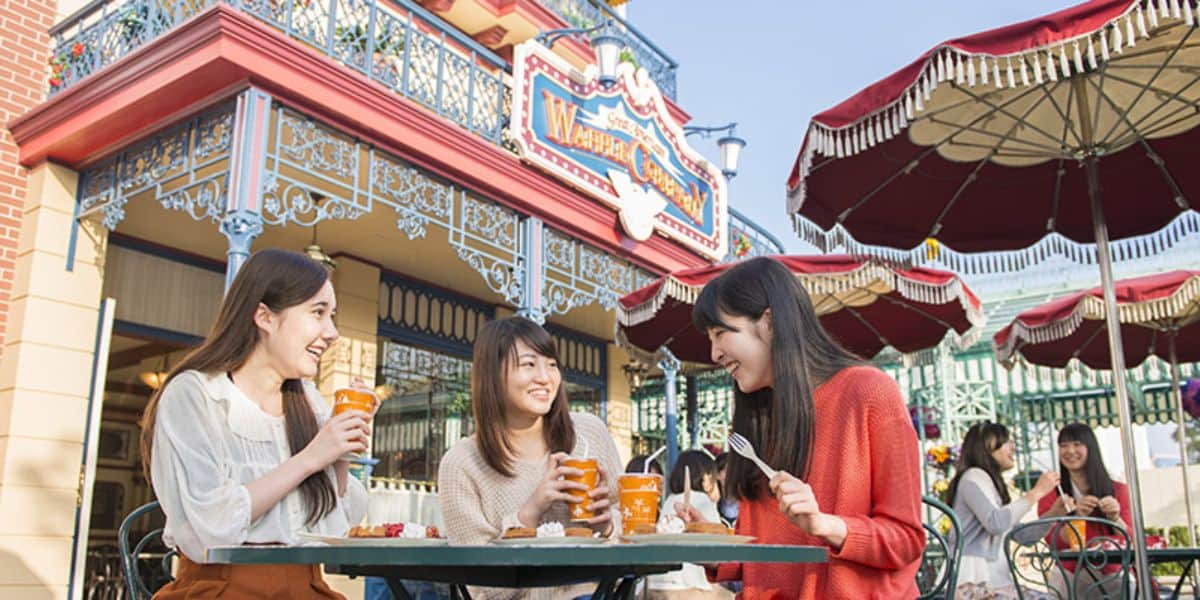
In the United States, the “Inclusion” pillar has become a fundamental part of the Disney Parks experience, leading to the total reimagining of icons like Splash Mountain and the scrubbing of stereotypical depictions in Peter Pan’s Flight and Jungle Cruise. However, across the Pacific, those very same scenes are not just surviving; they are thriving.
Here is why the “controversial” elements of Disney’s American parks have found a permanent sanctuary in Tokyo, and what it says about the cultural divide between the East and West.
The Splash Mountain Standoff: Br’er Rabbit vs. Princess Tiana
The most glaring disconnect between the parks involves Splash Mountain. In the summer of 2024, the American versions of the ride were officially retired, replaced by Tiana’s Bayou Adventure. The move followed years of criticism regarding the ride’s source material, the 1946 film Song of the South, which has long been condemned for its romanticized, stereotypical portrayal of the post-Civil War American South.

In the U.S., Disney leadership felt that the IP was no longer compatible with a modern, inclusive park environment. But in Tokyo Disneyland, the Briar Patch is going nowhere.
To the Japanese audience, Splash Mountain carries none of the specific historical baggage associated with the American South. The characters of Br’er Rabbit, Br’er Bear, and Br’er Fox are viewed as cute, trickster animals from a generic “Western” folktale. The Oriental Land Company (OLC), which owns and operates Tokyo Disney Resort, has shown zero interest in the Tiana retheme. For them, Splash Mountain remains one of the park’s “Big Three” thrill rides, and its popularity has only increased as it becomes the only place on Earth where fans can still experience the original log flume masterpiece.
Neverland Frozen in Time: Peter Pan’s Flight
In late 2024, Disney fans in Orlando and Anaheim noticed a significant change to Peter Pan’s Flight. In an effort to remove what the company called “stereotypical depictions of Indigenous people,” the “Tiger Lily” scene was completely reimagined. The original scenes, which featured caricatured “Indian” braves and a tribal camp, were replaced with a more culturally respectful depiction of Tiger Lily and her tribe performing a traditional dance.

However, if you ride the Tokyo version of Peter Pan’s Flight today, you are greeted by the 1983 original. The “Tiger Lily” scene remains in its classic, albeit controversial, form.
Why the discrepancy? In Japan, these depictions are often viewed through the lens of “fantasy” rather than “history.” The Japanese cultural perspective on Western tropes is significantly different; they often prioritize preserving the “original” work as art rather than reflecting modern social standards. For the Japanese guest, the scene isn’t an affront to a marginalized group—it is simply a scene from a beloved 1953 movie.
Trader Sam and the Jungle Cruise “Clean-Up”
The Jungle Cruise is perhaps the ride that has seen the most “sensitivity” edits in the United States. In 2021, Disney removed several depictions of indigenous people that were characterized as “savages” or “headhunters.” Most notably, the character of Trader Sam—the “head” salesman of the jungle—was removed and replaced with a “Lost and Found” gift shop managed by a different character.
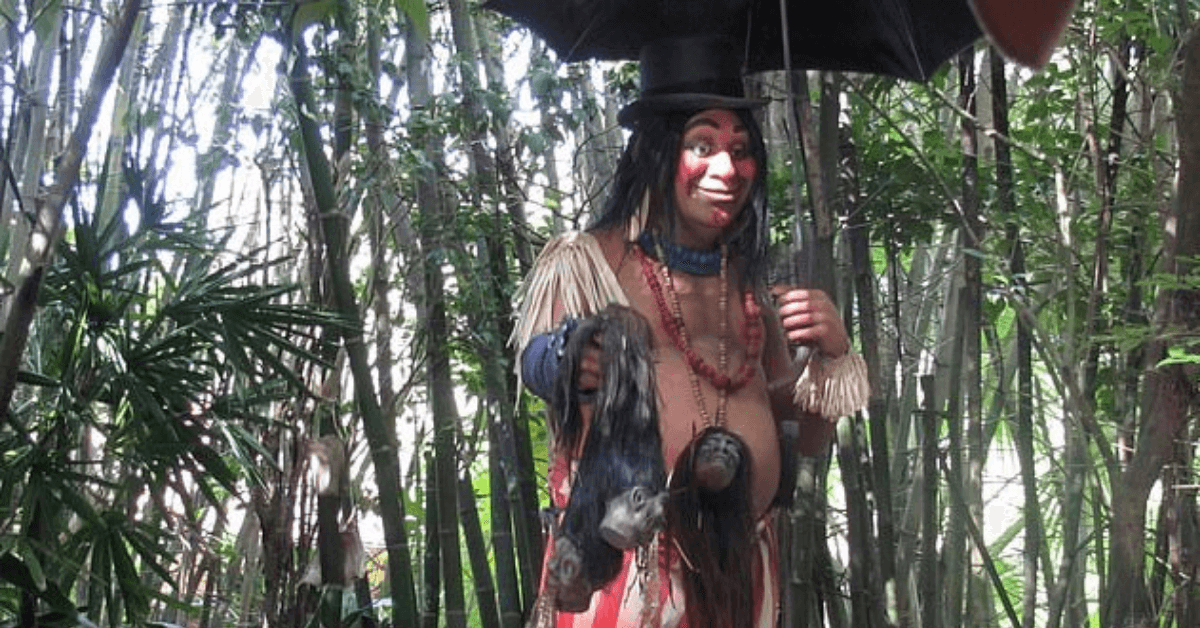
In Tokyo Disneyland, the Jungle Cruise underwent a massive “Wildlife Expeditions” update in 2014, adding a new soundtrack and projection effects. Yet, interestingly, many of the classic depictions of the jungle residents remained closer to the original 1955 vision than to the neutered American versions. While some of the more egregious caricatures were softened, the “spirit” of the classic Jungle Cruise remains much more intact in Tokyo than in Florida.
Pirates of the Caribbean: The Redhead’s Long Goodbye
The first significant domino to fall in the U.S. was the “Auction Scene” in Pirates of the Caribbean. In 2018, the iconic “Take a Wench for a Bride” scene—where a red-headed woman was being auctioned off to a crowd of lecherous pirates—was changed. The “Redhead” was transformed into a pirate herself, named Redd, who now leads the auction of the town’s rum and livestock.

This change sparked a massive “culture war” online, but it was eventually rolled out to every park—except Tokyo, which held out the longest. While Tokyo Disneyland did ultimately update the auction scene to match the global brand in 2018, it did so with a notable lack of fanfare, and many fans pointed out that Tokyo’s version of the ride still retains a much “darker” and more “classic” tone in its other scenes compared to the more “Disney-fied” updates in the American parks.
The Oriental Land Company Factor: Why Tokyo is Different
To understand why Tokyo Disneyland remains a time capsule, you have to understand its ownership. Unlike the parks in Paris, Hong Kong, or Shanghai, The Walt Disney Company does not own Tokyo Disney Resort.
It is owned and operated by the Oriental Land Company (OLC), which pays Disney for the licensing and the creative designs of Imagineering. This creates a unique dynamic:
- OLC Listens to Japanese Guests: The OLC’s primary goal is to ensure guest satisfaction in the Japanese market. If the Japanese audience doesn’t find a ride controversial, OLC is unlikely to spend millions of dollars changing it.
- The Cult of “Authenticity”: Japanese Disney fans are famously dedicated to “authenticity.” For them, a ride is a piece of historical “Disneyana.” Changing it is seen as a loss of history rather than a gain of progress.
- Different Social Pressures: The social and political pressures that drive changes in the U.S. (such as the 2020 social justice movements) do not have the same footprint in Japan. The OLC is not subject to the same “brand accountability” that The Walt Disney Company faces in the American media landscape.
Conclusion: Two Disneys, One World
The result is a fascinating schism in the Disney universe. In America, the parks are evolving into “living documents”—spaces that change to reflect the values of the people who visit them. In Tokyo, the parks are becoming “living museums”—spaces that preserve the creative triumphs of the past, regardless of how “outdated” they may become.

For American fans who miss the original Splash Mountain or the classic Neverland, Tokyo Disneyland has become a pilgrimage site. It is the only place left on the planet where the “Disney of Yesterday” still exists exactly as it was designed. Whether that is a victory for preservation or a failure of progress depends entirely on which side of the Pacific you’re standing on.
Are you ready to book a flight to see the Briar Patch one last time? Or do you think the American parks were right to move forward? Let us know in the comments!