
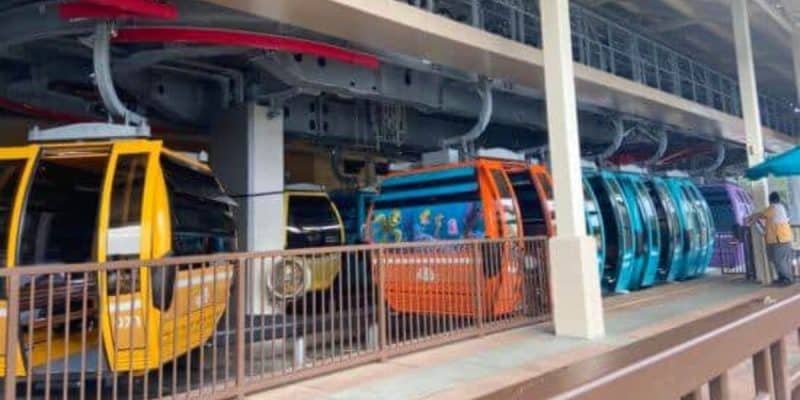
 Credit: Kelly C., Inside the Magic
In the vast, shimmering landscape of Walt Disney World, there is perhaps no modern addition more beloved—and simultaneously more controversial—than the Disney Skyliner. Since its maiden voyage in September 2019, the “Most Magical Flight on Earth” has transformed the way guests navigate the sprawling 25,000-acre resort. It is a ride that doubles as a utility, a colorful parade of gondolas gliding gracefully over the treetops of Central Florida.
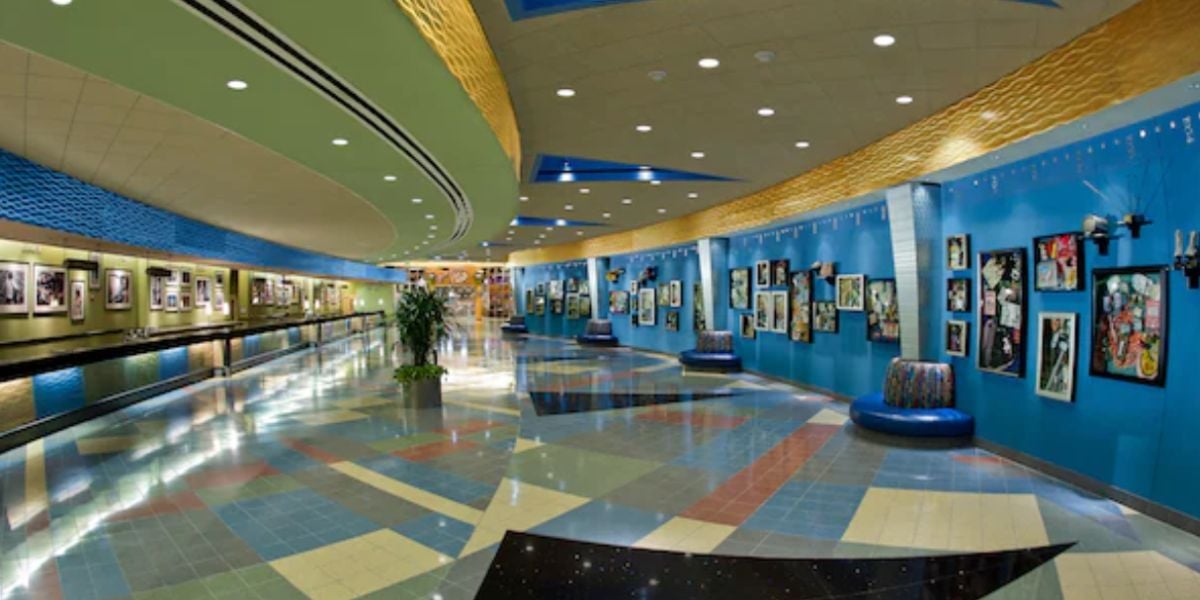
For the average guest staying at Disney’s Pop Century or Art of Animation, the Skyliner is a game-changer. It offers a direct, breezy, and scenic route to EPCOT and Hollywood Studios. Naturally, as the resort moves further into 2026 and looks toward the massive $60 billion expansion projects promised by Disney leadership, the fan demand is deafening: “Expand the Skyliner!”
Fans envision lines stretching to Magic Kingdom, Animal Kingdom, and the Disney Springs shopping district. They imagine a world where the exhaust-chugging buses are a relic of the past. However, behind the scenes, Disney’s Imagineers, engineers, and financial analysts are shaking their heads. Despite the public clamor, a Skyliner expansion is widely considered an “impossible ask.”

From astronomical infrastructure costs to the terrifying logistics of Florida weather and the legal quagmires of rights-of-way, here is the exhaustive deep-dive into why the Disney Skyliner is likely a closed loop that will never grow.
1. The Astronomical Cost: It’s More Than Just Cable
The first and most obvious hurdle is the price tag. While gondola systems are often touted as cheaper than light rail or monorail systems, “cheaper” is a relative term in the theme park industry.

The initial construction of the Skyliner cost Disney an estimated $10 to $12 million per mile, but that doesn’t include the cost of the massive, specialized stations. Each station—like the flagship hub at Disney’s Caribbean Beach Resort—requires a massive footprint, complex mechanical loading systems, and a dedicated staff of Cast Members.
The Return on Investment (ROI) Problem
Disney is a business driven by ROI. The current Skyliner serves four hotels and two theme parks. The “value” it adds is reflected in the room rates of the hotels it touches. By adding Skyliner access to Pop Century, Disney was able to justify price increases and higher occupancy rates for a “Value” resort.

However, expanding the line to Animal Kingdom would require miles of cable and towers through undeveloped conservation land. The cost of building that infrastructure wouldn’t necessarily drive more guests to stay at existing hotels—they are already at capacity. For Disney, spending hundreds of millions of dollars to “improve the commute” of a guest who is already paying for a room is a difficult sell to shareholders.
2. The Florida Weather Factor: A Lightning Rod in the Sky
Central Florida is famously the Lightning Capital of the United States. For a transportation system that consists of metal boxes hanging from a steel cable 60 feet in the air, this is a significant operational nightmare.

The 10-Mile Rule
Disney operates under strict safety protocols. When lightning is detected within a 10-mile radius, the Skyliner must begin its shutdown procedure. Unlike a bus, which can simply pull over, or the Monorail, which can continue to operate in most rain, the Skyliner must be cleared of all guests.
This leads to “The Skyliner Shuffle.” On a typical Florida summer afternoon, the system can go down for hours. During these windows, Disney must maintain a secondary fleet of buses to handle the overflow. Expanding the Skyliner doesn’t eliminate the need for buses; it doubles the logistical burden. Disney would essentially be paying for two transportation systems to serve the same route, since it cannot rely on the sky during frequent storms.
3. The “Hot Box” Controversy: Physics vs. Comfort
One of the most frequent complaints from guests—and a primary reason the system hasn’t been expanded to longer routes—is the lack of Air Conditioning.

The Skyliner cabins are cooled via “passive ventilation.” They are designed with cross-ventilation windows that create a breeze while the cabin is in motion. However, Central Florida in August is a humid, 95-degree furnace. If the Skyliner stalls (as it has during high-profile power outages), those cabins quickly become “hot boxes.”
Why Not Just Add A/C?
Adding A/C to the gondolas is not a simple fix.
- Weight: A/C units and the batteries required to power them would add thousands of pounds to the line. This would require thicker cables, stronger towers, and larger motors, exponentially increasing the cost and reducing the number of cabins that can be on the line at once.
- The Length Issue: The current routes are short (about 10-15 minutes). Disney knows guests can tolerate the heat for 12 minutes. If they expanded the line to Animal Kingdom—a journey that could take 25-30 minutes with turns and station stops—the risk of heat exhaustion for guests during a mid-day stall becomes a massive liability.
4. The Geographic and Infrastructure Nightmare
To expand the Skyliner to the Magic Kingdom or Disney Springs, Disney would have to navigate a maze of existing infrastructure.

The Rights-of-Way
The resort is crisscrossed with high-voltage power lines, underground utilidors, and major roadways like World Drive. A Skyliner expansion would have to clear these obstacles. In some areas, the towers would need to be so high (to clear existing structures) that they would interfere with the “visual sightlines” of the parks. Disney spends millions of dollars to ensure you can’t see “the real world” from inside the Magic Kingdom; a giant gondola tower looming over Liberty Square is an aesthetic non-starter.
The Animal Kingdom “Quiet Zone”
Extending the line to Animal Kingdom poses a threat to the animals themselves. The noise of the machinery and the visual of “giant flying predators” (from an animal’s perspective) gliding over the savanna could cause significant stress to the rhinos, giraffes, and elephants. To avoid the animal enclosures, the line would have to take a circuitous route so long that it would be slower than taking a bus.
5. Evacuation Logistics and Public Relations
Perhaps the most terrifying reason Disney is hesitant to expand is the “What If?” factor.

In October 2019, just weeks after opening, the Skyliner suffered a major malfunction that stranded guests in the air for over 3 hours. Some guests had to be evacuated by fire crews using cherry pickers over water and wooded areas.
The Rescue Challenge
Currently, most of the Skyliner route is accessible by emergency vehicles. However, expanding the route through the wooded conservation areas between Hollywood Studios and Animal Kingdom would make a mechanical evacuation nearly impossible. If a line stalls over a swamp or a dense forest, the Reedy Creek Fire Department (now the Central Florida Tourism Oversight District) would face a nightmare scenario that Disney’s insurance providers are simply not willing to underwrite.
6. The “Aesthetics of Magic”
Disney World is a masterclass in themed design. The Monorail is iconic because it represents the “Futuristic” vision of Walt Disney’s EPCOT. It fits the aesthetic of Tomorrowland and the Contemporary Resort.
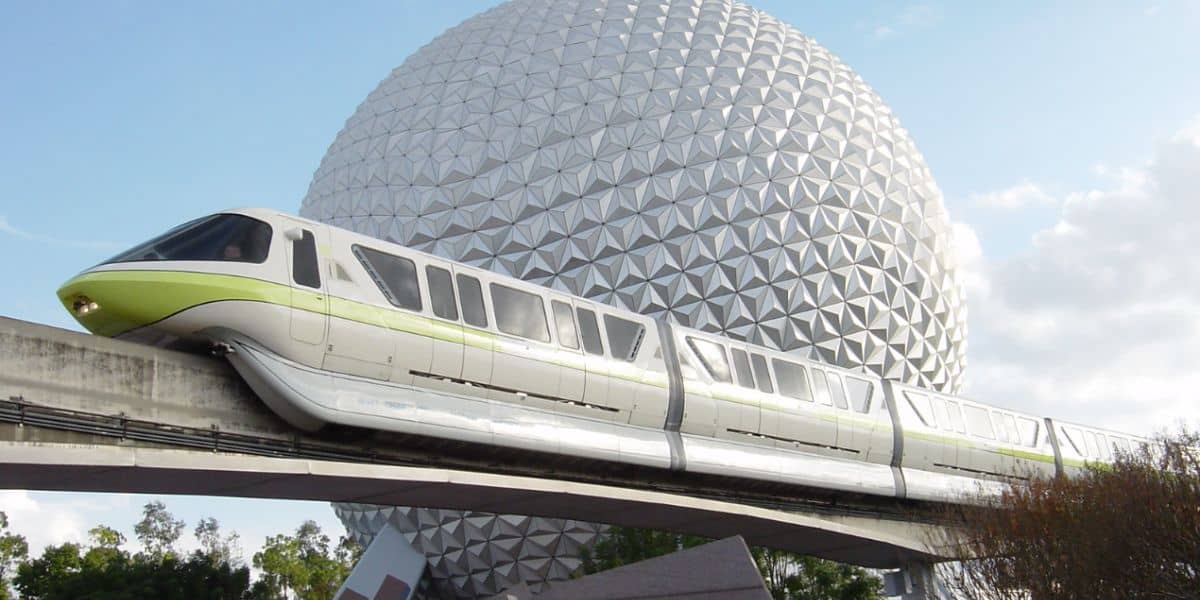
The Skyliner, while charming, is essentially a ski lift. It works well in the Caribbean Beach and Art of Animation area because those resorts have a whimsical, outdoor feel. However, Disney’s “Deluxe” resorts—such as the Grand Floridian or The Animal Kingdom Lodge—are designed to offer a high-end, immersive experience. The sight of cables and gondolas cutting through the Victorian elegance of the Grand Floridian would be a significant “thematic break” that Disney’s Imagineers fight to avoid.
7. The Future is Grounded: Autonomous Shuttles and Brightline
While fans are looking up at the sky, Disney is looking down at the road. The future of Disney transportation isn’t in the air; it’s in Autonomous Electric Shuttles.

Technology is rapidly advancing to the point where Disney can deploy a fleet of self-driving, air-conditioned mini-buses. These vehicles:
- Don’t require multi-million dollar towers.
- Can operate in lightning and rain.
- Can be rerouted instantly based on crowd levels.
- Have much lower insurance and evacuation risks.
With the eventual arrival of the Brightline train near the property and the continued expansion of the Disney bus fleet, the Skyliner is increasingly seen as a “boutique” transport option rather than a global solution for the resort.
Conclusion: A Beautiful, Closed Loop
The Disney Skyliner is a triumph of modern theme park engineering. It has solved the transportation woes for thousands of guests and provided a “free ride” that has become a highlight of many vacations.

But as we look toward the future of Walt Disney World in 2026 and beyond, we must accept the reality of the “Invisible Walls.” Between the staggering costs, the temperamental Florida weather, the lack of climate control, and the nightmare of geographic expansion, the Skyliner is likely to stay exactly where it is.
It is a masterpiece of a specific time and place—a colorful addition to the EPCOT resort area—but don’t expect to see those gondolas gliding toward the Magic Kingdom anytime soon. The sky, it seems, has its limits.
Do you think Disney should prioritize the Skyliner expansion despite these hurdles, or would you rather see a new Monorail line? Let us know in the comments below!