 Credit: Disney
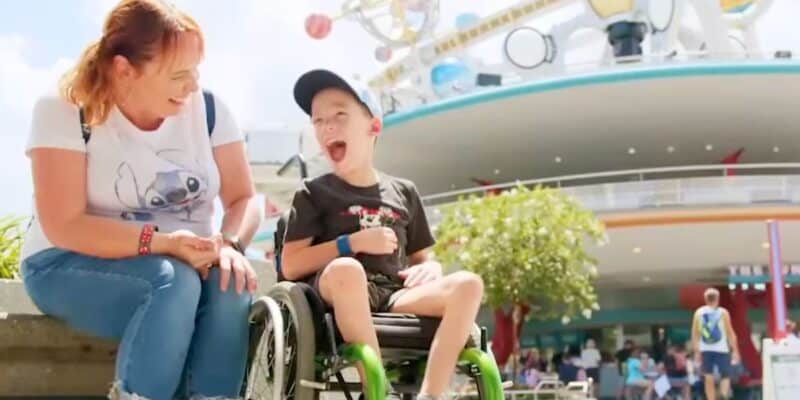
Disney has spent the last few years hearing plenty from disabled guests, and much of the conversation hasn’t been positive.
Changes to disability accommodations have left some longtime visitors questioning whether a Disney vacation remains realistic for their families. Guests who once knew how to navigate the parks have faced new rules, different approval processes, and uncertainty about what assistance they will receive.
Now, Disney is exploring an idea that could move accessibility in a much different direction.
A newly published patent reveals technology designed to solve one of the most basic problems some disabled guests encounter at theme parks: getting onto the ride itself. Instead of requiring certain guests to leave their wheelchairs or mobility devices, Disney is looking at a system that could allow them to ride without transferring.
It isn’t coming to the parks tomorrow. Still, after years of criticism, the idea could represent an important step.
Disney Has Faced a Growing Accessibility Problem
Disney’s relationship with some members of the disability community changed considerably after the company overhauled its Disability Access Service, better known as DAS.
In 2024, Disney significantly narrowed the range of people the service was
A Newly Published Plan Takes a Different Approach
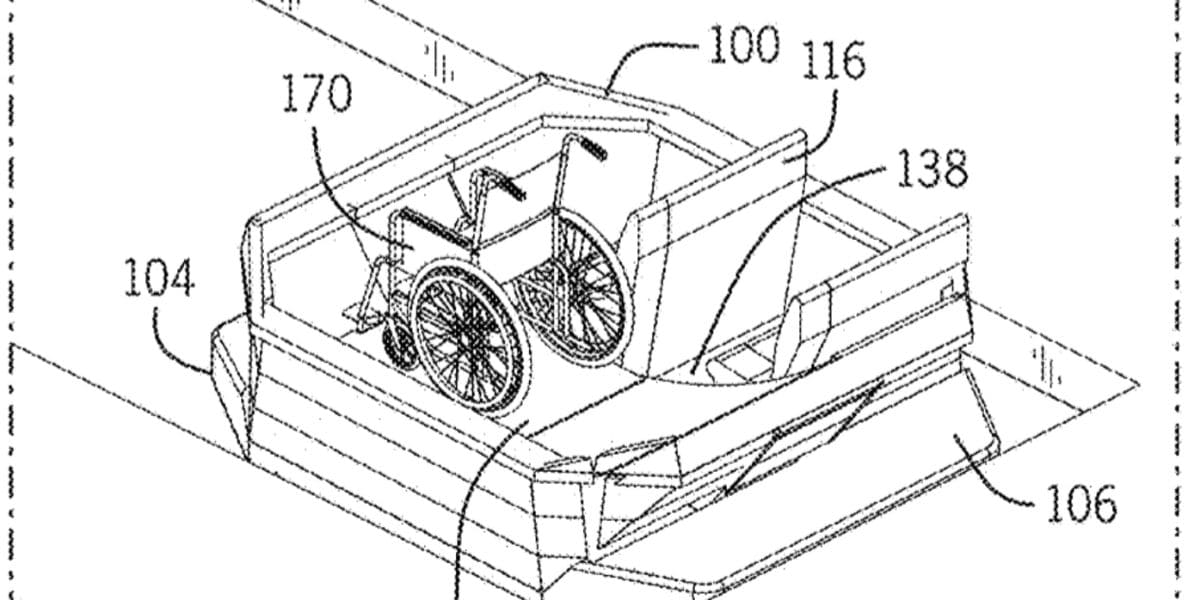
On September 17, 2026, a Disney patent titled “Rider Inclusive Transport Aide” became public. Disney originally filed it on March 11, 2025.
The concept centers on a movable platform built into a ride vehicle. It could accommodate a wheelchair or scooter while keeping the platform relatively level as the vehicle moves.
The patent appears particularly suited for boat-style attractions.
As the vehicle tilts or moves, the platform beneath the mobility device could adjust, helping keep a wheelchair or scooter more stable.
More importantly, guests could potentially remain in their mobility devices throughout the experience.
That would remove a major barrier on some Disney attractions.
Accessibility varies from ride to ride. Some guests must transfer from an ECV to a wheelchair, while others must leave their mobility device and enter the attraction vehicle.
This technology could give Imagineers another option when designing accessible ride systems.
There is one major catch: a patent doesn’t guarantee Disney will build it.
Disney could take years to implement the technology, modify the concept, or never introduce it. For now, it shows what the company is exploring rather than announcing a new attraction feature.
Why This Could Be Much Bigger Than One Ride Vehicle
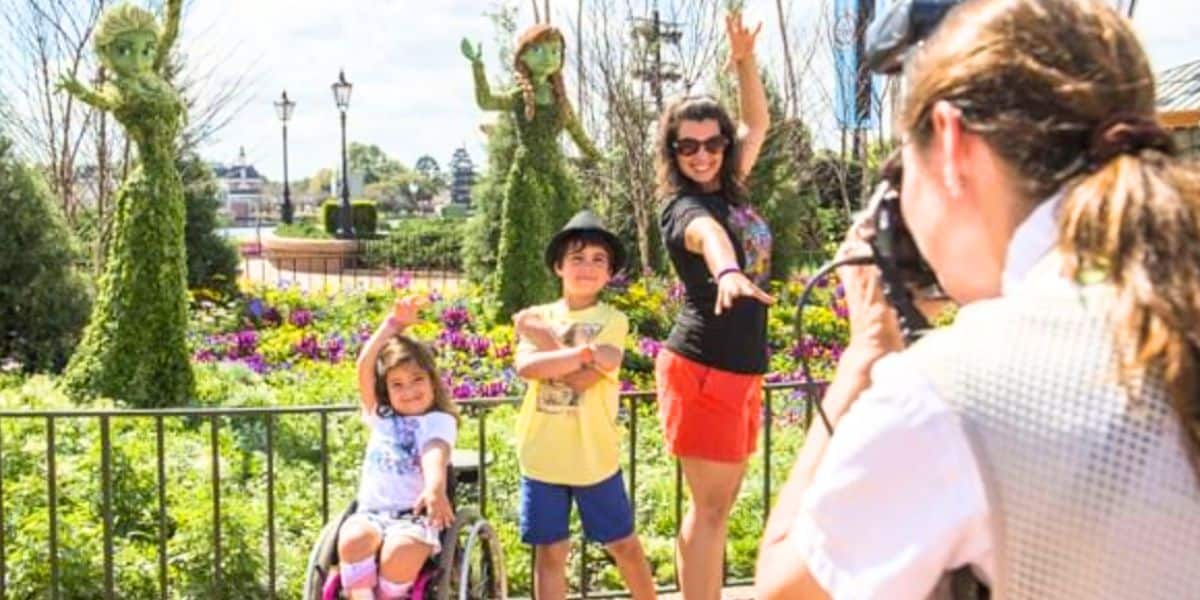
For guests who can easily step from a wheelchair into a ride vehicle, transferring may seem like a small part of the experience.
For someone who cannot safely or comfortably make that transfer, it can determine whether they ride at all.
That’s what makes Disney’s concept potentially significant.
Rather than asking the guest to adapt to the attraction, Disney is exploring how the attraction could adapt to the guest.
The system could also make the loading process easier. A more streamlined setup could reduce the time required to board certain mobility devices while providing disabled guests with a more comfortable experience.
Most importantly, it could give some guests greater independence.
A person who relies on a wheelchair shouldn’t necessarily have to leave the device that enables their mobility simply to experience a Disney attraction. When technology can safely eliminate that barrier, exploring it makes sense.
Disney also has an enormous influence within the theme park industry. If this system eventually works successfully at Disney attractions, similar accessibility concepts could become more common elsewhere.

Disney Still Has Plenty of Work Ahead
This patent doesn’t erase criticism over DAS or solve every accessibility issue inside Disney’s parks.
Disabled guests have different needs. Better wheelchair access doesn’t address developmental disabilities, sensory needs, or difficulties with conventional queues.
Disney doesn’t have to solve every problem with one invention, but it needs to remove unnecessary barriers.
This patent suggests Imagineers are exploring more inclusive attractions. If Disney turns the concept into operational technology, some guests could ride without needing a difficult or impossible transfer.
After years of criticism of accessibility, that could represent meaningful progress.
It isn’t enough. Disney still has work to do to rebuild trust and ensure disabled guests receive the access and assistance they need.
Listening to those guests and designing attractions around their needs would be a good place to start.