39
39
 Credit: Inside The Magic
Walt Disney World has long positioned itself as the most magical place on earth, a destination where anyone and everyone can step through the gates and feel like the experience was built specifically for them. That promise has always meant more than just great rides and beautiful theming. It has meant inclusion. It has meant accessibility.
It has meant that a family navigating the parks with a wheelchair, a child with sensory needs, or a guest managing an invisible chronic illness could still have a vacation that felt complete, joyful, and dignified. For a long time, Disney leaned into that promise harder than almost any other entertainment company in the world.
Something has shifted, and the conversation happening inside the Disney community right now reflects that shift in uncomfortable and important ways. Disabled guests are speaking up in greater numbers across social media, fan forums, and Annual Passholder communities, and what they are describing paints a picture of a park experience that feels increasingly hostile toward the very people the fifth key was supposed to protect.
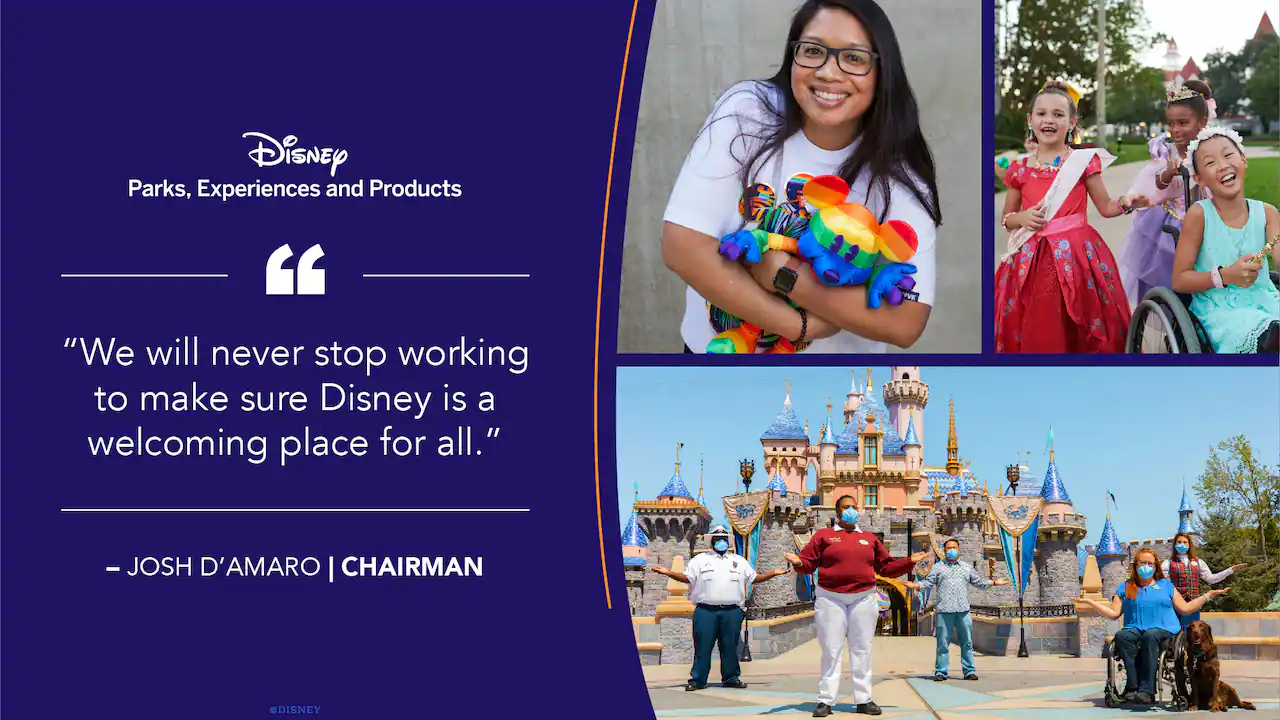
In September 2020, Disney added a fifth key to its iconic Four Keys philosophy, the foundational values that have guided cast member training and park culture for decades. The original four, Safety, Courtesy, Show, and Efficiency, were joined by Inclusion, a formal acknowledgment that belonging is not incidental to the Disney experience but central to it.
It was a meaningful addition, and it generated genuine excitement among guests who had long advocated for more intentional accessibility and representation across Disney Parks. But a growing number of disabled guests are now asking a pointed and increasingly urgent question. Does the way Disney is actually operating line up with that fifth key? Based on recent experiences shared across social media and fan communities, the honest answer appears increasingly complicated and, in some cases, deeply troubling.
The DAS Conversation
The Disability Access Service, known as DAS, has been one of the most significant accessibility tools Disney offers. For guests who cannot tolerate traditional queue environments due to physical, cognitive, or sensory disabilities, DAS has historically provided an alternative that allowed them to experience the parks without being forced into situations their conditions made genuinely harmful. The service has been a lifeline for many guests, not a shortcut, and the distinction matters enormously.
Recent changes to the DAS qualification process have been deeply polarizing, and the stories coming out of the community are hard to read. One Annual Passholder shared her experience navigating the new system for the first time after seven consecutive years of qualifying for DAS.
She described speaking with four different representatives across multiple interactions, each one marked by what she felt was immediate judgment the moment representatives saw her face on screen. She presents as visibly nondisabled, and she believes that appearance shaped the outcome of every conversation before she had a chance to explain her actual needs.
She described being talked down to repeatedly, condescended to as though she did not understand the difference between a standard queue and Lightning Lane, and spoken to in what she called Disney answers, responses that sounded professional but made clear she was not being genuinely heard.
She noted that she was told Disney could not accept medical documentation because the system lacked a qualified medical professional to review it, yet she was simultaneously transferred to speak with someone described in a medical capacity during the same call. That contradiction alone left her struggling to make sense of a process that felt more designed to deny than to accommodate.
LMAOO diabetics no longer qualify for a DAS (disability access service) pass at Disney World. As of May 2024, only those with “developmental disabilities” apply.
— Claire ♡ (@caffeinatedpup) November 19, 2024
Don’t call it a disability access service then?? Diabetes is ADA protected sooo I feel like this should be illegal?
She called the new system an epic failure and said it represented ableism in a way she had never expected to encounter at Disney. Her conclusion was that the new DAS system does not align with ADA policies and that Disney should consider moving toward a model similar to Universal Orlando Resort’s, which allows guests to submit documented medical information in advance and receive accommodations based on that documentation rather than a judgment call made by a representative over video chat.
Her experience is not isolated. The broader online conversation around DAS changes has taken on a tone that many disabled guests find deeply discouraging. Debates surfacing in fan communities have included genuinely harmful rhetoric around disability, with some guests questioning whether others are truly disabled enough to deserve accommodation, whether invisible disabilities should count at all, or whether guests with significant needs should simply avoid theme parks. That last one is particularly painful to hear in the context of a park that markets itself as a place for everyone.
The Disney ECV Debate
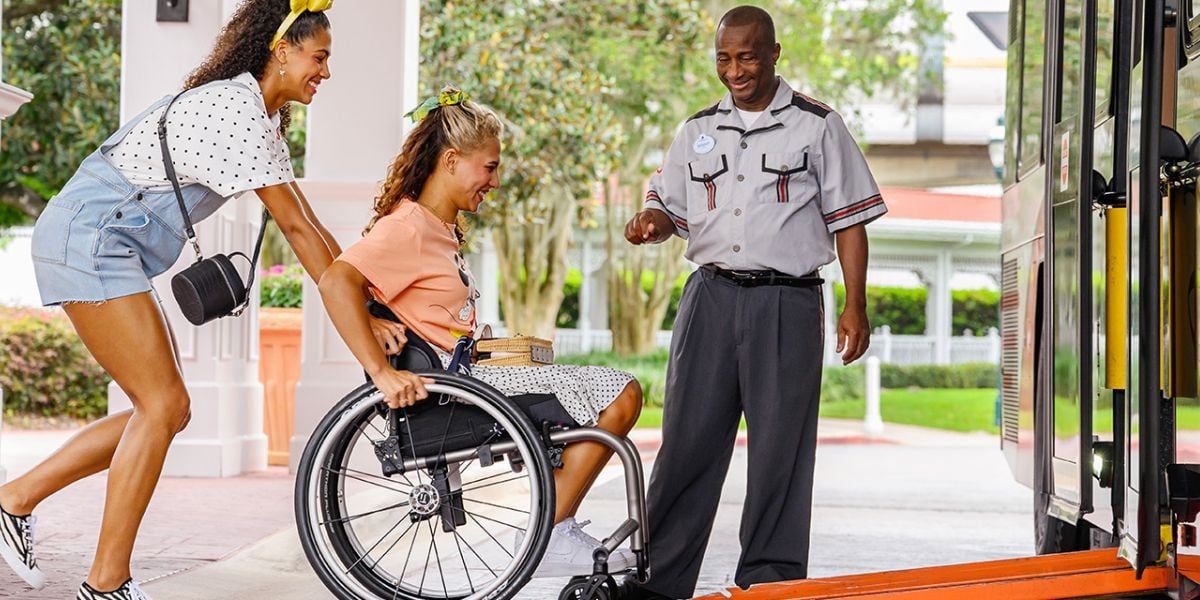
A parallel conversation is playing out around the use of Electric Conveyance Vehicles, commonly called ECVs or scooters, inside the parks. A post on an Annual Passholder Facebook group recently addressed the judgment that ECV users face regularly from fellow guests, and it resonated deeply with thousands of people. The post made a clear and important point. Disney World is an enormous place.
A full day in the parks routinely means eight to twelve miles of walking, and mobility aids exist specifically to help people participate in that environment without making themselves miserable, causing themselves injury, or cutting their day short due to pain or exhaustion. Using one does not require a visible disability, a permanent diagnosis, or anyone’s approval.
The responses from actual ECV users added necessary texture to the conversation. One commenter described the very real physical and mental demands of navigating crowded park environments on a scooter, including managing unpredictable foot traffic, watching for children running into her path, and sitting through multiple full bus cycles at the end of an already long day just to find a vehicle with an available scooter space.
The longest she had waited was a full hour. She noted that she missed being able to walk the parks herself, a reminder that mobility aid users are not gaming the system. They are doing what they have to do to be there at all.
Another commenter made a point that deserves more attention than it typically gets. Many people actively downplay their need for mobility aids in public because society has conditioned disabled people to feel like a burden or a spectacle. That internalized pressure sometimes produces comments or behaviors that bystanders then interpret as proof that the aid was never really necessary. It is a cycle that says far more about how disability is perceived culturally than it does about any individual guest’s legitimate needs.
A Disney Cast Member Incident That Went Viral
Perhaps the most visceral recent example of the accessibility conversation came from a guest at Disneyland who shared her experience on Threads after a deeply upsetting encounter at Indiana Jones Adventure. The guest uses a cane due to back and knee disabilities. She requested the accessible route through the exit, was initially accommodated, and then encountered a second cast member who told her she could use the standard queue instead.
She explained that the twisting layout of the standard Indiana Jones queue specifically aggravates her knee condition and that she needed the straighter accessible path. He told her she would be fine and refused to redirect her. She pushed back again, clearly and calmly. He repeated himself in a dismissive and rude tone.
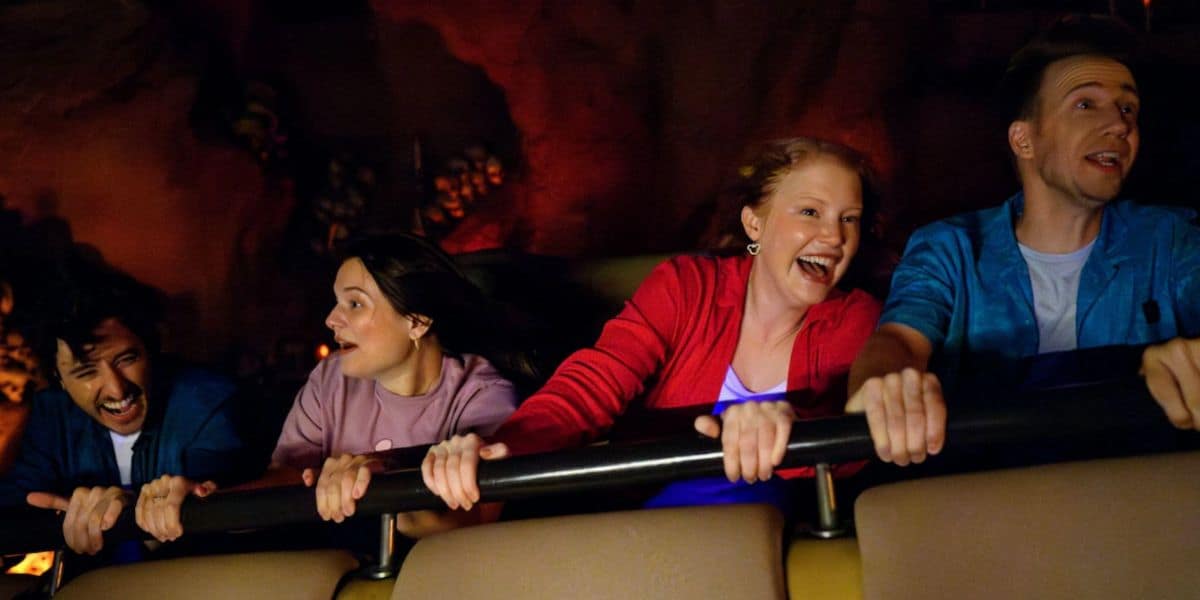
She went through the standard queue in pain. When she exited the ride and approached the cast member to get his name so she could file a report with Guest Services, he looked at her walking and said, in a mocking tone, that she had made it through just fine. He laughed. Her friend reported that he continued making comments and laughing as she walked away. She was too upset to hear them. She started crying and had to stop before she could continue her day.
She went directly to Guest Services, filed a complaint, and shared the experience publicly. Her final point was one that applies far beyond this single incident. She noted that everyone will eventually experience disability, whether through age, illness, or injury, and she expressed hope that the cast member in question develops empathy before that moment arrives for him personally.
View on Threads
Disney’s fifth key is Inclusion. What that guest experienced at Disneyland is a direct contradiction of it, and it is not the only one being reported right now. The question of whether Disney is living up to its own stated values when it comes to disabled guests is not a fringe concern anymore. It is a conversation happening loudly and publicly, and it deserves a direct and honest response from the company that put Inclusion on the list in the first place.