32
32
 Credit: Lucasfilm
A long time ago, in a galaxy far, far away–and, more specifically, about 200 years before the events of The Phantom Menace— Disney and Lucasfilm quietly launched one of the most ambitious storytelling experiments in Star Wars history.
Five years, over 100 comic issues, two dozen novels, and countless interconnected stories later, the High Republic era came to what Lucasfilm promised was its definitive end. Except, as it turns out, the galaxy far, far away isn’t quite finished with that chapter just yet.

What Was the High Republic?
For the uninitiated, the High Republic was Disney and Lucasfilm’s first serious attempt at building an interconnected universe within Star Wars. Rather than retreading the Skywalker saga or leaning on familiar faces like Luke, Leia, or Han, Lucasfilm made a bold creative decision: go further back.
Set approximately 200 years before Star Wars: Episode I–The Phantom Menace (1999), the High Republic era depicted the Jedi Order at the absolute height of its power and influence–confident, expansive, and not yet weathered by the betrayals that would define the prequel trilogy.
Broken into three distinct phases, the High Republic initiative told a sprawling, interconnected story across novels, comics, and animated series that rewarded dedicated fans who engaged with every corner of it.

The initiative was broadly considered a success by both Lucasfilm and fans, generating genuine enthusiasm and expanding the Star Wars universe in directions the films never could. But its relationship with the wider franchise was never entirely smooth sailing–and nowhere was that more apparent than in its most high-profile live-action entry.
The Acolyte: Ambition, Controversy, and a Cancellation That Shook the Fandom
When The Acolyte arrived on Disney+ in 2024, it represented the High Republic’s most visible moment yet. Created by Leslye Headland, the series pushed Star Wars decades before the Skywalker saga, exploring the Jedi at the height of their influence while quietly charting the earliest stirrings of Sith power. It was, by any reasonable measure, one of the most creatively distinct entries the franchise had produced in years.
It was also one of its most contested.

Drawing immediate comparisons to Star Wars: Episode VIII–The Last Jedi (2017) in the intensity of online debate it provoked, The Acolyte became a flashpoint almost immediately.
Discussion following every episode ranged from canon implications to its thematic ambitions, with the show’s diverse ensemble–including Amandla Stenberg, Lee Jung-jae, Manny Jacinto, and Jodie Turner-Smith–and its female-led, queer-helmed creative vision attracting both passionate support and sustained, often ugly, online criticism.
Despite strong performances and a genuinely distinctive creative voice, the eight-episode first season was cut short. Official reasoning pointed toward low viewership, though many fans interpreted the cancellation as a capitulation to the loudest voices of online backlash rather than any genuine audience rejection.
Disney Entertainment co-chairman Alan Bergman later pointed to budget concerns as a key factor. Analytics data later suggested The Acolyte had actually outperformed Obi-Wan Kenobi, The Book of Boba Fett, and Ahsoka in audience demand.

What made the cancellation sting even more was what had been planned. Headland had mapped out a Season 2 that would have leaned heavily into the mythology of Qimir, the enigmatic, darkly compelling figure played by Manny Jacinto, and his connection to Darth Plagueis, who made his live-action debut in the Season 1 finale.
More tantalizingly, Headland has since revealed that Qimir was intended to serve as a missing link in the Star Wars saga’s long-term dark side lineage, potentially positioning him as the first Knight of Ren: the cult-like dark side organization that wouldn’t resurface in the story until Star Wars: Episode VII–The Force Awakens (2015), centuries later.
“Following the Rule of Two,” Headland explained, “one way to keep it going is if the Stranger is the first Knight of Ren, part of a Sith-adjacent cult that we know eventually survives.”

It’s a thread that will now remain forever unresolved on screen, and it’s a loss that still resonates across the Star Wars fandom. The Acolyte stood as a bold, unfinished chapter that hinted at a much larger role in shaping the franchise’s future. Its cancellation left the High Republic’s live-action presence abruptly and unsatisfyingly curtailed.
Young Jedi Adventures and a Quiet Milestone
Not every High Republic story ended so abruptly. Star Wars: Young Jedi Adventures, Lucasfilm Animation’s first series created specifically for preschool audiences, completed its run in December 2025 with a third and final season, and did so with something of a quiet milestone attached.
Season 3 of Young Jedi Adventures arrived on Disney+ in 4K, making it the first Star Wars series on the platform to receive a format upgrade between seasons–a distinction not achieved by The Mandalorian, The Bad Batch, Andor, Visions, or any other franchise title on the service. It’s a small detail, perhaps, but one that speaks to an ongoing investment in the High Republic era even as its live-action counterpart was being wound down.
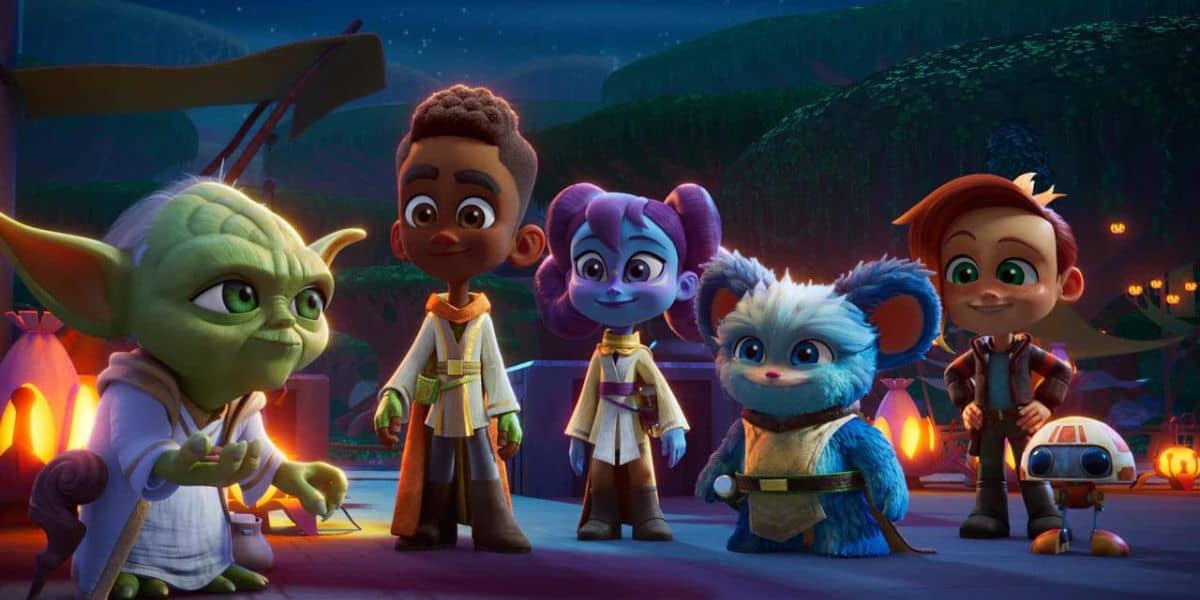
The series, set roughly 200 years before The Phantom Menace and following Jedi younglings Kai Brightstar, Lys Solay, and the beloved Nubs under the guidance of Master Yoda, concluded its run having quietly carved out its own niche–welcoming a new generation of fans into the galaxy while the broader conversation around the High Republic raged elsewhere.
The End That Wasn’t: Lucasfilm’s Promise and What Came Next
And then, on July 30, 2025, it was officially over. Marvel Comics released “The High Republic: The Finale”— a one-shot issue that Lucasfilm itself described as marking the end of Disney and Lucasfilm’s publishing initiative, The High Republic. Phase III was complete. The experiment, Lucasfilm said, had concluded.
Fans marked the moment. It felt significant. Five years of interconnected storytelling, spread across novels, comics, and animation, had come to a carefully managed close. The ambition of the whole enterprise deserved a proper ending, and Lucasfilm appeared to have given it one. Less than a year later, the High Republic is back.

“Star Wars: The High Republic Adventures–Pathfinders”
“Star Wars: The High Republic Adventures–Pathfinders,” the newly launched comic series from Dark Horse Comics, is the project in question, and it arrived with a few details worth unpacking. It should be noted that while Marvel Comics published the main “High Republic” line, Dark Horse published the “High Republic Adventures” run.
Lucasfilm’s own framing of “The High Republic: The Finale” as the definitive end of the initiative makes the existence of “Pathfinders” interesting. Less than a year after making a considerable deal of closing the book on the High Republic, the galaxy far, far away has quietly reopened it.
That said, “Pathfinders” is careful to position itself as adjacent to, rather than a direct continuation of, the original initiative. Dark Horse has been explicit that the story takes place “twenty years after Phase II of the High Republic,” and that it centers on “a brand-new team of Republic Pathfinders” entirely distinct from the characters who populated the five-year experiment.
The premise–a team dispatched to investigate the mysterious death of a Jedi Master, only to find that “not everything about this mission is as it seems”–is intriguing on its own terms, even if familiar faces could conceivably appear in future issues.
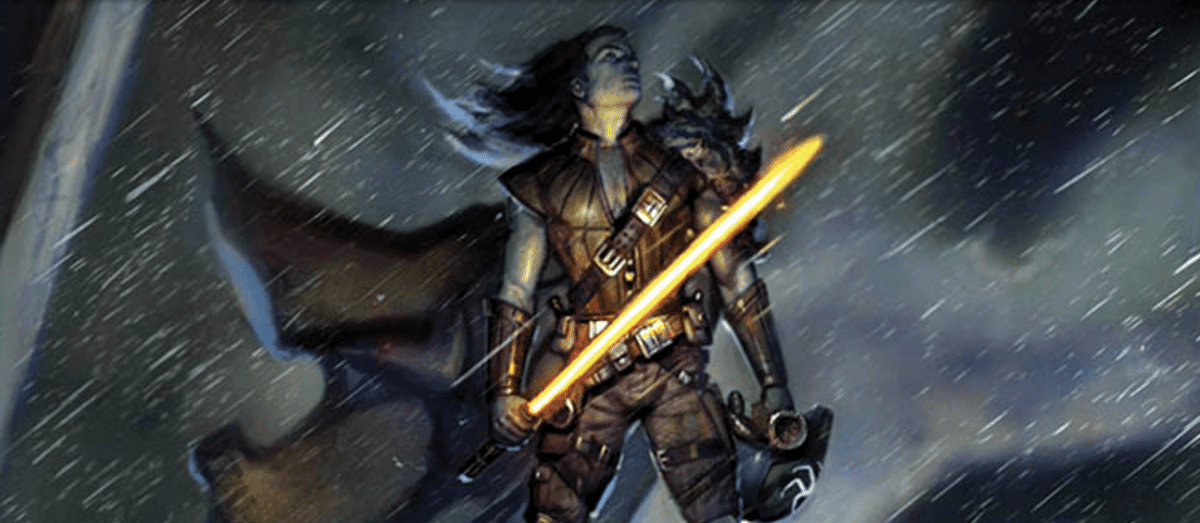
In other words, “Pathfinders” isn’t asking readers to have followed every novel and comic from the past five years. It’s a new entry point. Whether that’s a savvy creative decision or a way of having it both ways–drawing on the High Republic’s brand recognition while technically starting fresh–probably depends on how you felt about the original initiative to begin with.
The first issue of “High Republic Adventures–Pathfinders” was released on March 25, 2026, with the second and third issues of the six-part run arriving on May 13 and June 17, respectively.
A Galaxy Still Expanding
What “Pathfinders” ultimately represents, awkward contradictions and all, is a simple truth about Star Wars: the stories don’t really end. The High Republic may have had its official finale, The Acolyte may have had its plug pulled, and Lucasfilm may be approaching its next phase of expansion with, in Alan Bergman’s words, an insistence that “they have to be great”–but the universe keeps moving.
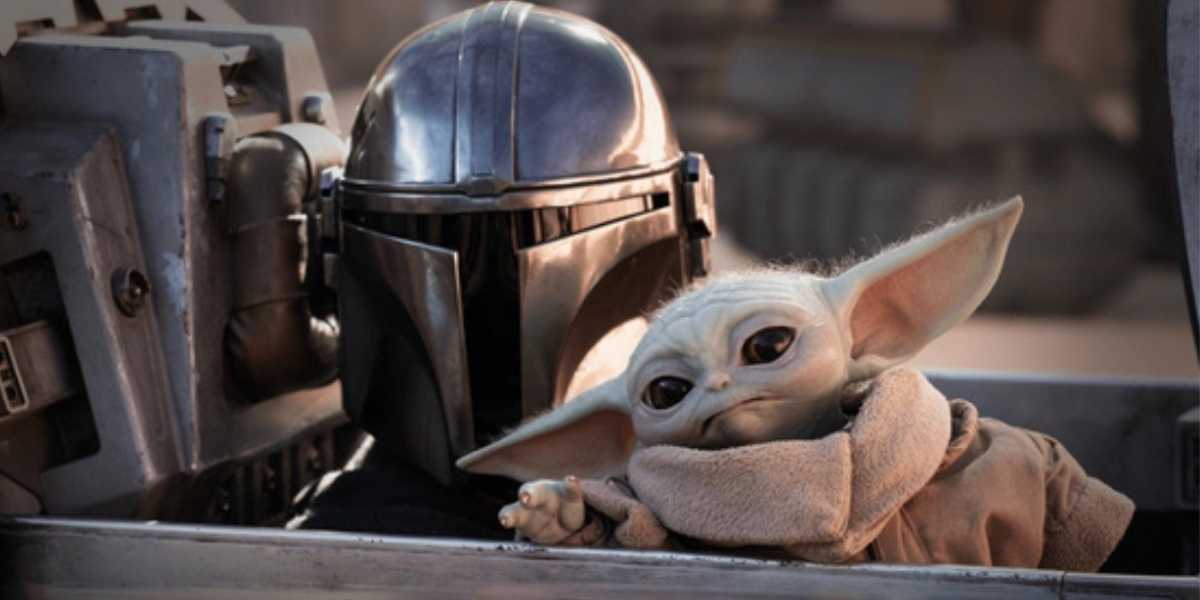
With Ahsoka Season 2 confirmed, The Mandalorian and Grogu arriving in just over a month, and Star Wars: Starfighter following in 2027, the broader franchise is clearly not resting. And somewhere in that expanding galaxy, set two centuries before any of those stories, a brand-new team of Republic Pathfinders is heading into the unknown–proof that, whatever Lucasfilm says about endings, the High Republic era still has stories left to tell.
How do you feel about the High Republic returning so soon after its official conclusion? Let Inside the Magic know in the comments below!