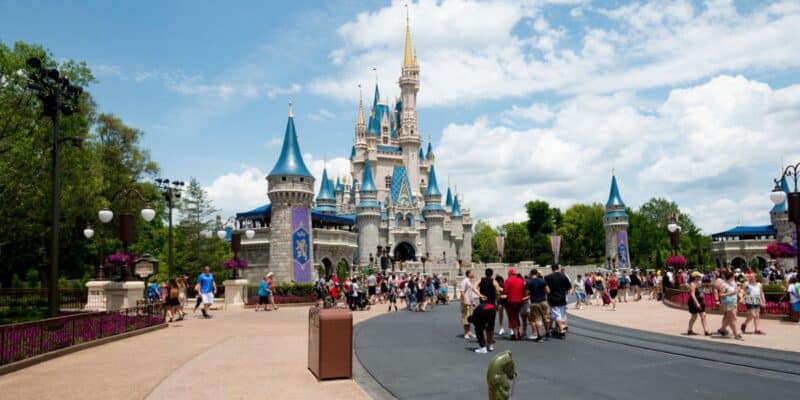
 Credit: Xiquinho Silva, Flickr
Planning a Walt Disney World vacation involves a kind of optimism that most other trips do not require. You are not just booking flights and hotel rooms. You are building something, an experience you have probably been thinking about for months, possibly longer, and every piece of it from the dining reservations to the park tickets to the resort choice carries emotional weight that a business trip or a weekend getaway simply does not have.
The flight is the first chapter of that experience, and for most guests it is supposed to be the easy part, the necessary transit that gets you from your regular life to the gates of something special.
For passengers flying Southwest Airlines right now, that first chapter is carrying unexpected weight of a different kind.
Southwest updated its Customer of Size policy on January 27, 2026, requiring passengers who may not fit within a single seat to proactively purchase an additional seat before travel. The policy gives Southwest the authority to make that determination “in its sole discretion” without specifying measurements or objective criteria beyond potential encroachment on neighboring seats.
Since the policy took effect, multiple passengers have gone viral on TikTok sharing experiences that have reignited a national conversation about how airlines treat larger travelers, what transparent policy enforcement actually looks like, and what happens when discretion becomes the only standard.
Two Passengers, Two Viral Stories, One Policy
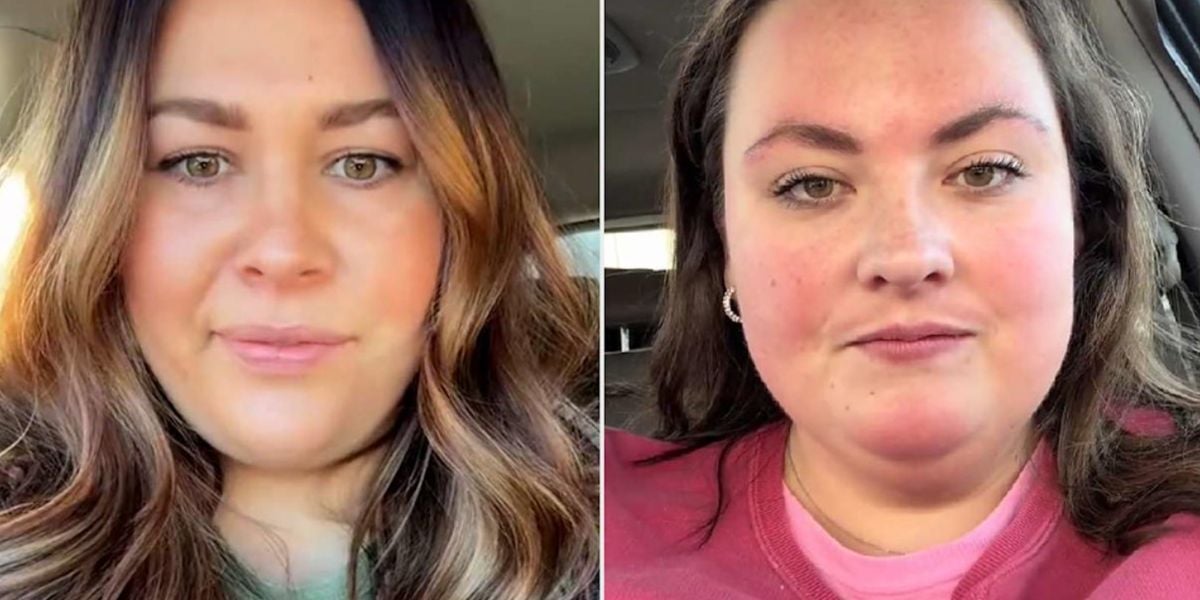
Erika DeBoer, 38, was traveling from Omaha, Nebraska to Las Vegas on February 6 when a Southwest employee informed her at bag check that she would need to purchase an extra seat. When she asked for an explanation, the employee cited the “safety and comfort” of other passengers. “The part that lingers the most is the words used. ‘Safety and comfort’ of other passengers. They just kept repeating it like robots without any care for the actual situation,” DeBoer told PEOPLE.
DeBoer paid for an upgraded window seat to continue her journey but was not flagged at all on her return flight home to Omaha. After the trip, she contacted Southwest, which issued a refund for the extra ticket and upgraded seat and sent a $150 voucher. She is still waiting for clarification on the policy itself.
“It feels powerless to be given two options — either buy an extra seat or not be allowed on the flight,” she said. “I was not humiliated or embarrassed or on the verge of tears. I was angry. I have zero shame in my size.”
Grace Simpson’s experience followed just days later. She had already successfully flown a Southwest flight from Norfolk, Virginia to Baltimore on February 10 when she was pulled aside at the gate for her connecting flight to San Diego. A supervisor told her a gate agent had identified her as a potential customer of size and that she would need to purchase an additional seat.
“I told him that I had already flown from Norfolk to Baltimore without issue, so I was not going to buy another ticket,” Simpson recalled. The supervisor ultimately relocated her to an empty seat in the back row at no additional cost. She has not formally complained to Southwest.
“It’s hard for me to wrap my head around the fact that I could go through ticketing, security, boarding and take my seat — with multiple employees seeing me — and yet if one person decided I didn’t fit the policy, I could be publicly deboarded,” Simpson told PEOPLE. “Even if nine people before thought I was fine, the 10th person could override that. That level of discretion feels less about safety and more about personal judgment and discrimination.”
The timing of Simpson’s experience carried additional weight. “I had just hit the 100-pound milestone less than a week before this incident,” she said. “Instead, the experience felt like a slap in the face.”
What Both Passengers Said They Actually Want
Related: Universal Confirms 17 Attractions Are Banned for “Plus-Size” Guests
Both DeBoer and Simpson were clear that their objection was not to a customer of size policy existing. It was to how the policy is implemented without objective standards.
“It’s completely unfair to get to the airport and be told you have to purchase an extra seat with no actual parameters or guidelines,” DeBoer said. “It was all up to the discretion of the Southwest employee by looking at me.”
Simpson called for transparency at the point of purchase. “From a consumer standpoint, transparency means more than just having information buried on a website. If a policy could require someone to purchase an additional seat or potentially deplane, it should be clearly communicated at the point of purchase. There should be a prompt, a checkbox or a clearly visible notice — something that ensures customers are aware before they finalize their ticket,” she told PEOPLE.
DeBoer also raised a question that cuts to the heart of the inconsistency: “The scrutiny wasn’t about space alone — it was about size, and specifically about fat bodies, when it should be about every body that might spill past an armrest or encroach on the seat next to them.”
When PEOPLE contacted Southwest for comment, the airline stated that its “policy is well defined” on its website and noted that “our policy is in line with airline industry standards.”
“When people say this is about ‘comfort and safety for all passengers,’ I think what’s often missing is that people of size are also part of ‘all passengers,'” DeBoer told PEOPLE.
Simpson agreed: “Fat passengers deserve dignity, predictability, and respect in public spaces too. The conversation often centers on how other passengers feel sitting next to someone larger, but it rarely considers how it feels to be the person being evaluated, flagged or potentially removed.”
What This Means for Guests Flying Southwest to Disney World

For Disney travelers, the Southwest Customer of Size situation creates a specific kind of pre-trip anxiety that lands differently than a standard travel inconvenience. A Disney vacation has financial and emotional stakes that a business trip does not. Non-refundable park tickets, dining reservations, and resort check-ins mean that a gate confrontation that delays or prevents boarding does not just ruin a flight. It can unravel an entire trip that took months to build.
The inconsistency both women described, being flagged on one flight but not another, is the detail that makes advance planning genuinely difficult. There is currently no objective measurement a guest can apply at home to know with certainty whether they will be asked to purchase a second seat.
If you are a larger traveler booking Southwest for a Disney trip, the most protective approach available right now is to review Southwest’s Customer of Size policy on their website before purchasing, consider proactively booking a second seat if there is any uncertainty, and contact Southwest directly with questions before travel rather than encountering the policy for the first time at a gate.
How Disney Itself Handles Size Inclusivity in the Parks
Disney has made consistent efforts to ensure attractions accommodate guests of varying body types. Ride vehicles on classic attractions like it’s a small world and Pirates of the Caribbean use open boat-style seating without fixed individual seats, allowing guests to position themselves comfortably without the constraints of a molded individual seat.
Omnimover attractions including The Haunted Mansion and Journey Into Imagination use a continuous bench-style vehicle design rather than bucket seats with defined individual dimensions.
Disney has also made proactive changes to attraction seating over the years to move toward flatter, more open bench configurations that reduce the likelihood of guests being turned away at boarding. The goal, as Disney has consistently communicated through its accessibility approach, is to maximize the number of guests who can experience each attraction rather than create situations where a guest discovers an incompatibility after waiting in a queue.
Guests with specific questions about attraction fit can speak with a Cast Member at the attraction entrance before entering the queue. Disney’s approach is to handle those conversations with as much discretion and dignity as possible, and test seats are available outside several attractions for guests who want to check compatibility before committing to the wait.
The contrast between Disney’s ongoing investment in size-inclusive attraction design and the experiences DeBoer and Simpson described at Southwest is not subtle. Disney has made the accommodation part of the design. Southwest is currently navigating what happens when a policy relies on individual judgment without objective standards, and the viral stories from February suggest the current approach needs work.
If you are planning a Disney World trip and Southwest is your airline, read the policy before you book, ask questions directly if you have them, and give yourself as much runway as possible on travel day to handle anything unexpected. And once you get to the parks, know that Disney has put considerable thought into making sure the magic is as accessible as possible once you walk through the gates.