Credit: 20th Century Studios
The Predator franchise has never been one to shy away from visceral, blood-soaked action. From the iconic 1987 original featuring Arnold Schwarzenegger to Dan Trachtenberg’s critically acclaimed Prey, the series is built on the foundation of high-stakes survival and the gruesome trophies taken by the galaxy’s most dangerous hunters. However, Disney—the current parent company of the franchise via 20th Century Studios—has recently found itself in the crosshairs of a major regulatory crackdown.

In a move that has stunned the entertainment industry and sparked a heated debate over marketing boundaries, the UK’s Advertising Standards Authority (ASA) has officially banned a digital advertisement for the latest installment, Predator: Badlands. The reason? A graphic image featuring what appeared to be a severed human torso that parents and regulators have deemed “inappropriate and disturbing.”
The Ad That Went Too Far: A Severed Body in Public View
The controversy centers on a digital video poster that went live in November 2024, coinciding with the film’s theatrical release. The advertisement wasn’t tucked away in an R-rated magazine or hidden behind a parental gate on a streaming service. Instead, it was a high-profile digital ad designed to catch passersby’s attention.
The ad’s visual content was undeniably intense. It featured the film’s main Yautja—played by Dimitrius Schuster-Koloamatangi through performance capture as the character “Dek”—holding a figure by the throat high in the air. The most shocking detail, however, was the state of the figure being held: it was severed in half at the waist, with the lower portion of the body missing.
While the Predator films are known for this level of brutality, the ASA’s concern stemmed from the ad’s placement. Digital posters in public spaces are visible to everyone, including young children. The image of a humanoid figure being torn apart was deemed a bridge too far for public consumption, prompting a flood of concerns about the potential to cause “fear or distress” among younger audiences.
Disney’s “Synth” Defense: Robot or Human?
When the ASA launched its investigation, Disney (representing 20th Century Studios) didn’t immediately back down. The studio mounted a fascinating defense, arguing that the ad was prepared with a “sense of responsibility” toward its audience.
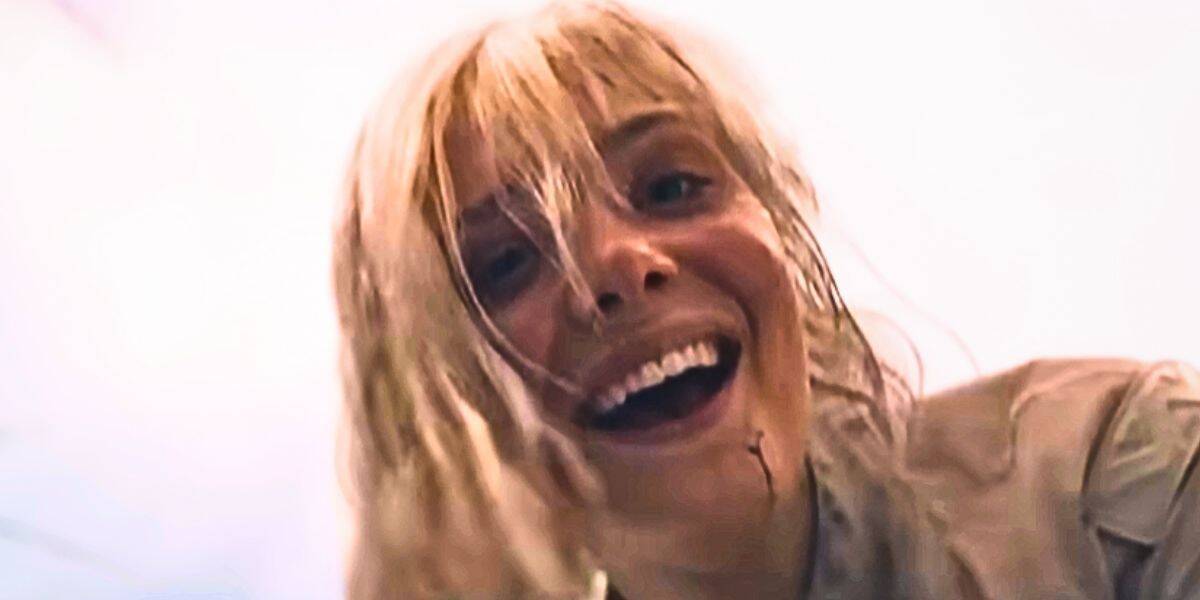
Their primary argument hinged on a plot point from the film itself: the figure being held by the Predator wasn’t a human being at all. Disney clarified that the victim was actually a “synth”—an advanced robotic android standard in the sci-fi setting of Predator: Badlands. Because the character was a machine, Disney argued the violence was effectively “bloodless” in its intent and shouldn’t be categorized with the same severity as the mutilation of a human character.
The ad also featured the ominous logline: “Welcome to a world of hurt,” which Disney felt provided enough context for the film’s gritty, sci-fi nature.
The ASA Ruling: Appearance is Everything
Ultimately, the UK’s regulatory body was not swayed by Disney’s technicality. In their final ruling, the ASA acknowledged the studio’s claim that the figure was a “synth” robot but noted that this distinction was entirely lost on the average viewer.

“Whilst we acknowledged Twentieth Century Studio’s comment that the smaller figure was not actually a human, but rather a ‘synth’ robot, we considered that was not clear from the ad, and that the figure was likely to be interpreted as a human,” the ASA stated.
From the perspective of a child—or even an unsuspecting adult—the ad appeared to show a monster holding the mangled remains of a person. The ASA dubbed the ad “inappropriate and disturbing” for a general audience, particularly children who might happen across the digital poster in a shopping mall or on the street.
Disney has since acknowledged the ruling, with a representative stating: “We acknowledge the ASA’s ruling. We take our responsibilities to audiences very seriously and strive to work closely with partners to meet the required standards.”
What Makes Predator: Badlands Different?
This marketing mishap is a rare blemish on what has otherwise been an exciting new chapter for the franchise. Predator: Badlands marks a significant departure from every previous entry in the series. Directed by Dan Trachtenberg, the filmmaker who “saved” the franchise with the 2022 hit Prey, Badlands is the first film to feature a Yautja (the Predator) as the central protagonist.

Instead of following a group of humans being hunted, the film focuses on “Dek,” a Predator on a desolate planet who must navigate a dangerous world of advanced technology and rival factions. The film stars Elle Fanning in a dual role, playing sisters Thia and Tessa, who find themselves caught in the hunter’s path.
The decision to make the Predator the “hero” (or at least the POV character) was a bold move that paid off with critics and fans alike. Despite the ad ban, the film enjoyed a modest box office run, grossing $184.5 million worldwide against a $105 million budget. While not a massive blockbuster by Disney standards, it was a profitable success that proved there is still an enormous appetite for R-rated sci-fi horror.
The Future of the Franchise on Disney+
The ad ban hasn’t slowed down the film’s momentum for long. Predator: Badlands is officially set to make its streaming debut on Disney+ (and Hulu in the US) on February 12, 2026.

This streaming release is highly anticipated, as it brings the latest entry to the platform where Prey became a record-breaking hit. Fans who missed the film in theaters will finally get to see the “synth-ripping” action for themselves—this time behind the safety of a parental control lock.
Director Dan Trachtenberg isn’t stopping with Badlands, either. He recently confirmed that he is working on multiple projects within the Predator universe, including an animated anthology titled Predator: Killer of Killers. Trachtenberg has expressed a deep love for the lore, stating in recent interviews that “anything is on the table” for the Yautja’s future.
A Lesson in Horror Marketing
The banning of the Predator: Badlands ad serves as a potent reminder of the tightrope walk required when marketing R-rated content in a PG world. As Disney continues to integrate “mature” brands like Predator, Alien, and Deadpool into its family-friendly ecosystem, these cultural and regulatory clashes are likely to continue.

For fans, the “banned” ad has only added to the film’s gritty mystique. While the “synth” robot might have looked too much like a human for the UK’s comfort, the controversy highlights exactly why people love the Predator series: it is uncompromising, visceral, and—as the ad promised—a “world of hurt.”
As the film prepares to land on Disney+ this February, parents can rest easy knowing the graphic imagery will stay on the screen and off the streets. But for the rest of us, the hunt is just getting started.
Are you excited to watch Predator: Badlands on Disney+? Did the ad go too far, or was it just a misunderstanding of sci-fi robots? Let us know in the comments below!