Credit: Inside the Magic
There are few moments in Disneyland attractions as perfectly executed as the collapsing bridge sequence in Indiana Jones Adventure: Temple of the Forbidden Eye.
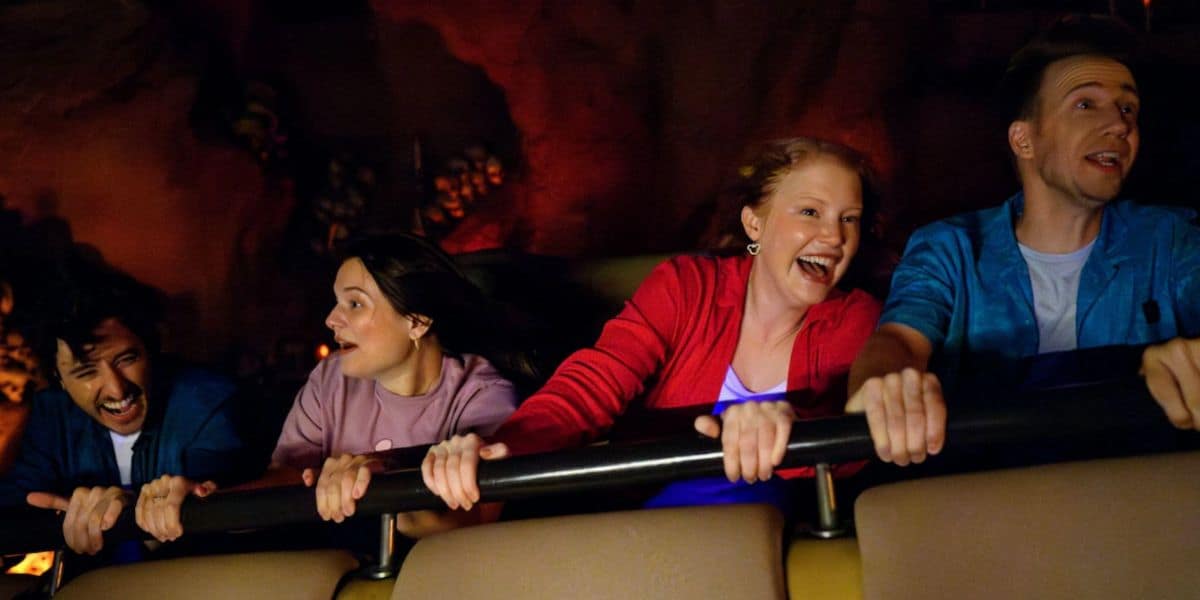
Your vehicle rolls onto what appears to be an ancient rope bridge suspended over a chasm, pauses dramatically in front of the massive stone face of Mara, and then the entire structure seems to give way beneath you as ropes drop and the vehicle bounces, creating the visceral sensation that you’re about to plunge into darkness before the jeep roars back to life and speeds away from danger.
It’s a masterclass in practical effects and psychological manipulation, using vehicle hydraulics and dropping rope elements to sell an illusion that feels completely real in the moment. Except for several years, that illusion didn’t work at all because the effect was broken or inactive, leaving guests to experience a significantly diminished version of one of the ride’s signature moments.
The ropes stayed static, the dramatic pause felt awkward without payoff, and longtime fans mourned the loss of an effect that had defined the attraction since its 1995 opening.
Now, after years of being dormant, the collapsing bridge effect has returned to full functionality, confirmed working as of Monday, January 26th, giving guests once again that heart-stopping moment where it genuinely feels like the bridge might collapse and send everyone tumbling into the abyss below.
How the Bridge Effect Actually Works

The genius of the collapsing bridge effect lies in its simplicity and the way multiple elements combine to create a convincing illusion. The bridge structure itself doesn’t actually move at all. It’s a stationary set piece that remains firmly in place throughout the entire sequence. What creates the sensation of collapse comes from two key components working in perfect synchronization.
First, the ride vehicle’s hydraulic system causes the jeep to bounce and shift as if the surface beneath it is giving way. These movements feel organic and unpredictable, mimicking exactly what you’d experience if a rope bridge actually started to fail under your weight. The hydraulics can create subtle shifts and more dramatic drops, all carefully choreographed to match the visual cues guests are seeing.
Second, the rope elements on both sides of the bridge physically drop during the sequence. These ropes form the visual framework that sells the bridge concept, and watching them suddenly fall away while you’re sitting in a bouncing vehicle creates the psychological trigger that makes your brain believe the entire structure is collapsing.
The combination of feeling movement beneath you while seeing the support structure fail triggers that primal fear response that makes the effect so effective.
For several years, the rope dropping mechanism wasn’t functioning. The vehicle would still pause on the bridge, and the hydraulics might create some movement, but without the ropes falling, the effect lost most of its impact. Guests familiar with how the ride should work noticed the absence immediately, while first-time riders experienced a version of the attraction that didn’t deliver the dramatic moment the Imagineers originally designed.
Indiana Jones Adventure’s Ongoing Maintenance Challenges
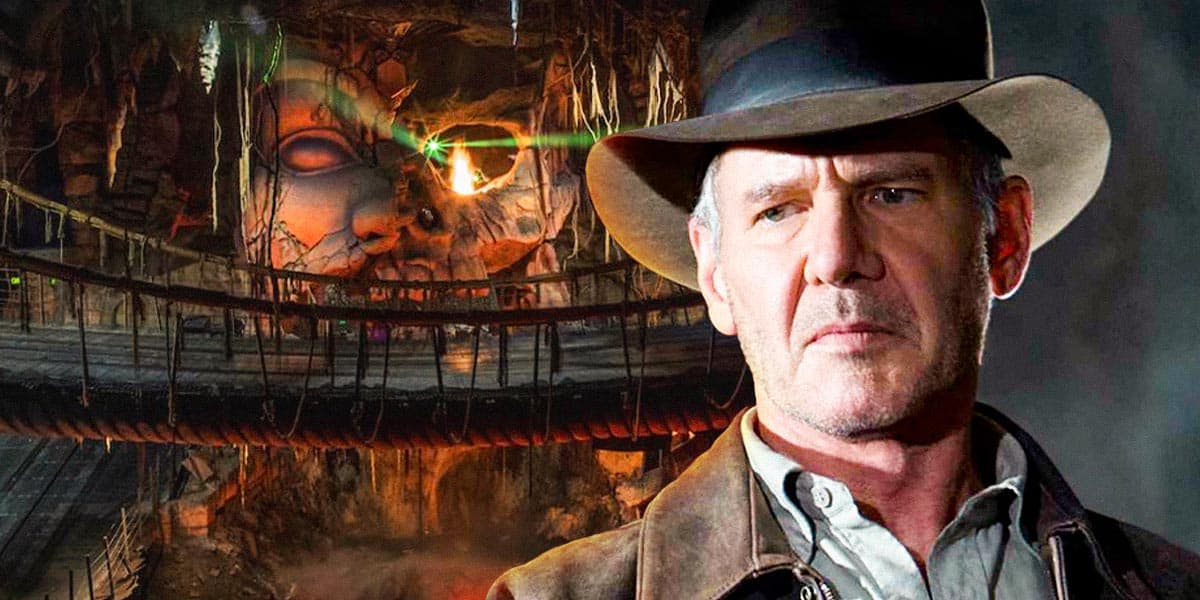
Temple of the Forbidden Eye has earned a reputation as one of Disneyland’s most maintenance-intensive attractions. The ride closes for refurbishment frequently, sometimes for brief periods lasting only a few days and sometimes for extended stretches spanning months. These closures reflect the complexity of the attraction’s numerous practical effects, animatronics, and mechanical systems that must work in precise coordination to deliver the full experience.
The attraction opened in 1995 as a groundbreaking achievement in theme park technology, featuring elaborate practical effects, sophisticated animatronics, and an enhanced motion vehicle system that was revolutionary for its time. Nearly 30 years later, maintaining all these systems requires constant attention and periodic replacement of components that have exceeded their original operational lifespan.
Not every effect that breaks gets restored. Some effects have been permanently abandoned over the years and replaced with projection-based alternatives that are easier to maintain. While projections can effectively convey certain story elements, they lack the physical impact and presence of the practical effects they replace. Longtime fans often lament these changes as the ride gradually shifts from its original heavily practical design toward more projection-based solutions.
A major 2023 refurbishment addressed several long-dormant effects and introduced a new scene, demonstrating Disney’s continued investment in the attraction despite its maintenance challenges. The restoration of the bridge effect in 2026 suggests Disney recognizes the importance of these signature practical moments that define what makes Indiana Jones Adventure special.
The Original Disneyland Version
Indiana Jones Adventure: Temple of the Forbidden Eye opened at Disneyland Park in 1995, instantly becoming one of the park’s most popular attractions. The ride sends guests on an archaeological expedition gone wrong as they explore an ancient temple dedicated to the deity Mara. The attraction perfectly captures the spirit of the Indiana Jones films, blending adventure, danger, humor, and that sense of exploring somewhere humans probably shouldn’t be.
The queue alone sets standards that influenced theme park design for years afterward. Guests wind through elaborately detailed temple passages filled with ancient artifacts, warning signs, and environmental storytelling that builds anticipation before ever boarding the ride vehicle.
The attention to detail throughout the attraction, from the queue through every scene of the ride itself, creates an immersive experience that holds up remarkably well decades after opening.
The ride’s story involves choosing between three paths representing different supernatural gifts from Mara, though guests quickly discover they should have heeded the warnings not to look into Mara’s eyes. What follows involves escaping the temple as it collapses around you, encountering various traps and dangers along the way, with the collapsing bridge representing one of the most memorable moments in that escape sequence.
Tokyo’s Crystal Skull Version
Tokyo DisneySea opened in 2001 with its own version of the Indiana Jones Adventure attraction, subtitled Temple of the Crystal Skull. The ride uses nearly identical ride vehicles and track layout as the Disneyland version but tells a different story set in Mexico rather than India.
This version explores themes connected to crystal skulls rather than the eye of Mara, though the basic structure of an archaeological expedition encountering supernatural dangers remains consistent.
The existence of the Tokyo version demonstrates both the popularity of the original Disneyland attraction and Disney’s willingness to adapt successful concepts for different markets with culturally appropriate modifications. Tokyo DisneySea’s reputation for immaculate maintenance and operational excellence means the Crystal Skull version likely experiences fewer of the extended effect breakdowns that plague the California original.
Coming to Disney World: The Animal Kingdom Version
DINOSAUR at Disney’s Animal Kingdom closes permanently next month to undergo transformation into a third Indiana Jones Adventure attraction. This conversion makes sense from multiple perspectives.
DINOSAUR uses the same Enhanced Motion Vehicle ride system as Indiana Jones Adventure and features an almost identical track layout, meaning the basic ride infrastructure already exists and simply needs rethemed rather than completely rebuilt.
The new version will feature its own unique storyline set in a Mayan temple, fitting thematically with the Tropical Americas land that will replace DinoLand U.S.A. According to the story details revealed so far, Indiana Jones ventures into the temple after hearing stories of a mythical creature.
Construction walls in DinoLand feature bat-like creatures that appear to reference Camazotz, spirits from Maya mythology, suggesting the mythical creature driving the story may have connections to these legendary beings.
While the Disney World version will share the basic ride system and general structure with the existing Indy rides, the unique storyline and Mayan temple setting should differentiate it enough to feel like a distinct experience rather than a direct clone of the Disneyland or Tokyo attractions.
The question remains whether Disney will incorporate signature effects like the collapsing bridge into the new version or create entirely new moments specific to the Mayan temple narrative.
Why Practical Effects Still Matter
The return of the bridge effect after years of being dormant highlights why practical effects remain important even as theme parks increasingly rely on screens and projections. There’s something visceral about feeling a vehicle move beneath you while watching physical elements of the environment respond that screens simply cannot replicate.
The psychological impact of seeing ropes actually fall while feeling your vehicle bounce creates a more convincing and memorable experience than any digital effect could achieve.
Maintaining these practical effects requires more resources and creates more operational challenges than projection-based alternatives. Components wear out, mechanisms need adjustment, effects break and require repair. But the payoff in guest experience justifies the investment for attractions that built their reputations on pushing the boundaries of what practical effects could accomplish.
Indiana Jones Adventure represents a specific era of Imagineering that prioritized elaborate practical effects and physical environments over digital solutions. As these attractions age, the temptation to replace complex practical effects with simpler projection alternatives grows stronger. Each restored effect like the bridge sequence represents a commitment to maintaining what made these attractions special in the first place.
If you’ve ridden Indiana Jones Adventure recently, did you notice the bridge effect working again? For those planning Disneyland trips, this is definitely one of those moments worth paying attention to now that it’s back in action. Drop a comment and let us know your favorite practical effect on the ride, or whether you think Disney should keep investing in maintaining these complex systems versus updating to more modern technology.