12
12
 Credit: Disney
For decades, the “Disney Vault” was a clever marketing ploy—a way to create artificial scarcity for classics like Cinderella or The Lion King. But in 2026, the vault has taken on a more literal and somber meaning. While nearly the entire library of The Walt Disney Company is available at the click of a button on Disney+, one Academy Award-winning film remains conspicuously absent.

Despite a surging demand from film historians, physical media collectors, and a vocal segment of the public, Disney CEO Bob Iger has reportedly doubled down on the decision to keep the 1946 film Song of the South buried. As social media debates reach a fever pitch, the battle over this controversial relic has become a flashpoint for the broader conversation regarding corporate censorship, cultural sensitivity, and the preservation of cinema history.
The Tweet That Set the Fandom Ablaze
The conversation was reignited this week following a viral post from SplashMHS, a prominent voice in the Disney theme park and history community. The tweet suggests that despite internal discussions regarding a “curated” or “contextualized” release for the film’s 80th anniversary in late 2026, Bob Iger has personally intervened to ensure the film remains inaccessible to the general public.
The reaction was instantaneous. On one side, proponents of film preservation argue that “erasing” history is a dangerous precedent. On the other hand, the vast majority of cultural critics and the Disney leadership team view the film as a radioactive brand liability that contradicts the company’s modern “Inclusion” initiatives.
The Background: Why is Song of the South Radioactive?
To understand why Bob Iger is so adamant about keeping the film under wraps, one must look at the deep-seated controversy that has followed the movie since its premiere. According to Disney Fanatic, Song of the South is a live-action/animated hybrid based on Joel Chandler Harris’s Uncle Remus stories.
Set during the Reconstruction era in the Southern United States, the film follows a young boy named Johnny who visits his grandmother’s plantation. There, he befriends Uncle Remus, an elderly Black worker who tells him fables about Br’er Rabbit, Br’er Fox, and Br’er Bear. While the animated segments—featuring the Oscar-winning song “Zip-A-Dee-Doo-Dah”—are masterpieces of mid-century animation, the live-action framing has long been condemned for its “pastoral” and “romanticized” depiction of the post-Civil War South.
The film paints a world where Black workers live in blissful harmony with their former masters, seemingly unaffected by the systemic horrors of slavery or the burgeoning Jim Crow laws of that era. Critics argue the film perpetuates the “Happy Slave” trope and utilizes racial caricatures that, while common in 1940s Hollywood, are deeply offensive in a modern context.
Bob Iger: The Brand Protector
Bob Iger has never been shy about his distaste for the film. During a 2020 shareholders’ meeting, Iger was asked whether the film would ever be released on Disney+. His response was unequivocal: “I’ve felt, as long as I’ve been CEO, that Song of the South was—even with a disclaimer—just not appropriate in today’s world.”

In 2026, Iger’s stance appears even more rigid. As Disney continues to navigate a complex political landscape, the CEO’s primary objective is brand safety. Releasing Song of the South, even as an archival curiosity, would likely trigger a massive PR firestorm that would overshadow Disney’s current successes.
For Iger, the risk-to-reward ratio simply doesn’t add up. While a small segment of fans might pay for a “Legacy Collection” Blu-ray, the potential for viral clips of the film to be taken out of context on social media poses a threat to Disney’s family-friendly image that Iger isn’t willing to entertain.
The “Bayou” Connection: Distancing the Parks
The refusal to release the film is intrinsically tied to the recent transformation of Disney’s theme parks. For thirty years, Song of the South lived on in the public consciousness through Splash Mountain. The ride, which used the film’s characters and music without mentioning the plantation setting, was one of the most popular attractions in the history of Magic Kingdom and Disneyland.

However, in a move to distance itself from the film’s legacy, Disney shuttered the ride in 2023 and 2024, replacing it with Tiana’s Bayou Adventure. This new attraction, themed after The Princess and the Frog, serves as a symbolic replacement of the Uncle Remus era with a modern, empowering story of a Black female entrepreneur.
By keeping the film locked away, Iger is ensuring that the source material for the “old” ride slowly fades from memory, allowing the Tiana brand to take center stage without the “baggage” of the 1946 film.
The Counter-Argument: History vs. Harassment
Despite the valid criticisms of the film, a counter-movement has grown online. Many film historians point to the work of James Baskett, who played Uncle Remus and was the first Black man to receive an Academy Award (an Honorary Award for his performance). They argue that by burying the film, Disney is also burying Baskett’s historic achievement and his nuanced, warm performance that broke barriers at the time.

Others point to the “Warner Bros. Strategy.” When Warner Bros. releases older cartoons containing racial stereotypes (such as Looney Tunes), they often include a disclaimer voiced by Whoopi Goldberg. The disclaimer explains that the cartoons are a product of their time, and while they are wrong, “to pretend they never existed would be the same as claiming these prejudices never existed.”
The public demand mentioned in recent tweets often cites this approach. Fans ask: Why can’t Disney treat its audience like adults? Why not release the film with a mandatory documentary prologue explaining the historical context and the failures of the Reconstruction era?
The 2026 Reality: Digital Erasure
As we move further into the digital-only era of media, the Song of the South controversy highlights a growing fear regarding “digital erasure.” If a company like Disney decides a piece of art is no longer profitable or socially acceptable, it has the power to make it disappear from the face of the Earth, essentially.
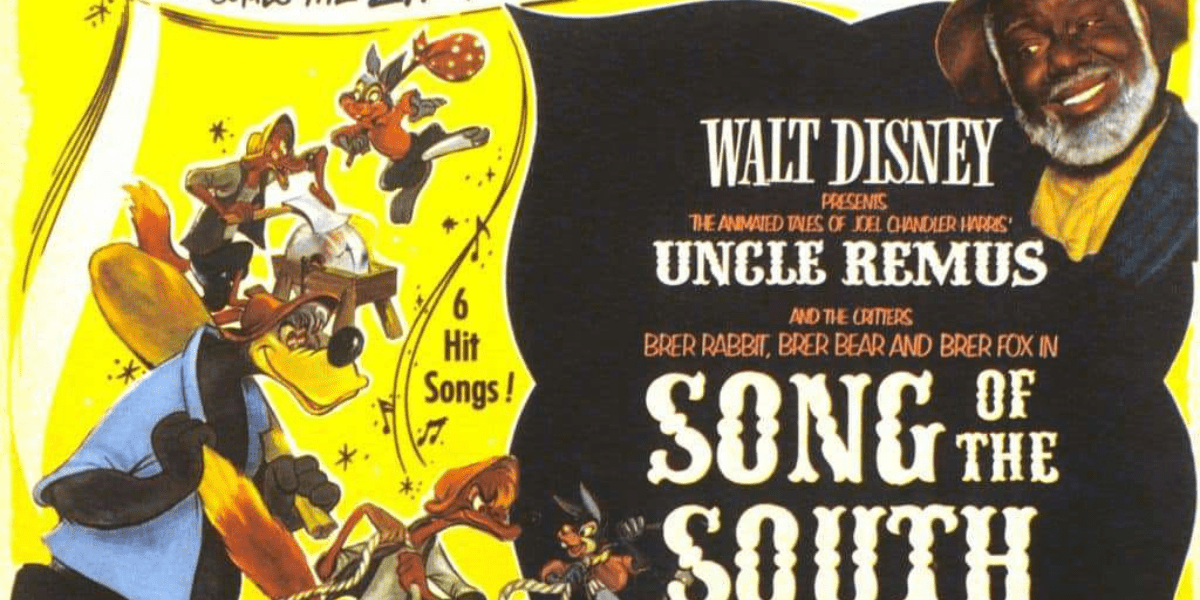
With physical DVDs of the film becoming rare and expensive black-market items, the film is effectively becoming a “lost” movie. For Bob Iger, this seems to be the preferred outcome. The goal is for Song of the South to become a footnote in a Wikipedia article rather than a film that people can actually watch and critique.
Conclusion: The Door Remains Shut
As the viral tweet from SplashMHS suggests, the “Disney Vault” is no longer a revolving door. For Song of the South, the door is bolted shut from the inside by a CEO who views the past as a potential threat to the future.

While the public demand for the film—whether driven by nostalgia, curiosity, or a passion for film history—is louder than ever, Bob Iger’s Disney is focused on a different song. As Tiana’s Bayou Adventure brings new life to the parks, the “Zip-A-Dee-Doo-Dah” era is being systematically dismantled.
For those hoping to see Uncle Remus and Br’er Rabbit return to the screen, the message from the 2026 proxy statements and internal memos is clear: Some things are better left forgotten, at least according to the man at the helm of the Mouse House.