 Credit: 20th Century Fox
Following the streaming success of Rick Riordan’s Percy Jackson and the Olympians on Disney+, The Walt Disney Company is exploring another opportunity to bring the timeless pantheon of ancient Greece to the screen. In an ambitious move into mythological storytelling, Disney is developing an original live-action feature film about Medusa.
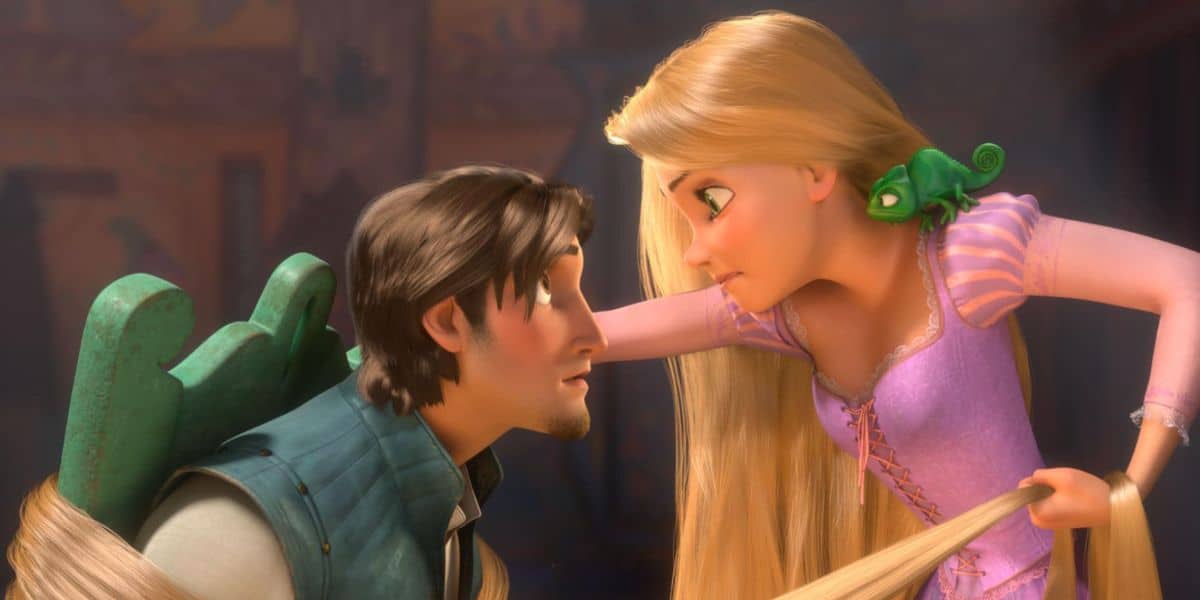
The project pairs major Hollywood talent behind the camera. According to Deadline, Disney has tapped screenwriter Michael Montemayor—who recently penned the script for the studio’s upcoming live-action reimagining of Tangled—to write the first draft. Producing the film is Dwayne “The Rock” Johnson alongside his Seven Bucks Productions partners Dany Garcia and Hiram Garcia, teaming up with producer Matt Smith through Electro Corduroy Entertainment.
While official plot details remain tightly sealed under Mount Olympus lock and key, the project represents another opportunity for Disney to explore the rich, complex, and sometimes terrifying tapestry of classical Greek lore. With a notable production team attached and one of mythology’s most recognizable figures at its center, the film has the potential to offer a fresh interpretation of a story that has captivated audiences for centuries.
The Percy Jackson Connection: Greek Mythology Returns to Disney
To understand why Disney’s new Medusa project is attracting attention, one need only examine the recent success of Percy Jackson and the Olympians.

When Disney+ debuted the serialized adaptation of Riordan’s bestselling novels, the series quickly established itself as one of the platform’s notable original releases. Its premiere generated 13.3 million global views across Disney+ and Hulu during its first six days, making it Disney Branded Television’s biggest-ever series premiere at the time.
The series demonstrated that there is an audience for contemporary interpretations of mythological legends, particularly when they combine recognizable ancient stories with modern characters and family-friendly adventure. Its appeal spans younger viewers, nostalgic readers who grew up with Riordan’s books, and families looking for fantasy programming.

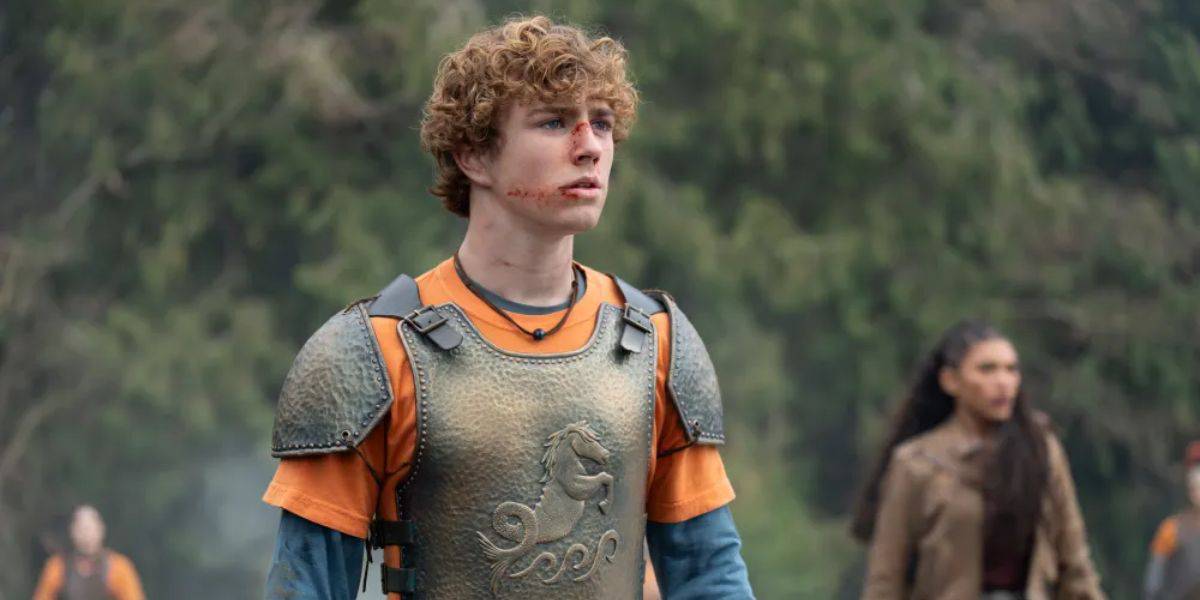
For years, Hollywood has approached Greek mythology through a variety of styles, from the fantasy adventure of Clash of the Titans to the brutal action of 300. However, Percy Jackson offered a different perspective on these legends, exploring the complicated family dynamics of the Olympian gods, the consequences of hubris, and the human collateral damage caught in divine crossfire.
Disney has not confirmed that the success of Percy Jackson directly inspired the Medusa film. Nevertheless, the two projects represent separate opportunities for the company to explore the enduring appeal of Greek mythology. While Percy Jackson approaches these stories through the eyes of teenage demigods, a standalone Medusa feature could explore one of the most recognizable figures in mythology from an entirely different perspective.
Transforming a Monster: Why Medusa Demands a Modern Lens
Historically depicted in classical art and pop culture as a villainous, snake-haired monster whose petrifying gaze turns wandering warriors to stone, Medusa’s mythology is considerably more complicated than the familiar image suggests.

There is no single definitive version of Medusa’s origin story. In earlier Greek traditions, she is already a Gorgon, one of three sisters born to the primordial sea deities Phorcys and Ceto. Her sisters, Stheno and Euryale, are also Gorgons, although Medusa is the only one traditionally described as mortal.
One of the most influential alternative interpretations comes from the Roman poet Ovid’s Metamorphoses. In that account, Medusa was once a beautiful mortal whose hair attracted particular attention. After Neptune, the Roman counterpart of the Greek god Poseidon, assaulted her in Minerva’s sacred temple, the goddess punished Medusa by transforming her hair into snakes and giving her a gaze capable of turning living creatures to stone.

The story presents a deeply troubling imbalance of divine power and punishment. Rather than focusing exclusively on Medusa as a monster, Ovid’s retelling offers a tragic interpretation of a woman whose fate is shaped by the actions of powerful gods.
Modern literary retellings and cultural reinterpretations have further transformed Medusa from a mere monster-of-the-week into a potent symbol of feminine power, survival, divine injustice, and tragic defiance.

By bringing Michael Montemayor on board—a writer who is also working on Disney’s live-action Tangled adaptation—the studio has an opportunity to explore a fresh interpretation of the character. Rather than framing Medusa purely through the eyes of the male hero Perseus, the film could offer an empathetic, character-driven story exploring autonomy, retribution, and divine betrayal.
That is speculation, however. The filmmakers have not revealed the story they intend to tell, and it remains unclear whether the movie will follow Ovid’s interpretation, draw from earlier Greek traditions, or introduce an entirely original version of the Gorgon.
The Rock & Seven Bucks: Disney’s Go-To Production Partners
The involvement of Dwayne Johnson’s Seven Bucks Productions gives the project a significant Hollywood production team, particularly given the company’s previous collaborations with Disney.

Disney and Seven Bucks have cultivated a working relationship through several major productions:
- Jungle Cruise (2021): Johnson starred in and produced the live-action adventure based on the classic Disney Parks attraction. The film earned approximately $221 million worldwide during the pandemic-era theatrical recovery. Although a sequel was previously in development, Johnson and Emily Blunt indicated in 2025 that Jungle Cruise 2 was unlikely to move forward.
- Moana Franchise: Seven Bucks has been instrumental in expanding the Polynesian cultural phenomenon. Johnson reprised his voice role as Maui in the animated franchise and also produced the live-action Moana theatrical adaptation, which was released in July 2026.
- Production Scale: Beyond Disney, Seven Bucks has developed a reputation for producing large-scale entertainment projects with global appeal, including Sony Pictures’ revived Jumanji franchise and other action-oriented productions.

While Johnson’s role in Medusa is currently confirmed as a producer alongside Dany and Hiram Garcia, there is no indication that the Hollywood megastar will appear on screen.
That has not stopped speculation about what kind of casting could accompany a project centered on Greek mythology. An appearance by Johnson as an imposing Olympian deity—such as Poseidon or Zeus—would certainly be an interesting possibility. However, there is no evidence that Disney is considering him for either role, and his involvement should currently be understood as a producing commitment rather than an acting announcement.
Technical Magic: Bringing the Gorgon to Life
From a visual-effects standpoint, translating Medusa into modern live action presents one of the most exciting creative challenges the film could face.

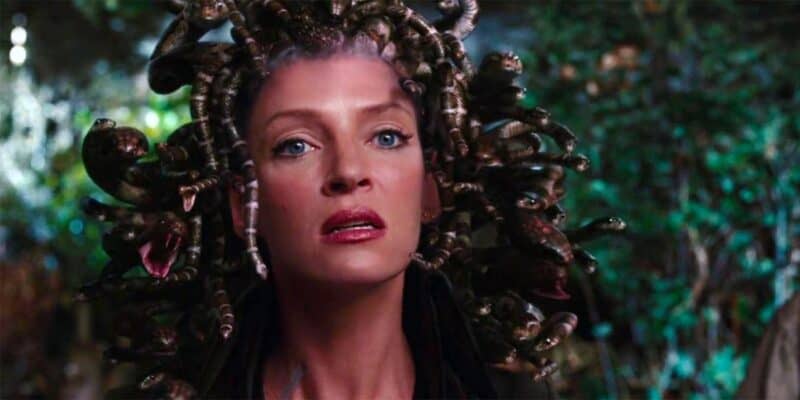
Past cinematic depictions—from Ray Harryhausen’s legendary stop-motion animation in the 1981 classic Clash of the Titans to Uma Thurman’s portrayal of Medusa in 2010’s Percy Jackson & the Olympians: The Lightning Thief—have captured the public imagination. Modern visual-effects technology, practical animatronics, and advanced digital hair-and-fluid simulation could allow filmmakers to approach the character in entirely new ways.

Audiences could eventually see a seamless fusion of practical prosthetic artistry and cutting-edge CGI. Creating a living, expressive crown of venomous serpents that react dynamically to the character’s emotional state—hissing in anger, recoiling in grief, or coiling protectively—could establish a memorable visual identity for the film.
Of course, Disney has not revealed its visual-effects plans, production partners, or design approach. Whether the filmmakers favor practical creature effects, digital animation, or a combination of both remains to be seen.
What’s Next on Disney’s Mythological Horizon?
The development of Medusa arrives amid an industry-wide reassessment of studio intellectual property. With superhero fatigue dominating box-office headlines, Hollywood continues to search for universal stories with built-in global recognition that don’t require audiences to follow decades of interconnected comic-book continuity.
Greek mythology offers an especially appealing foundation for filmmakers. The ancient stories are in the public domain, allowing studios to draw from characters and narratives that have endured for thousands of years without acquiring rights to the original myths.
Individual modern adaptations, translations, and creative interpretations can still carry their own copyright protections, but the underlying mythology provides an enormous library of storytelling possibilities.
If Medusa eventually reaches audiences and proves successful, it could demonstrate the potential for additional standalone mythological films. Stories centered on figures like Icarus, Atalanta, Hades and Persephone, or Achilles could offer similarly compelling opportunities for cinematic reinterpretation.

For now, however, there is no indication that Disney is developing an interconnected Greek mythology cinematic universe. The Medusa project remains in its early stages, with casting notices, a director, production dates, and a release window yet to be revealed.
The creative ingredients behind Medusa are nevertheless noteworthy. By combining the writer of Disney’s upcoming live-action Tangled adaptation with the production experience of Dwayne Johnson’s Seven Bucks Productions, the studio has assembled a team capable of bringing a distinctive mythological story to the screen.
Whether the resulting film becomes a theatrical spectacle, a character-driven reimagining, or something entirely unexpected remains to be seen. For now, Disney is preparing to turn Hollywood’s eyes to stone once again.