 Credit: Disney
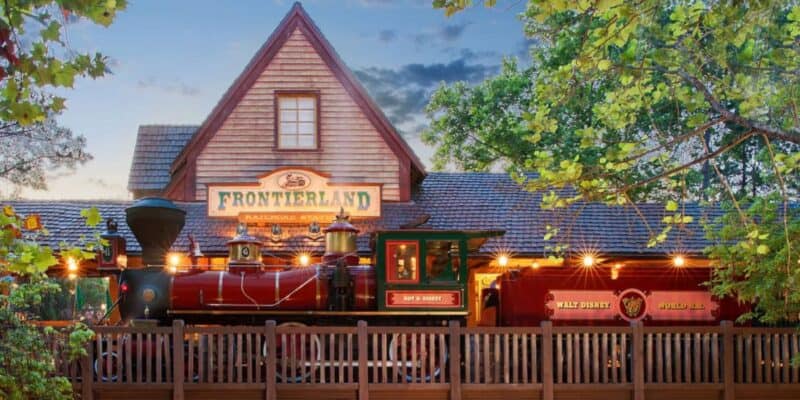
For generations, walking into Frontierland at Walt Disney World’s Magic Kingdom meant stepping back in time to a very specific, cohesive era. It was the “Old West” in its purest theme park form—a rustic, rugged landscape of cowboys, riverboats, and untamed wilderness. However, with the Rivers of America and Tom Sawyer Island having been closed for more than a year now, a new era is rapidly revving its engines.
The arrival of Piston Peak National Park, the highly anticipated Cars-themed land, marks a monumental shift for the park. As the construction walls dominate the landscape and the area transforms, a glaring question emerges: Is the traditional, unified concept of Frontierland gone for good?
The short answer seems to be yes. What was once a seamless transition through the American frontier has evolved into a geographic and temporal mishmash. If you take a stroll through the western side of Magic Kingdom today, you are no longer journeying through a single, cohesive timeline of the Old West. Instead, you are traversing an incredibly diverse and somewhat disjointed map of North America.
A Geographical and Temporal Mishmash
Consider the current layout of this side of the park. Within a short walking distance, guests find themselves wandering through a vibrant New Orleans setting, thanks to Tiana’s Bayou Adventure, which has now been open for over two years. Just a stone’s throw away is the spooky, gothic charm perfectly encapsulated by the Haunted Mansion.
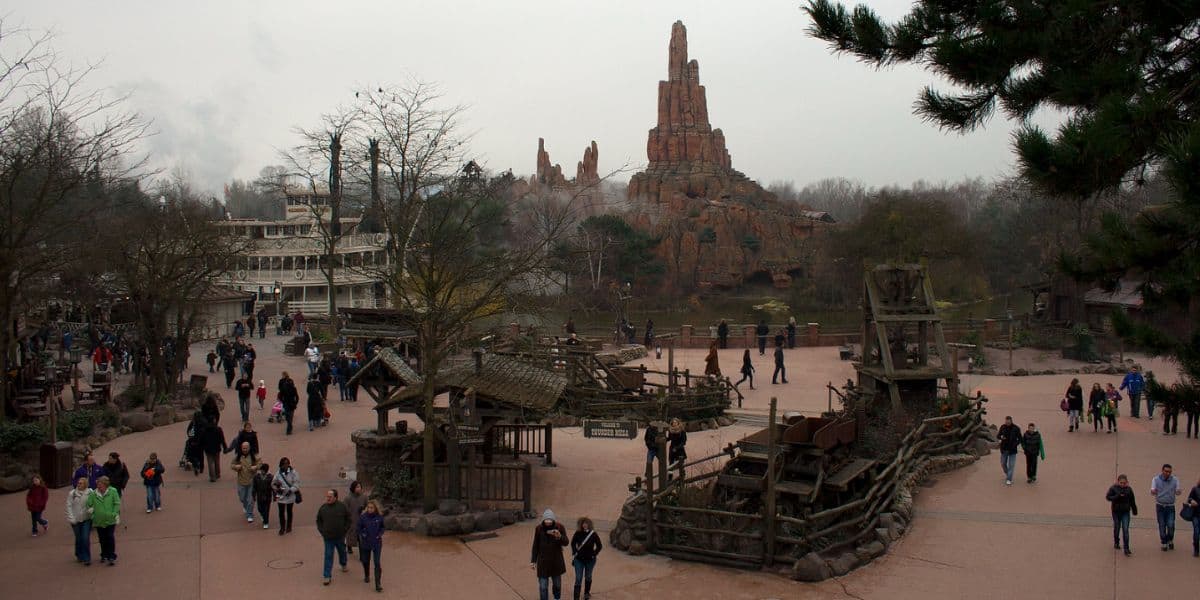
Next door sits Colonial America, preserved in the brickwork and revolutionary spirit of Liberty Square. Looming in the distance are the arid, red-rock mesas of Arizona, represented by the wildest ride in the wilderness, Big Thunder Mountain Railroad. Wedged in between these distinct regions is the classic American West—or at least, what remains of the original Frontierland aesthetic.
Now, Disney is introducing Piston Peak National Park into this already complex tapestry. Inspired by the Cars cinematic universe and drawing heavily from the breathtaking landscapes of America’s National Parks, Piston Peak promises stunning “parkitecture,” towering pine trees, and thrilling rally races. But how does a land populated by sentient, anthropomorphic vehicles mesh with 18th-century colonial patriots, a 1920s New Orleans salt dome, and a 19th-century haunted estate?
The Imagineering Challenge: Being a “Good Neighbor”
On paper, finding any sort of thematic cohesion seems impossible. The aesthetic jump from the historical realism of Liberty Square to a cartoon-inspired national park where cars rule the world is a massive leap. Walt Disney Imagineering is acutely aware of this challenge. They are tasked not only with building an incredible new attraction but also with ensuring that the visual transitions between these wildly different zones don’t completely shatter the Magic Kingdom’s immersive illusion.

Walt Disney World Executive Creative Director Jason Grandt addressed this exact conundrum when discussing the placement of the new expansion. Acknowledging the delicate balance required to integrate Piston Peak, Grandt noted:
“If we’re going to build in the middle of this What is a place that can touch the visual look of all of these places…? That same Frontierland story is still there…Liberty Square is still there, but we want to make sure we can be a good neighbor to these places as we start to design and invent this new environment.”
Being a “good neighbor” in theme park design comes down to sightlines, soundscapes, and clever geographical transitions. Imagineers have gone to great lengths to ensure that the towering peaks of Piston Peak do not intrude on the historical sobriety of Liberty Square.
To achieve this, the mountain range facing the colonial area has been designed to look softer, acting as a lush, natural mound rather than an aggressive, jagged peak. A cascading waterfall down its side will provide kinetic energy and natural white noise, deliberately placed to block the sight of cartoon cars zooming around and to muffle the sounds of revving engines from reaching guests enjoying a quiet moment near the former entrance to the Liberty Square Riverboat.
Inside Piston Peak National Park: A Breathtaking New Vision
While the transitions are handled with meticulous care, the interior of Piston Peak National Park is unabashedly a departure from the old Frontierland. Massive models of the new land reveal an intricate, sprawling environment that trades the muddy banks of the historic rivers for a rushing mountain waterway. Water remains an integral part of the landscape, paying homage to the aquatic features it replaces. Imagineers have promised an abundance of waterfalls and cascading streams, ensuring the area feels alive and kinetic rather than like a paved-over parking lot.
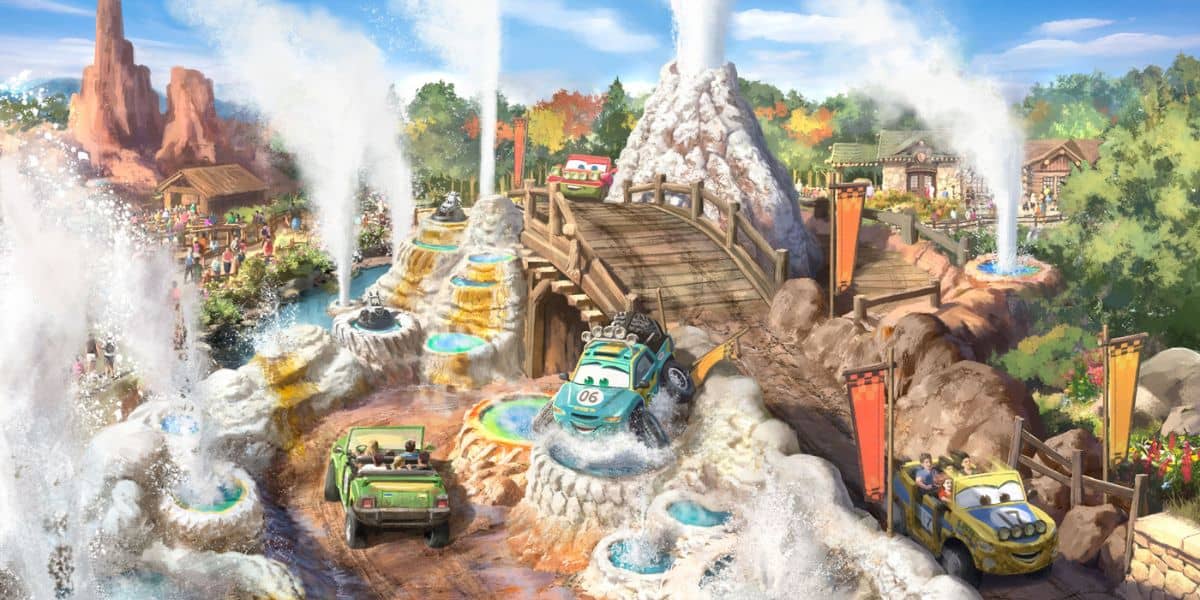
The attention to detail within Piston Peak is staggering, even if it feels worlds away from traditional cowboys and pioneers. The land will feature unique geological formations, including newly expanded geyser areas that visually tie into the nearby Big Thunder Mountain Railroad.
Guests will stroll past rainbow pools featuring subtle tire tread patterns naturally woven into the rockwork, leading up to the land’s centerpiece geyser, affectionately dubbed “Old Tankful” (a clever nod to the famous natural geysers found in America’s National Parks). The introduction of details such as Ranger J. Autobahn Woodlore further cements the area’s distinct, whimsical tone. It is a stunning display of Imagineering prowess, blending the natural beauty of the great outdoors with the playful architecture of the Pixar universe.
Trading Nostalgia for Modern Thrills
Yet despite the undeniable beauty and the thrilling prospect of new high-speed attractions, longtime fans are left grappling with the loss of thematic purity. The original Magic Kingdom lands were designed as distinct chapters in an overarching story of Americana and fantasy. Frontierland was the chapter dedicated to westward expansion and the pioneering spirit. By replacing the Rivers of America—a symbol of the untamed frontier—with a national park populated by talking cars, the narrative focus has irreparably shifted.
The defense, as Grandt suggested, is that the core story remains that the American Wilderness is vast. Piston Peak represents the early 20th-century conservation movement and the rise of the great American road trip. It is, in a way, the natural chronological progression of the frontier. The pioneers of Big Thunder Mountain eventually gave way to the automobiles of Piston Peak.
But for guests walking the pathways of Magic Kingdom, this intellectual justification may be hard to reconcile with the physical reality of seeing New Orleans, colonial brickwork, haunted estates, Arizona mesas, and a Pixar-themed national park all colliding in the span of a ten-minute walk.
Ultimately, the disappearance of the cohesive “Old West” in favor of Piston Peak reflects modern theme park design. Today’s audiences crave recognizable intellectual properties, high-octane thrills, and visually stunning environments. The rustic, quiet charm of a riverboat cruising around a man-made island is being traded for the undeniable appeal of a multi-million-dollar attraction that will appeal to guests of all ages.
Piston Peak National Park is poised to be an architectural marvel and a blockbuster addition to Walt Disney World. It will undoubtedly draw massive crowds and win over many skeptics once they see the rushing waterfalls and towering pines in person. However, it will also stand as a permanent monument to the changing identity of Magic Kingdom. The cohesive Old West has ridden off into the sunset, replaced by a brave new world where traditional geography is just a suggestion, and the frontier is whatever Imagineering dreams up next.