25
25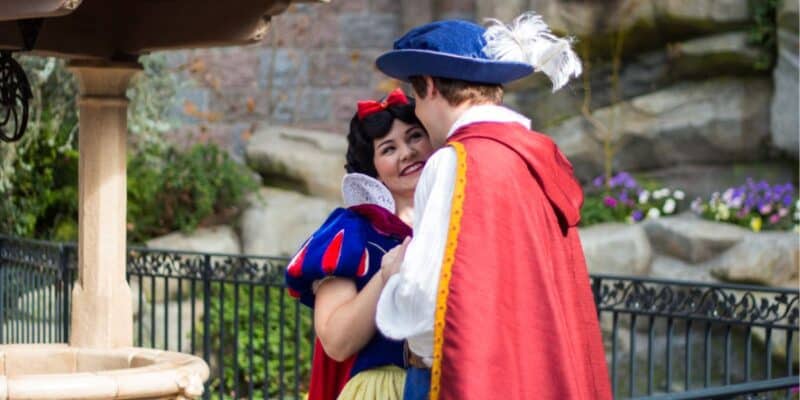
 Credit: Looseey, Flickr
Disney has spent years trying to balance the stories that built its empire with a push to make its entertainment feel more modern and progressive.
That hasn’t always gone smoothly.
Classic attractions have been rewritten or replaced, while familiar characters and story elements have been reconsidered. Critics have repeatedly labeled that approach “woke,” particularly when Disney changes something fans consider a classic.
Now, one of Disney’s oldest princesses has landed right back in that debate.
And after everything that happened with Snow White (2025), the timing certainly isn’t helping Disney’s case.
Disney’s Snow White Remake Sparked Controversy
Disney’s live-action Snow White (2025) became controversial long before audiences saw it.
The remake, starring Rachel Zegler, made significant changes to the story audiences knew from Snow White and the Seven Dwarfs (1937).
Much of the discussion centered on Snow White’s relationship with the Prince and Disney’s decision to move away from the traditional romance.
Instead, the remake gave Snow White a more independent, leadership-focused story.
That generated criticism from fans who felt Disney was trying too hard to modernize a fairy tale rather than embrace the original.
The movie ultimately struggled at the box office.
Now, some fans believe those same modern ideas have reached a classic Disney attraction.
Disneyland Paris Reopens Snow White Ride
Blanche-Neige et les Sept Nains at Disneyland Paris closed for a multi-month refurbishment before officially welcoming guests back on July 28, 2026.
One of the biggest changes came at the attraction’s finale.
Previously, guests reached the end and found physical figures of Snow White and the Prince together alongside the Seven Dwarfs.
That presentation is gone.
Disney installed a new static Snow White figure, but the physical Prince figure that previously appeared with her has been removed.
Disneyland’s Poor Attempt at Keeping the Prince Around
There is an important distinction.
The Prince hasn’t disappeared from the finale completely. Disneyland Paris added him and his horse to the painted mural behind the scene.
Disney says that the addition makes the ending more consistent with Snow White and the Seven Dwarfs (1937).
But the physical Prince character no longer stands with Snow White.
Snow White remains physically present alongside the dwarfs, while her Prince has been moved to the background of the artwork.
For fans accustomed to seeing the couple together, that is a noticeable change.
Fans See Another “Woke” Disney Change
Disney hasn’t described the removal of the physical Prince figure as political or connected it to the live-action remake.
Critics, however, see similarities.
One fan sarcastically suggested Disney wanted the attraction to resemble Snow White (2025), joking that the remake was “such a success.”
The commenter also pointed toward the remake moving away from “Someday My Prince Will Come,” sarcastically arguing that Snow White didn’t need a prince because she was now a “girl boss.”
Another fan responded, “Don’t fix it if it ain’t broke!”
“Ridiculous, but I’m not surprised, very annoying to see,” another wrote.
Someone else added, “She’s a girl boss! 🙄,” while another declared, “Paris is going downhill fast.”
Those are fan opinions, not Disney’s explanation.
Still, the criticism centers on a factual change: Disney removed the physical Prince figure from Snow White’s side.

A Painted Prince Isn’t The Same Thing
Yes, the Prince remains pictured in the mural.
But critics argue that it isn’t the same presentation guests previously encountered.
Snow White still has her own physical figure. The Seven Dwarfs remain physically represented. The Prince who previously appeared alongside them does not.
Instead, guests now see him as part of the background artwork.
Considering the controversy surrounding Snow White (2025), it isn’t difficult to understand why some fans immediately connected the two decisions.
Fans Want Classics To Remain Classics
Most Disney fans aren’t necessarily opposed to every park change.
Attractions age. Technology improves. Effects need replacing. Theme parks naturally evolve.
But many fans see a difference between improving an attraction and changing how a classic story is presented.
Some have defended the change by pointing toward darker elements in older versions of the Snow White fairy tale.
That argument doesn’t really address this attraction.
Blanche-Neige et les Sept Nains represents Disney’s Snow White and the Seven Dwarfs (1937), rather than a direct adaptation of the Brothers Grimm story.
The Prince and Snow White’s romantic ending are part of that Disney classic.
Disney Is Reopening an Old Debate
Disneyland Paris hasn’t totally erased the “romantic” ending. The mural specifically keeps the Prince around. But Disney has changed the romantic “together” ending, with the Prince by Snow White’s side.
Snow White remains a physical figure in the finale. The Prince does not. That becomes especially interesting after Disney attempted a more modern approach with Snow White (2025), which became a major theatrical disappointment.
Disney hasn’t said this decision has anything to do with a “woke” agenda, and there’s no evidence establishing that as Disney’s official motivation. But critics can still point to the change itself. The physical Prince who once stood alongside Snow White is gone.
Disney has plenty of opportunities to create new stories with new ideas. But when it revisits Snow White and the Seven Dwarfs (1937) and changes the physical presentation of its classic ending, longtime fans are going to notice.
The Prince may still be painted into the background. He just isn’t standing beside Snow White anymore.
And for some fans, that difference is a pretty big deal.