Credit: Disney
For six years, guests at Disneyland have been quietly frustrated. Even after the parks reopened and things began to return to normal, one lingering pandemic-era restriction remained, like an unwanted souvenir. If you had a Park Hopper ticket, you were unable to switch parks until 11:00 a.m. There were no exceptions or flexibility—just a hard barrier keeping you from entering Disney California Adventure or Disneyland Park until mid-morning.
Finally, that rule is gone today.
As of June 9, 2026, Disneyland Resort in California has officially removed the 11:00 a.m. park-hopping restriction. Park Hopper ticket holders and Magic Key Passholders can now move freely between Disneyland Park and Disney California Adventure at any point during the day, starting from the moment the parks open.
It is the last significant operational relic of the COVID-19 era at Disneyland, and its removal marks the end of a chapter that quietly shaped a new planning format for millions of vacations since 2021.
How the Restriction Started and Why It Lasted This Long
To understand the significance of today, it’s important to reflect on the history of the situation. When Disneyland reopened in April 2021 after more than a year of closure, the option for park hopping was not immediately available. When it was eventually reinstated, it came with a strict 1:00 p.m. lockout, meaning guests could not switch from one park to another until that afternoon’s window opened.
In February 2023, Disney eased this restriction to 11:00 a.m., which improved the situation somewhat, but still required visitors to commit their entire morning to a single park. Walt Disney World eliminated its own version of this restriction back in January 2024 to make the Orlando parks more enjoyable and easier to navigate. Now, two and a half years later, Disneyland is finally catching up.
What Changes Today
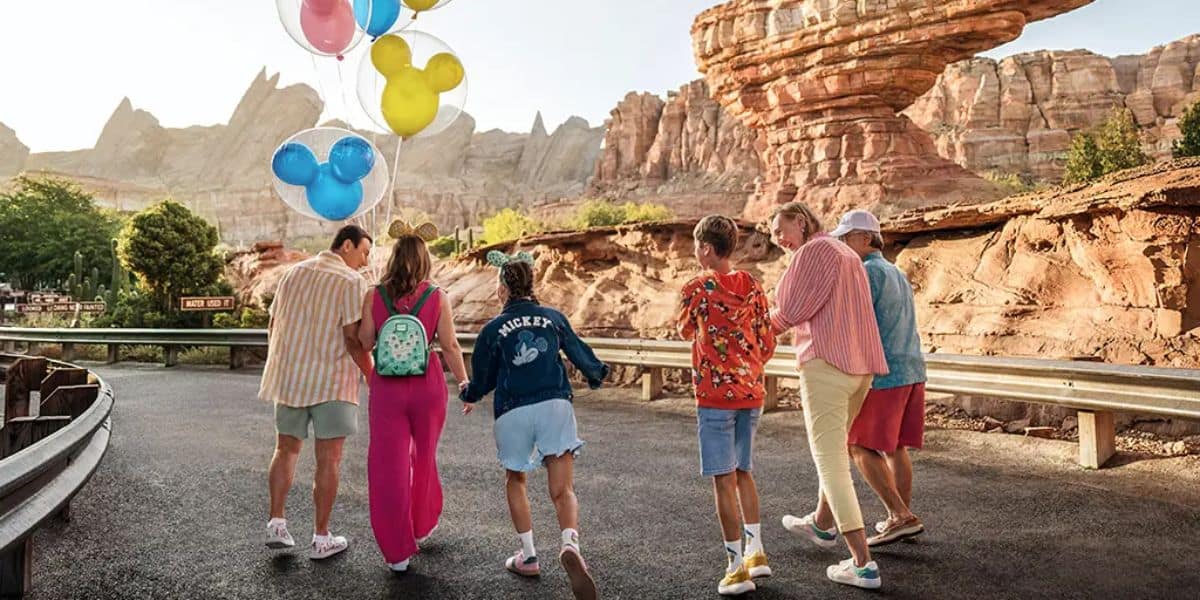
What changes today is simple but significant. If you want to rope drop Space Mountain at Disneyland Park and then immediately cross the esplanade to grab a Radiator Springs Racers boarding group, you can do that now. If you want to have breakfast at Carthay Circle and spend the rest of the morning at Disneyland, that is also completely on the table.
The two parks sit steps apart from each other, separated by nothing more than a pedestrian plaza. This makes all-day hopping uniquely viable at Disneyland in a way it simply is not at the sprawling Walt Disney World Resort in Florida.
The Starting Park Requirement That Still Applies
There are two things worth noting about how this works in practice. First, you still need to select a starting park when booking your visit. That requirement remains in place, sadly. But it has essentially become a formality at this point.
Especially since you no longer need to physically tap into that park before hopping to the other. According to Disney, the initial park selection now primarily serves as an operational data point rather than a hard restriction on your movement.

What About Disneyland Capacity?
Second, park hopping is still subject to capacity limits. On busy days, if the park you want to enter has reached its attendance limit, you may be denied entry at the gate, regardless of the time. Disney has not provided specific details on how guests will be notified in real time when a park is at capacity, so it’s wise to build some flexibility into your plans on busier days.
What This Means for Magic Key Holders
For Magic Key holders especially, today’s change is a long time coming. Annual passholders who visit frequently have been navigating the 11:00 a.m. rule for years, adjusting morning itineraries and Lightning Lane strategies around a restriction that never felt permanent, even when it was. Locals who pop into the parks for a few hours at a time now have genuine flexibility from the moment the gates open.

The Disneyland Park Pass Reservation System Is Not Going Away
It is worth being honest about what today does not change. The Park Pass reservation system is not going anywhere. Disney has made clear that theme park reservations remain a permanent fixture for capacity management and operational planning purposes. Some guests will find that frustrating, particularly those who were hoping this rollback signaled a broader dismantling of pandemic-era infrastructure. That shift, if it ever comes, is not happening today.
What is happening today is significant and deserves to be acknowledged. The 11:00 a.m. restriction was one of those rules that guests learned to navigate rather than fully accept, serving as a daily reminder that the parks were still operating under a framework established during a crisis.
Starting this morning, that framework has lost one of its key components. Now, you can enter the park at opening time, explore wherever you like, and no longer need to keep an eye on the clock. At Disneyland, where the two parks are close enough to hear one from the other, this newfound freedom carries real meaning.