The logistical landscape of Walt Disney World transportation has officially entered a new era. Following weeks of field testing and the installation of physical signage at the property, the resort has updated its official website to codify permanent restrictions on who can utilize its complimentary bus and watercraft services departing from Disney Springs.
Credit: Ed Aguila, Inside the Magic
The policy change, which officially took effect on June 28, 2026, aims to regulate crowd flow and preserve transportation capacity for high-spending on-property consumers.
However, while the new rules are now explicitly detailed on major transit landing pages, a significant documentation error remains. A glaring contradiction buried in the resort’s online Frequently Asked Questions (FAQ) section has yet to be addressed by digital operations teams, leaving an operational loophole that could confuse or strand unaware day guests.
What the Official Website Now States Regarding Restrictions
For guests looking for official policy confirmation, the updated language on the Walt Disney World website leaves little room for ambiguity on the primary bus and watercraft pages. The text formalizes what on-the-ground operations teams have been enforcing at the Disney Springs bus loops and the Sassagoula River Cruise docks.
Credit: Thomas Duesing, Flickr
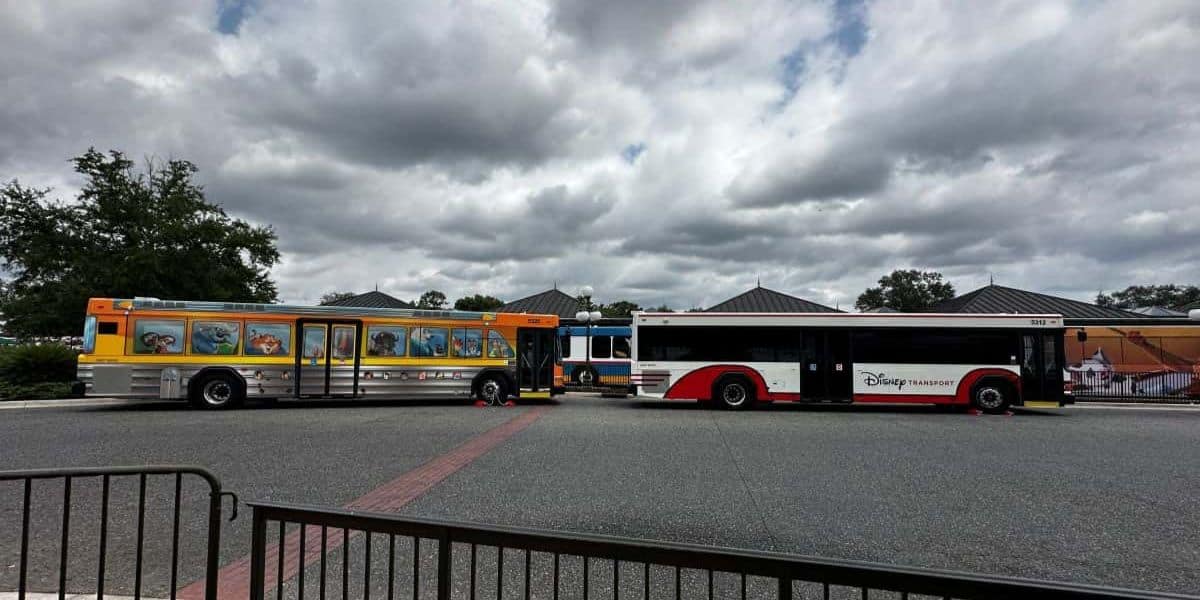
According to the newly updated sections of the website, bus service departing from Disney Springs and heading directly to Disney Resort hotels is strictly reserved for guests who possess a qualifying, verifiable reason to travel to those properties. The official website text states:
“Bus service from Disney Springs to Disney Resort hotels is available for Guests staying at a Disney Resort hotel or visiting one with a valid dining or experience reservation. Guests may be asked to show a valid Resort hotel room key, dining reservation or experience reservation.”
Furthermore, the digital update introduces a strict chronological limit on when eligible reservation holders may board these vehicles. The website establishes a clear two-hour transit window, noting:
“Guests with a valid dining or experience reservation may board the appropriate Disney Resort hotel bus from Disney Springs up to 2 hours before their reservation time.”
Credit: Disney Dining
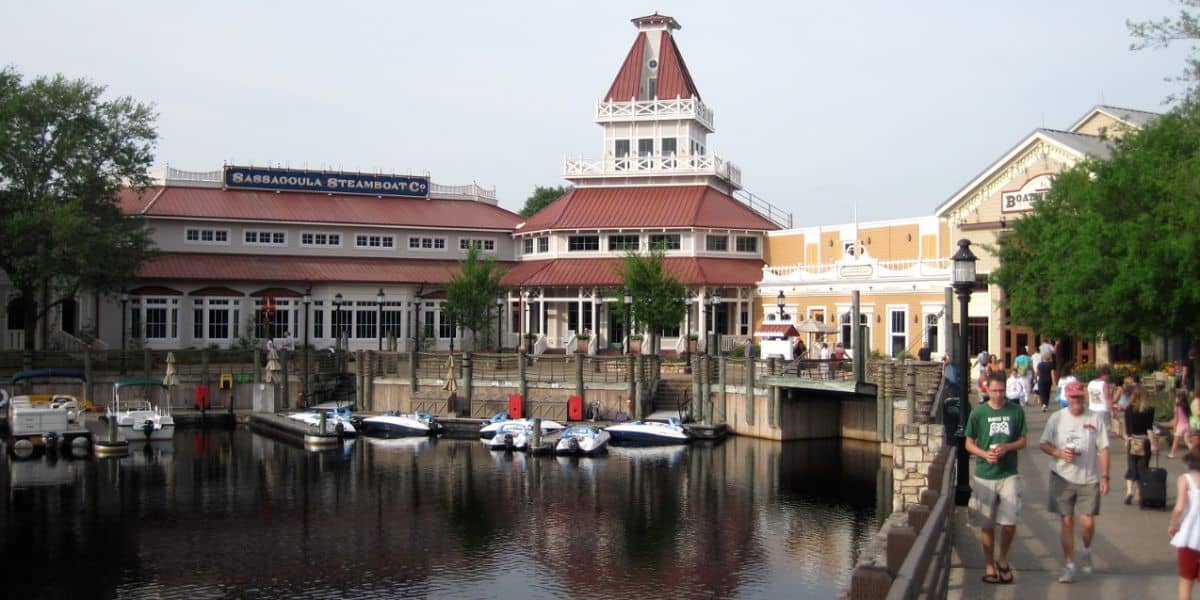
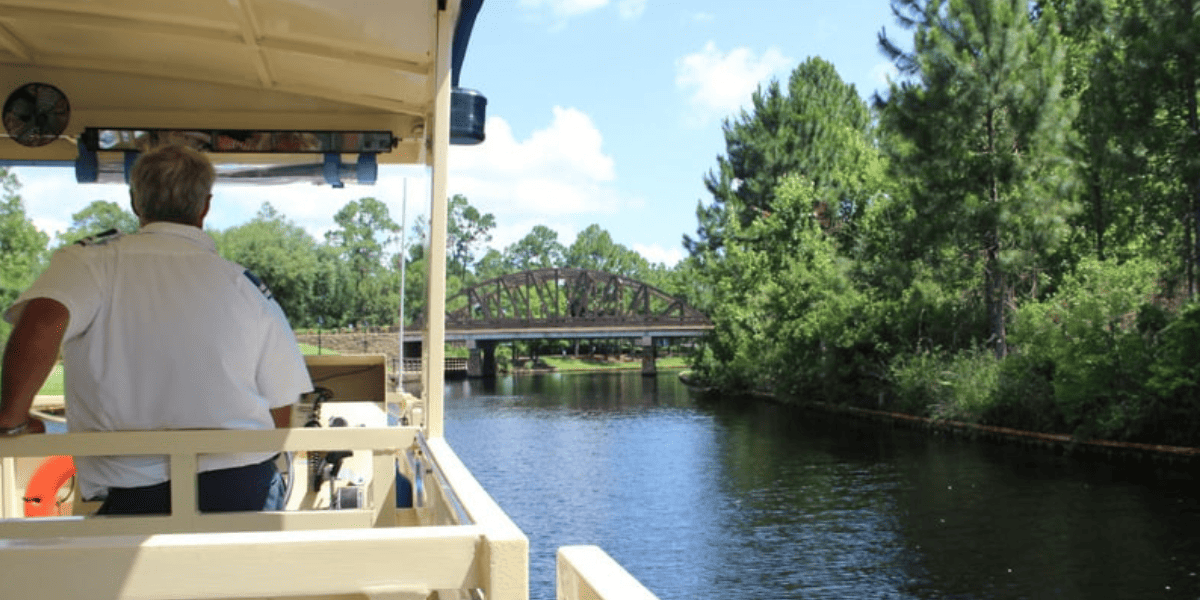
These same operational constraints have been added to the resort’s watercraft transport page. The restrictions directly impact the Sassagoula River Cruise, the ferry service that links Disney Springs to Disney’s Saratoga Springs Resort & Spa, Disney’s Old Key West Resort, Disney’s Port Orleans Resort – Riverside, and Disney’s Port Orleans Resort – French Quarter.
Guests seeking to board a ferry boat to any of these four destinations must now present a digital or physical room key, or a confirmed qualification code tied to a same-day dining or experience booking, within the same two-hour boarding window.
The Glaring Contradiction: The Transport FAQ Left Behind
While the primary bus and boat pages have been meticulously updated to reflect this major policy pivot, Disney’s digital maintenance team did not complete a property-wide sweep of its online documentation. As a result, the official Transportation FAQ page—specifically, the section addressing day guests who are not staying overnight at an on-property resort—contains legacy guidance that directly contradicts the new rules.
Credit: SJ Grant, Flickr
Currently, the unedited FAQ states that non-resort guests are fully permitted to park their vehicles in a theme park parking lot and use the complimentary Disney transportation network to navigate among multiple theme parks, visit resort hotels for dining, or travel to Disney Springs for shopping.
This legacy guidance reflects an older operational model that completely clashes with the newly updated bus and watercraft mandates. The old FAQ page frames Disney Springs as an easily accessible, open-ended terminal within a fluid, interconnected transit system. In contrast, the newly updated pages treat Disney Springs as a restricted zone where resort-bound outbound traffic is heavily gatekept.
The Logistical Trap: How the Discrepancy Affects Day Guests
This administrative oversight creates a functional logistical trap for a guest who builds a vacation day around the official information currently displayed in the unrevoked FAQ section.
Credit: Disney
Consider a hypothetical non-resort-day guest who reviews the official website and decides to follow the advice on the outdated FAQ page. This guest arrives in the morning, pays the standard daily parking fee at a theme park lot, and enjoys their afternoon.
Seeking to break up their day with dinner or shopping, they board a complimentary Disney bus from that theme park directly to Disney Springs. Up to this point in the journey, their travel aligns perfectly with both old and new guidelines.
The breakdown occurs when the guest finishes their evening at Disney Springs and attempts to return to the theme park lot where their vehicle is parked.
Because direct bus transportation from Disney Springs to the four main theme parks does not exist during standard operating hours, guests have traditionally returned to the parks by catching a bus to an adjacent resort hotel (such as taking a bus to the Contemporary to walk over to Magic Kingdom, or a bus to the Beach Club to walk into EPCOT).
Credit: Disney
Under the new policy posted on the updated bus page, this guest will be denied boarding at the Disney Springs bus depot for not having a resort room key or a table-service dining reservation. However, according to the outdated FAQ page, this style of multi-point travel is explicitly framed as an authorized use of the complimentary system.
Without a qualifying reservation to clear the scanning tablets at Disney Springs, a guest following the FAQ’s exact words would effectively find themselves stuck at Disney Springs at the end of the night with no clear, official way back to their parked car.
Managing Expectations in a Transitional Era
The presence of this online contradiction highlights the complexities Walt Disney World faces as it transitions from its historically open, flexible transportation model into a highly regulated, reservation-dependent ecosystem. For decades, the fluid nature of Disney transit was a major selling point for the resort, allowing guests to flow freely between parks, hotels, and shopping districts.
Credit: EMLpotography, Flickr
As the resort continues to roll out stricter digital and physical barriers to protect its resort infrastructure and manage transit capacity, keeping its massive library of online documentation completely aligned remains a challenge.
Until digital operations teams update the legacy transport FAQ page to match the permanent rules implemented on June 28, guests are strongly advised to ignore the older multi-park transit advice and strictly adhere to the new rules published on the main bus and watercraft pages.
To ensure a smooth evening, anyone planning to depart Disney Springs via a resort bus or boat must ensure they carry a valid digital room credential or a confirmed table-service reservation code within the mandatory two-hour window.
Get daily updates from Inside the Magic
I'd like to receive emails from Inside the Magic.
Comments Off on Official: Disney World Updates Website With Disney Springs Transportation Restrictions, But a Glaring Contradiction Remains
 Credit: Anthony Quintano, Flickr