 Credit: Central Florida Zoo
For anyone who has been following the Sloth World Orlando story since the beginning, every update has arrived with the same quiet dread of knowing that whatever comes next is likely to be worse than what came before. The story started with an inspection report. It escalated through regulatory violations, building code citations, an expired permit, a stop-work order, a state criminal investigation, and a bankruptcy filing. And through all of it, the most irreversible consequences have not been the legal or regulatory ones but the biological ones, the animals whose lives were altered beyond recovery by the conditions they were kept in before a single paying guest ever walked through the doors of the attraction that brought them to Florida.
Bandit, a three-month-old baby sloth, died at the Central Florida Zoo on April 29 after arriving in critical condition as part of a group of 13 sloths transferred from Sloth World’s possession. Habanero, an adult male, died on May 3 after a period of critical illness and declining condition that led to the difficult decision to humanely euthanize him. And now, as of May 5, the Central Florida Zoo has confirmed that a third sloth named Dumpling has passed away following a sudden and rapid downturn driven by ongoing digestion and gastrointestinal complications that the zoo’s veterinary team was ultimately unable to reverse. Three sloths are gone. Ten remain. And the zoo’s own updates make clear that this is a day-by-day situation with no guaranteed outcomes for the animals still in their care.
Dumpling’s Death
Dumpling arrived at the Central Florida Zoo on April 24 as part of a group of 13 sloths transferred from Sloth World. From the moment of arrival, Dumpling was among the animals the zoo identified as requiring the highest level of care, and the eleven days that followed were described by the zoo as a series of ups and downs rather than a consistent recovery trajectory. Dumpling continued to struggle with digestion and gastrointestinal issues throughout the care period, and on Monday morning, experienced a sudden decline that progressed quickly despite ongoing treatment efforts. The zoo confirmed the death in a statement that also addressed the biological reality that makes sloth care so unpredictable in situations like this. Sloths are well-known for masking signs of illness, which can make early detection challenging and lead to rapid, sometimes irreversible changes in condition. Their metabolisms work so slowly that it could potentially take many weeks for pre-existing issues to manifest, meaning the full consequences of what these animals experienced before arriving at the zoo may still be working their way through the physiology of the eleven sloths still in care.
Habanero’s Death
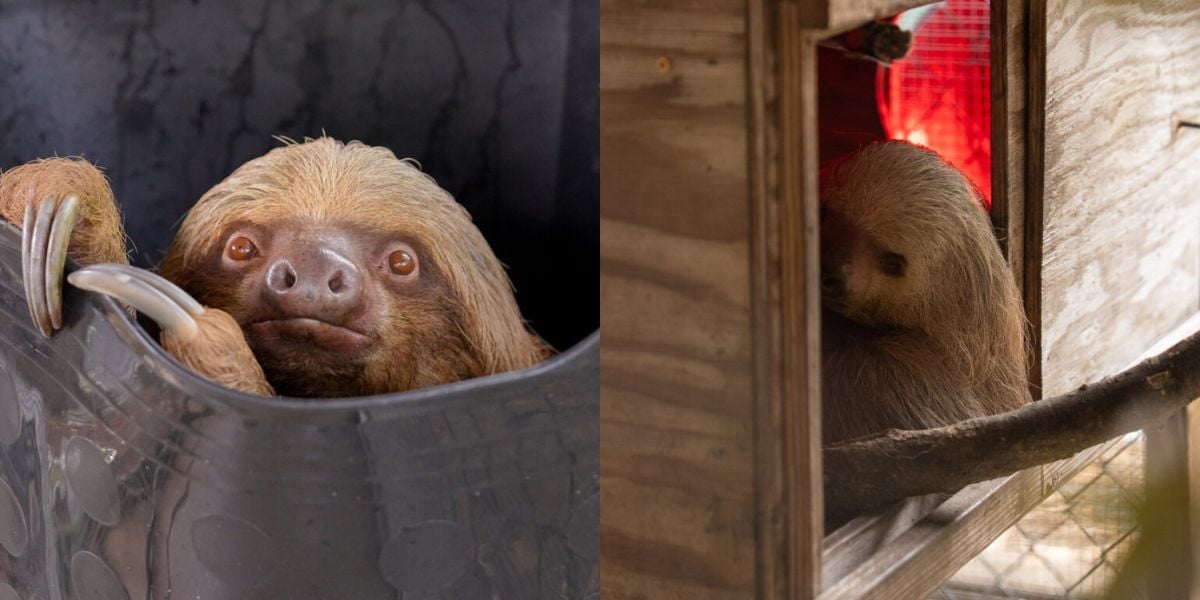
The death of Dumpling came two days after the zoo announced the loss of Habanero, an adult male who died on May 3 following a period of critical illness. Habanero initially showed encouraging signs of stabilization after arrival, including eating and drinking regularly under close veterinary supervision, which made the subsequent deterioration more difficult for the zoo’s team to process. His condition worsened in recent days before the decision was made to humanely euthanize him. The zoo described the loss as gut-wrenching and noted that, at the time of the Habanero update, two remaining sloths were in guarded condition and receiving ongoing medical attention. The zoo’s CEO, Richard Glover, who previously confirmed that the team did everything possible for Bandit during that animal’s final days, acknowledged over the weekend before Habanero’s death that losing these animals is really tough on the team, even when everyone knew going in that it was going to be an uphill battle.
The Full Picture of What Has Been Lost Including Sloths
The three deaths at the Central Florida Zoo bring the total number of sloths who have died in connection with the Sloth World operation to a number that continues to grow from the original 31 documented in the FWC inspection report. Those 31 deaths occurred between December 2024 and February 2025 at the International Drive warehouse, with 21 sloths from Guyana dying after arriving at a facility without water or electricity, and 10 additional sloths from Peru arriving in poor condition, two dead on arrival, and eight dying subsequently. The 13 sloths transferred to the Central Florida Zoo represented the survivors of that original group, and three of those 13 have now died in zoo care despite the best efforts of the veterinary and animal care teams working around the clock to provide outcomes they were denied under Sloth World’s management.
Sloth World owner Ben Agresta attributed the original deaths to a foreign-born virus and denied wrongdoing, a characterization directly contradicted by a former Sloth World employee, who attributed the deaths to poor conditions and the owner’s failure to properly care for the property and business. The Sloth Conservation Foundation’s founder Dr. Rebecca Cliffe has indicated she is preparing to file legal action against Agresta, noting that she reached out to Sloth World in January asking about their plans and the source of their animals, was told the sloths came from the wild and that Sloth World planned to donate over one million dollars to conservation efforts, and then received no further communication after asking how many sloths were still alive. The Sloth Conservation Foundation is now pushing to ban imports of wild-caught sloths into the United States entirely, citing the Sloth World situation as evidence of why such a ban is necessary.
Where the Sloth Investigation Stands
Florida Attorney General James Uthmeier has confirmed that a statewide prosecutor and animal welfare law expert will assist the Ninth Circuit State Attorney’s Office in a criminal investigation of Sloth World. PETA has announced a lawsuit. The company has filed for bankruptcy. The attraction has never opened. The permits have expired. And the eleven sloths still at the Central Florida Zoo are receiving individualized care that now includes expanded diagnostics, blood analysis, body condition assessments, hormonal testing, and additional screenings that the veterinary team has been able to pursue as the animals have had more time to settle into their environment. The zoo has emphasized that establishing these baselines is an important step toward understanding each animal’s needs and identifying changes as early as possible, suggesting the care approach is becoming more sophisticated as the team learns more about each individual animal’s condition.
The Central Florida Zoo continues to accept public donations to support the ongoing rehabilitation of the eleven remaining sloths. The cost of the specialized care these animals require is high, and the zoo’s public transparency about each loss reflects a commitment to keeping the community that has followed this story informed about the reality of what the surviving animals are facing every day.