
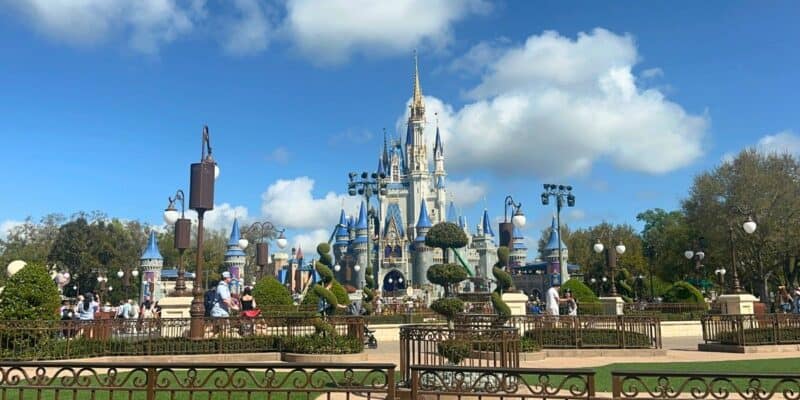
 Credit: Erica Lauren, Inside the Magic
If you’ve priced out a Walt Disney World vacation recently and felt like something was off, you’re not imagining it. The numbers still look familiar at first glance. Ticket prices haven’t exploded overnight. Resorts are still advertised with that same “starting from” language. And yet, when you actually build out a full trip, the final total tells a very different story.
That’s because 2026 isn’t defined by one major price hike—it’s defined by several smaller ones hitting all at once.
Individually, they don’t seem dramatic. But when you combine tickets, hotels, Lightning Lane access, and food, the total cost of a typical Disney World vacation has quietly climbed by around 15% compared to just a year or two ago. And for families, especially those traveling with kids, that increase is impossible to ignore.
Let’s break down where that extra cost is really coming from—and why it’s changing how people plan their trips.

The Ticket Price Illusion
On the surface, Disney has done a good job keeping headline prices steady. You’ll still see that familiar “starting at $119” price for a single-day ticket to Disney’s Animal Kingdom. It’s the kind of number that feels reassuring, especially if you’ve been following Disney pricing trends for years.
But the reality sits just beneath that number.
The issue isn’t the lowest price—it’s how often you can actually get it. In 2026, more dates have been shifted into higher pricing tiers. Days that used to fall into the “regular” category are now considered “peak,” and that shift adds up quickly.
Magic Kingdom is the clearest example. Late 2026 dates now top out at $209 for a single day, marking a new high. But even outside of major holidays, you’re seeing more days priced in the $180–$190 range. Not long ago, those same days would have cost closer to $160.
For a family of four, that difference alone can mean an extra $80–$100 per park day. Multiply that across a multi-day trip, and suddenly you’re looking at several hundred dollars added before you even step inside a ride queue.
Resort Prices Are Doing the Heavy Lifting
If tickets are creeping up, hotel costs are where things really start to accelerate.
Across the board, Disney resort rates have climbed in 2026. Value resorts like Disney’s Pop Century and the All-Star Resorts are still positioned as budget-friendly options, but even those are noticeably more expensive than they were just a year ago. When you factor in taxes, the total cost of a typical stay has jumped by roughly $150 compared to similar dates in 2025.
And that’s just the entry level.
When you look at the average nightly rate across all resort categories—Value, Moderate, and Deluxe—the numbers become even more striking. The tax-included average now sits around $1,515 per night, up roughly $152 from previous averages.
That’s not a small bump. That’s the kind of increase that can add $700–$800 to a five-night vacation without changing anything else about your trip.
For many families, the hotel has quietly become the most expensive part of the entire experience.

Lightning Lane Is Changing the Math
Then there’s Lightning Lane, which continues to reshape how guests experience the parks—and how much they spend to do it.
In 2026, the cost of skipping the lines has gone up again, and this is where the numbers start to feel more immediate.
Magic Kingdom’s Lightning Lane Multi Pass now reaches up to $45 per person during peak times. That means a family of four is spending around $180 per day just for access to shorter wait times on select attractions.
And that’s before you add in Lightning Lane Single Pass selections for rides like TRON Lightcycle / Run or Guardians of the Galaxy: Cosmic Rewind. Those individual purchases have also crept up, with prices increasing by a few dollars per ride.
On paper, a $2 or $3 increase doesn’t seem like much. But when you’re stacking multiple rides across multiple days, it becomes a significant expense.
For many families, Lightning Lane has shifted from an optional upgrade to something that feels almost necessary—especially during busy seasons. And when you treat it that way, it adds roughly $200 or more per day to your budget.
That’s where a big chunk of that 15% increase is coming from.
Food Costs Are Quietly Adding Up
Food is another area where the increases are subtle—but constant.
You won’t necessarily notice it on a single receipt. A burger might cost a dollar more than it did last year. A drink might be up by fifty cents. Table-service restaurants have raised prices on entrees and appetizers by a few dollars each.
But across an entire trip, those small increases start to stack.
For a family of four eating two to three meals a day in the parks, that can mean an additional $100–$200 over the course of a vacation. And if you’re planning character dining or signature restaurants, the increase becomes even more noticeable.
There’s also one factor that catches families off guard every year: the age threshold.
Once a child turns 10, Disney considers them an adult for dining purposes. That shift alone can add hundreds of dollars to a trip. For a five-night stay, the difference in meal pricing can exceed $500 for just one child crossing that threshold.
It’s one of those details that doesn’t show up in the marketing—but makes a big impact on the final bill.
Why It Feels Bigger Than It Looks
What makes this 2026 pricing shift so interesting is that it doesn’t come from a single headline change.
There’s no one announcement that says, “Disney World just got 15% more expensive.”
Instead, it’s the combination of everything:
- Slightly higher ticket prices
- More peak pricing days
- Increased hotel rates
- More expensive Lightning Lane access
- Small but consistent food price hikes
Each one feels manageable on its own. But together, they create a noticeable jump in the total cost of a vacation.
That’s why so many guests are reacting the same way. They start planning a trip expecting one number, and by the time everything is added up, they’re looking at something significantly higher.

What This Means for Guests in 2026
For longtime Disney visitors, this shift is already changing how trips are planned.
Some families are shortening their stays to offset the higher nightly rates. Others are skipping Lightning Lane altogether and building their days around standby lines. And many are becoming more selective about when they visit, trying to avoid peak pricing periods whenever possible.
There’s also a growing trend of splitting vacations—spending part of the trip at Walt Disney World and part elsewhere, rather than committing to a full week on property.
At the same time, Disney continues to offer discounts, promotions, and limited-time deals to help balance out some of these increases. But even with those offers, the baseline cost of a trip is still trending upward.
The Bigger Picture
Disney World has always been a premium vacation, and for many families, it still holds that same value. The parks continue to evolve, new experiences are being added, and demand remains strong.
But 2026 marks a moment where the math feels different.
Not because of one massive change—but because of how everything has shifted together.
That 15% increase isn’t just a number. It’s the result of a system that’s becoming more layered, more dynamic, and, for many guests, more expensive to navigate.
And if you’re planning a trip, it’s something you’re going to notice long before you ever scan your ticket at the gate.