2
2
 Credit: Inside The Magic
The Walt Disney Company has long been celebrated for its ability to create magic on the silver screen and in its theme parks across the globe. But according to a bombshell new report from the Institute on Taxation and Economic Policy (ITEP), Disney’s most impressive illusion last year didn’t happen in a movie studio or at the Magic Kingdom—it happened in the accounting department.

Despite raking in a staggering $8.30 billion in U.S. pretax income in 2025, the entertainment behemoth managed to pay absolutely zero dollars in federal corporate income tax.
In an era where everyday Americans feel the squeeze of inflation and meticulously calculate their own tax liabilities each April, the revelation that one of the world’s most profitable and recognizable brands contributed nothing to the federal coffers has sparked outrage, debate, and deep questions about the structure of the American tax system.
How does a company make over $8 billion in profit and pay a 0% federal tax rate? The answer lies in a complex web of corporate tax loopholes, executive compensation write-offs, and recent legislative tax cuts that have enabled America’s largest corporations to bypass the IRS legally.
The ITEP Report: Disney Is Not Alone
Before diving into Disney’s specific financial maneuvering, it is crucial to understand the broader context of corporate tax avoidance in the United States. According to the ITEP report published in April 2026, Disney is just one of at least 88 major, profitable U.S. corporations that paid zero federal income tax in 2025.

Collectively, these 88 companies—which span industries from tech and manufacturing to retail and entertainment—generated more than $105 billion in domestic pretax income last year. Under the current statutory federal corporate income tax rate of 21 percent, these corporations theoretically should have owed a combined $22.1 billion.
Instead, not only did they pay zero dollars, but the group actually received a collective $4.7 billion in tax rebates from the government. When measured against the 35 percent corporate tax rate that existed just a decade ago, these 88 companies effectively slashed their tax bills by over $41 billion in a single year. Disney, with its $8.3 billion in domestic profit, was one of the largest single beneficiaries on the list, standing shoulder to shoulder with other tax-avoiding titans like Tesla, United Airlines, and CVS Health.
How Disney Pulled Off the Zero-Tax Illusion
Because corporate tax returns are not public documents, the exact line-by-line accounting of Disney’s tax strategy remains a closely guarded corporate secret. However, thanks to new Securities and Exchange Commission (SEC) disclosure rules that took effect for the 2025 calendar year, publicly traded companies must now list the categories of tax provisions that significantly impact their tax expenses.

Based on these annual shareholder reports, tax experts at ITEP identified three primary mechanisms Walt Disney used to wipe out its federal tax liability.
1. The R&E Tax Credit and Immediate Expensing. Research and development are the lifeblood of innovation, and the federal government has long incentivized them. However, the scale of these write-offs has drastically expanded. Disney used the federal research and experimentation (R&E) credit to reduce its tax burden significantly. Furthermore, a retroactive provision passed in 2025 allows companies to immediately write off their research and development expenses in a single year, rather than amortizing them over time. By aggressively categorizing its vast investments in streaming technology, theme park engineering, and digital media as R&D, Disney was able to shelter billions of dollars from taxation.
2. The FDDEI Deduction (Foreign-Derived Deduction Eligible Income) Disney is a global brand, and it used its international reach to shrink its domestic tax bill. The company took advantage of the Foreign-Derived Deduction Eligible Income (FDDEI) deduction. This specific tax break lowers the federal corporate tax rate on profits generated from exports—meaning sales and services provided to customers in foreign countries. Expanded retroactively in 2025, the FDDEI deduction allows corporations to deduct a massive 33.34 percent of eligible profits. By leveraging its international licensing, merchandise exports, and global streaming subscriptions, Disney effectively shielded a massive portion of its U.S.-based income from the IRS.
3. Executive Stock Options Loophole Perhaps the most controversial strategy utilized by Disney in 2025 was the exploitation of the executive stock option tax break. Federal tax law allows companies to write off stock-option-related expenses at a rate far beyond the actual expenses they report to shareholders and investors. When top Disney executives exercise their lucrative stock options, the company can deduct the difference between the stock’s original grant price and its current market value as a tax deduction. This creates a massive phantom “loss” on paper for tax purposes, heavily reducing the company’s taxable income while simultaneously enriching its highest-ranking officials.
The Role of the Trump Administration’s Tax Cuts
Disney’s ability to achieve a 0% tax rate did not happen in a vacuum; it is the direct result of deliberate legislative policy. The ITEP report explicitly points to two major corporate tax-cut packages pushed through by the Trump administration as the catalyst for this unprecedented era of tax avoidance.
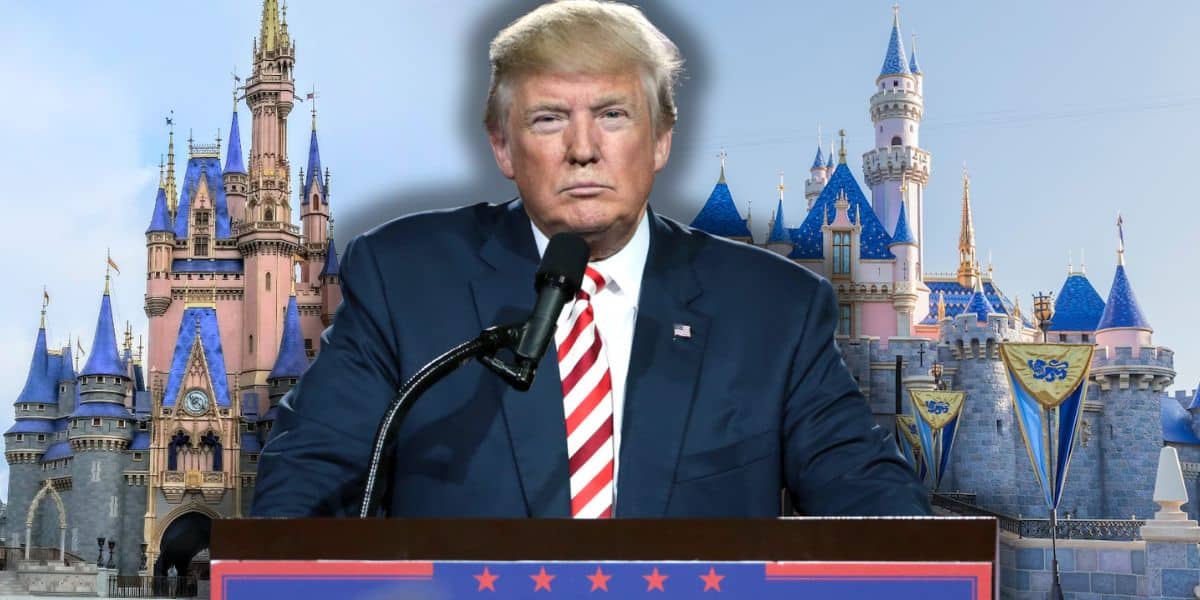
The foundation was laid by the 2017 Tax Cuts and Jobs Act (TCJA), which slashed the baseline corporate tax rate from 35 percent to 21 percent and introduced the predecessor to the FDDEI deduction. But the final blow to corporate tax liabilities came last year with the passage of the 2025 “One Big Beautiful Bill Act” (OBBBA).
The OBBBA retroactively expanded foreign export deductions, supercharged accelerated depreciation, and allowed for the immediate expensing of R&D costs. By layering the sweeping cuts of the 2017 TCJA with the aggressive new loopholes of the 2025 OBBBA, the federal government legally paved the way for highly profitable giants like Disney to sidestep the IRS entirely.
The Ripple Effect: Starving State Budgets
The consequences of Disney’s tax avoidance extend far beyond Washington, D.C. Because the vast majority of state corporate income tax rules are pegged directly to federal income definitions, a tax break claimed at the federal level automatically reduces a company’s state tax liability as well.

The ITEP data reveals that the 88 zero-tax companies, including Disney, paid a nationwide effective state income tax rate of just 1.4 percent last year. The weighted-average state corporate tax rate is normally around 6 percent. This means that by exploiting federal loopholes, these corporations are simultaneously starving state and local governments of the revenue needed to fund public schools, infrastructure, and emergency services.
A System Working Exactly as Designed
When everyday citizens look at a company earning $8.3 billion in profit while paying zero federal income tax, they often assume a crime has been committed. The harsh reality is that Disney did not break the law; they simply followed the rules written by Congress.

Disney’s 2025 tax strategy is a masterclass in corporate accounting, maximizing legal deductions to ensure maximum value for its shareholders. However, as the national deficit grows and the tax burden falls increasingly on the shoulders of the working and middle classes, reports like ITEP’s are fueling a growing demand for corporate tax reform.
Until the tax code is fundamentally rewritten to close the stock option loopholes and dial back the massive corporate subsidies embedded in recent legislation, the magic trick will continue. And companies like Disney will keep making billions, while the American taxpayer foots the bill.