
 Credit: Disney
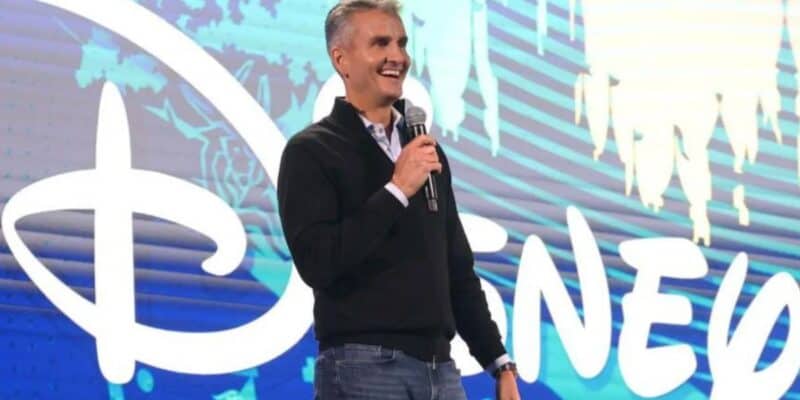
Josh D’Amaro hasn’t even had time to settle into his role as CEO fully, and yet the pressure is already building. Less than a month into the job, he’s facing growing frustration from fans, critics, and even some within the company itself. It’s not just one issue driving the conversation—it’s a combination of decisions, policies, and directions hitting at once.
From the outside, it feels like the tone of this new era at Disney is being defined almost immediately. And while leadership transitions are rarely smooth, this one has sparked a level of reaction that’s hard to ignore. Fans aren’t just watching—they’re reacting in real time.
What’s driving that reaction comes down to four key controversies that are already shaping how people view D’Amaro’s leadership.

DAS Changes Spark Accessibility Concerns
One of the most emotional flashpoints so far has been Disney’s changes to its Disability Access Service (DAS). The company tightened eligibility requirements, making it significantly harder for guests to qualify for accommodations that many families have relied on for years.
For those affected, this hasn’t felt like a minor update. It’s been a major shift.
Guests have shared stories about losing access to the program despite previously qualifying, while others say the process has become more complicated and less supportive. The frustration isn’t just about inconvenience—it’s about feeling like access to the parks has been reduced.
D’Amaro hasn’t backed away from the changes. In fact, he’s done the opposite. He has publicly defended the updated system, pointing to efforts to prevent abuse and maintain fairness. At the same time, he has made it clear that Disney does not plan to reverse the new restrictions.
That stance has only added fuel to the conversation. Fans who were hoping for adjustments or a rollback have instead seen leadership double down, turning concern into backlash for many.
As this issue continues to unfold, it has become one of the clearest early indicators of how D’Amaro plans to handle criticism—and that approach is being closely watched.

Rising Costs Continue Without Relief
From there, the conversation quickly shifts to something that affects nearly every Disney fan: cost.
Across the board, prices are climbing. Theme park tickets continue to rise, hotel stays are becoming more expensive, merchandise costs keep creeping up, and even streaming through Disney+ has seen price increases.
For many families, a Disney vacation already felt like a major investment. Now, it’s starting to feel out of reach.
What’s notable is not just the price increases themselves, but the messaging around them. D’Amaro hasn’t signaled any plan to make Disney more affordable. Instead, he has focused on delivering a “better experience” to justify the cost.
That means more additions, more updates, and more offerings designed to make guests feel they’re getting value—even as prices climb.
But for fans, that framing doesn’t always land. The idea of paying more for a slightly enhanced experience doesn’t solve the core concern: affordability.
And based on D’Amaro’s comments so far, this trend isn’t slowing down. If anything, it’s becoming a central part of Disney’s strategy moving forward. That has left many fans feeling like the company is moving further away from being accessible to everyday families.
Layoffs Add to Growing Unease
While fans are dealing with rising costs, another development has raised a new concern: layoffs.
Reports have surfaced that roughly 1,000 jobs are positioned to be cut under D’Amaro’s leadership, with many of those roles tied to marketing and corporate operations. While restructuring isn’t unusual for a company the size of Disney, the timing has raised eyebrows.
Coming at the same time as price increases, the layoffs create a contrast that’s hard to ignore. On one hand, guests are paying more than ever. On the other hand, the company is reducing its workforce.
That combination has led to questions about priorities.
There’s also concern about how these cuts could impact the guest experience. Fewer employees can mean slower service, reduced offerings, and less support across different parts of the business. Even if those effects aren’t immediate, fans are already thinking about what it could mean long-term.
D’Amaro hasn’t positioned the layoffs as a headline-making move, but the reports alone have contributed to the broader narrative forming around his leadership. It’s another layer in a growing list of changes that feel, to some, like they’re moving Disney in a more corporate direction.
Disney’s AI Push Raises Creative Questions
At the same time, Disney’s push into artificial intelligence has added yet another dimension to the conversation.
The company had been exploring a partnership with OpenAI’s Sora technology, designed to generate video content using AI. While that specific deal ultimately fell through, it doesn’t signal a retreat from AI. If anything, it shows that Disney is actively exploring how the technology could fit into its future.
D’Amaro has tried to reassure fans and creatives by emphasizing that AI won’t replace human storytelling. But those comments haven’t fully eased concerns.
For many, the worry isn’t just about replacement—it’s about direction.
Disney has long been defined by its creativity, artistry, and emotional storytelling. The idea of leaning into AI, even as a tool, raises questions about whether that identity could shift. Writers, animators, and fans alike have expressed concern about how far the company might go in integrating AI into its content.
There’s also a broader fear that Disney could begin prioritizing efficiency over originality. Even if that’s not the intention, the perception alone has been enough to spark debate.
And with the company continuing to explore AI despite the failed partnership, it’s clear this conversation isn’t going away anytime soon.
A Challenging Start With No Clear Reset
Put all of this together, and it’s easy to see why D’Amaro’s first few weeks have drawn so much attention.
Each of these controversies—DAS changes, rising costs, layoffs, and the AI push—touches a different part of the Disney experience. But they all connect in one important way: they shape how fans feel about the company’s direction.
Right now, that feeling is mixed at best.
D’Amaro still has time to define his leadership and shift the narrative. Early reactions don’t always tell the full story, and Disney has a long history of adapting when needed. But first impressions matter, and this one has been anything but quiet.
Less than a month in, the spotlight is already intense. And how D’Amaro responds to these controversies moving forward will likely determine whether this early backlash fades—or becomes something much bigger.