
 Credit: Theme Park Tourist, Flickr
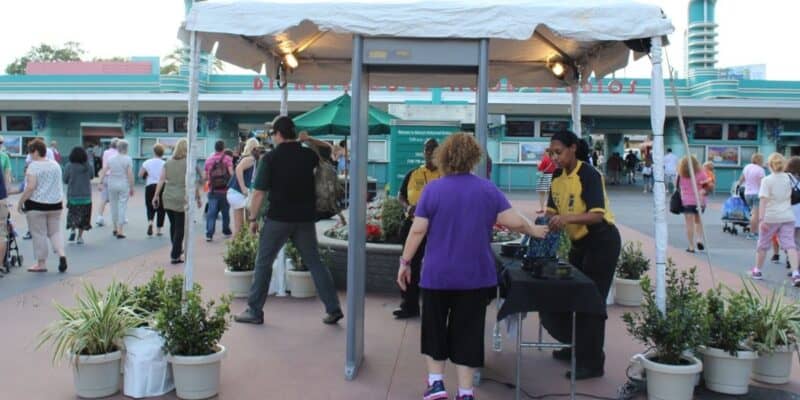
Anyone who visits Walt Disney World regularly knows that the security checkpoint has slowly evolved over the years. What used to be a quick bag check has become a sophisticated operation involving scanners, trained security teams, and clearly posted rules about what guests can and cannot bring into the parks.
Most of the time, the process is smooth. Guests walk through the scanners, bags are inspected if necessary, and everyone heads toward the tapstiles ready for a day of rides, shows, and snacks.
But over the past year—especially here in 2026—security teams have become noticeably stricter about several specific items. Some of these were technically never allowed, but enforcement has tightened. Others represent brand-new restrictions that many guests are only discovering when they reach the front gate.

If you’re planning a trip soon, it’s worth knowing about these items ahead of time. Bringing any of them could slow down your entry, send you back to your hotel, or force you to throw something away before stepping inside the park.
Here are seven items Disney security is increasingly rejecting at the entrance in 2026.
1. Realistic Toy Blasters and Prop Weapons
One of the biggest crackdowns involves toy blasters and prop weapons that look too realistic.
This rule isn’t entirely new, but enforcement has intensified. Security teams are paying close attention to any toy or prop that could be mistaken for a real weapon—even if it’s clearly intended as part of a costume.
Some Star Wars–style props, particularly detailed replica blasters, are now being stopped at the gate if they appear too realistic. Disney’s policy focuses on avoiding anything that could create confusion or alarm among other guests.
Many guests visiting Star Wars: Galaxy’s Edge enjoy dressing the part, but props that resemble actual firearms—even fictional ones—can now trigger a secondary security check. In many cases, guests are asked to return the item to their vehicle or hotel.
If you’re planning a themed outfit, Disney recommends sticking to simple accessories rather than weapon-style props.
2. External Microphones for Filming
Another newer restriction, as of 2026, that has surprised some guests involves external microphones.
With the rise of livestreaming and content creation inside the parks, Disney has quietly started limiting certain types of filming equipment. Handheld microphones, shotgun microphones mounted to cameras, and extended boom-style audio gear are now frequently flagged by security teams.
Small personal microphones attached to clothing are generally fine, but larger external setups can raise concerns because they resemble professional filming equipment.
Disney’s parks allow casual photography and filming for personal use, but anything that appears to be part of a commercial production can draw attention from security or guest relations.
Guests arriving with large microphones have increasingly been asked to remove them before entering.

3. Oversized Wagons and Certain Stroller Brands
Strollers have always been part of the Disney park experience. Families rely on them to transport kids—and sometimes snacks, bags, and souvenirs.
However, Disney tightened stroller size rules several years ago, and enforcement has become stricter again recently.
In particular, some wagon-style strollers and oversized models are being turned away more frequently. While Disney allows standard double strollers, wagons and extra-wide stroller designs are not permitted.
Security teams have also begun paying closer attention to certain stroller brands that exceed the size guidelines or convert into wagon-style carriers.
Guests arriving with these models are often asked to take them back to their car or switch to a rental stroller inside the park.
4. Loose Ice and Large Coolers
Disney allows guests to bring food and drinks into the parks, which is great news for families trying to manage vacation costs. However, there are limits to what kind of containers you can bring.
Ice packs are perfectly fine, but bags filled with loose ice are increasingly being stopped during security checks. The concern is partly about spills and messes but also about security visibility when scanning bags.
Small soft-sided coolers with sealed ice packs remain the safest option for guests bringing their own snacks and drinks.
5. Glass Containers
Glass has been discouraged at Walt Disney World for years, but enforcement has become noticeably more consistent.
With the exception of small baby food jars, glass containers are not permitted inside the parks. That includes soda bottles, glass water bottles, and homemade food containers.
Security teams are especially strict about glass items because of the risk of breakage in crowded areas.
Many guests who bring drinks from nearby stores discover this rule at the entrance and must either discard the item or return it to their car.
Switching to reusable plastic or metal bottles is the easiest way to avoid this issue.
6. Selfie Sticks and Extended Camera Poles
Selfie sticks have been banned inside Disney parks for years, but they continue to show up in security checks every day.
The issue isn’t just about photos—it’s about safety. Extended poles can become dangerous in crowded walkways and attraction queues.
They’re also not allowed on many rides, which can create operational problems if guests attempt to carry them onboard.
As a result, security teams will almost always stop selfie sticks at the front gate and ask guests to leave them outside the park.
7. Folding Chairs and Large Tripods
Finally, folding chairs and large camera tripods are another category that security teams are watching closely.
Disney parks simply aren’t designed for guests to set up personal seating areas. Walkways and viewing spots need to remain clear, especially during parades and nighttime shows.
Large tripods also fall under Disney’s restrictions on professional-style filming equipment.
Small handheld stabilizers are typically fine, but full-size tripods often trigger a security check and may not be allowed inside the park.
Why Disney Is Tightening Security Rules
None of these policies exist just to make guests’ lives difficult.
Walt Disney World sees tens of thousands of visitors every single day, and security teams constantly adjust procedures to keep those crowds moving safely. Even small changes—like restricting certain gear or oversized items—can prevent congestion and confusion at the entrance.
There’s also a broader shift happening across the theme park industry. As social media content creation grows and park attendance continues to rise, operators are adapting their policies to maintain safety and operational flow.
For Disney, that means drawing clearer lines around what counts as personal-use items versus equipment or props that could disrupt the guest experience.

What Guests Should Do Before Their Visit
The easiest way to avoid problems at the front gate is simple: check the official Walt Disney World prohibited items list before packing your bag.
Security checkpoints are efficient, but being stopped for a prohibited item can delay your entire group and start the day on a frustrating note.
Stick with small bags, avoid oversized gear, and skip anything that might look like a prop weapon or professional filming setup.
Because when everything goes smoothly at security, the rest of the day can start exactly how it should—walking down Main Street, grabbing that first coffee or Mickey-shaped snack, and heading straight for your first ride.