9
9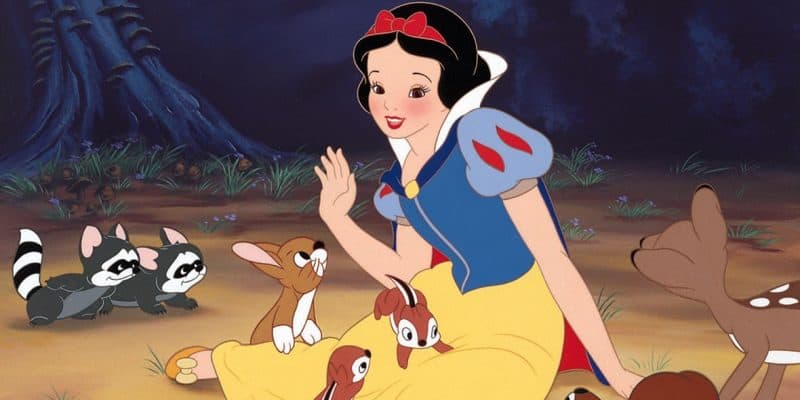
 Credit: Disney
Disney’s live-action remake strategy has delivered both spectacular successes and notable disappointments over the past decade, with films ranging from billion-dollar blockbusters to underperforming releases that struggled to connect with audiences.

The approach of reimagining classic animated films with modern production values and contemporary storytelling has proven inconsistent, generating passionate responses from fans who grew up with the originals while attempting to introduce these stories to new generations.
Some remakes like Beauty and the Beast and The Lion King have dominated box offices worldwide, while others have faced challenges ranging from creative criticism to audience indifference.
Understanding the financial realities behind these productions provides crucial context for evaluating Disney’s theatrical strategy and the sustainability of continuing to mine its animation library for live-action adaptations.
The business model depends on balancing production costs against worldwide box office performance, home entertainment sales, and merchandising opportunities, making each release a complex financial equation rather than simply a creative endeavor.
New financial filings have revealed that Disney’s 2025 live-action Snow White carried a production cost of $336.5 million, confirming it as one of the most expensive films in the company’s history.
The figure comes from legally required filings in the United Kingdom, where the movie was produced, and represents spending that exceeded the film’s original production budget according to the documents per Forbes.
Production Costs Revealed Through UK Filings

The $336.5 million cost became public through financial statements filed by Hidden Heart Productions, the Disney subsidiary responsible for producing Snow White in the United Kingdom. UK film production companies must file detailed financial statements to qualify for the Audio-Visual Expenditure Credit, a government program that reimburses up to 25.5% of money spent in the country on film productions.
These filings reveal complete production costs because qualifying companies must be “responsible for pre-production, principal photography and post-production of the film; and for delivery of the completed film.” The terms prohibit studios from hiding costs in other companies, stating “there can only be one FPC in relation to a film.”
The UK government reimbursed $64.9 million of Snow White’s costs through this program, bringing the net production expenses down to $271.6 million. However, even that reduced figure represents spending higher than Disney’s Rogue One: A Star Wars Story, Guardians of the Galaxy, and the 2017 live-action Beauty and the Beast, which grossed $1.3 billion globally.
Early reports suggested the production faced challenges that drove costs upward. By July 2022, Disney had already spent $183.3 million even though principal photography had only just wrapped. A fire that ravaged the Snow White set at Pinewood Studios contributed to expenses, and the film later underwent extensive reshoots that pushed spending beyond the original budget.
Box Office Performance

Snow White opened to $87.3 million worldwide in its debut weekend, falling 13% below forecasts. The film ultimately earned $205.7 million globally, making it the fifth-lowest grossing of Disney’s 21 live-action theatrical adaptations of animated classics.
Only four Disney live-action remakes performed worse at the box office. Mulan released during the pandemic with limited theatrical distribution. The 1994 version of The Jungle Book earned less than Snow White in raw dollars. However, when adjusted for inflation, both 102 Dalmatians and Christopher Robin actually exceeded Snow White’s theatrical performance despite appearing lower in nominal box office figures.
Film industry research suggests theaters typically keep approximately 49% of box office revenue, with the remaining 51% going to studios as rental fees. Applying this split to Snow White’s $205.7 million gross would give Disney approximately $102.9 million in theatrical revenue against the $271.6 million net production cost after the UK tax credit.
This creates an apparent theatrical loss of $168.7 million. However, theatrical revenue represents only part of a film’s total financial picture. Disney generates additional income through home entertainment sales, streaming platform value, merchandise, and other revenue streams not reflected in box office figures alone.
Marketing costs, which can reach tens of millions of dollars for major releases, also don’t appear in production company filings and must be factored into overall profitability calculations.
Controversy Surrounding the Production
Snow White generated significant controversy before its release. Star Rachel Zegler made comments criticizing aspects of the original 1937 animated film, describing Prince Charming’s behavior as stalker-like and calling the original “extremely dated when it comes to the ideas of women being in roles of power.” These comments disappointed some fans of the classic animated feature.
The first trailer received over one million dislikes on YouTube, with critics particularly focusing on the computer-generated dwarfs, which some viewers found less appealing than the hand-drawn characters in the original animation.
Zegler also made political statements on social media that created additional friction with some audience segments, including comments about the Israeli-Palestinian conflict and remarks following the 2024 presidential election.
David Hand, whose father worked on the 1937 original that won Walt Disney an honorary Oscar, suggested the filmmakers “would be turning in their graves” over some of the creative choices in the remake.
Disney’s Broader Live-Action Strategy

Despite Snow White’s underperformance, Disney continues investing heavily in film production. The company’s first quarter 2026 results showed operating income in its entertainment division fell 35% to $1.1 billion, partly due to an “increase in programming and production costs.”
The strategy showed its continued potential with the next release. Lilo & Stitch, another live-action remake of an animated classic, earned $1.038 billion at the box office, making it the fourth-highest grossing adaptation of a Disney animated film. The success helped offset Snow White’s losses and demonstrated that the live-action remake approach remains viable when productions connect with audiences.
Later 2025 releases continued Disney’s strong performance. Zootopia 2 became Disney’s highest-grossing animated film ever with $1.803 billion, while Avatar: Fire and Ash accumulated $1.44 billion. These successes illustrate Disney’s ability to generate massive box office returns when productions resonate with global audiences, even as individual releases like Snow White face challenges.
The $336.5 million production cost for Snow White provides rare transparency into big-budget filmmaking expenses and highlights the financial risks studios accept when producing tentpole releases. While the film’s theatrical performance disappointed relative to its costs, Disney’s subsequent releases demonstrated the company’s resilience and the continued audience appetite for both animated films and successful adaptations of beloved properties.
What do you think about Disney’s live-action remake strategy after seeing these numbers? Are you planning to catch any of their upcoming releases, or has the mixed performance of films like Snow White changed how you approach Disney’s theatrical offerings? Drop your thoughts in the comments, and if you found this breakdown helpful, share it with other Disney fans trying to make sense of the business side of the magic.