
 Credit: Disney
The Disneyland Monorail has been an iconic piece of theme park transportation history since 1959, carrying millions of guests along its scenic route between Tomorrowland and Downtown Disney. For decades, visitors have passed through its turnstiles guided by simple printed signs indicating entry and exit points.
Now, according to a recent permit filing discovered by Theme Park IQ, Disney is preparing to modernize this small but significant piece of guest experience infrastructure. The timing is particularly interesting given the monorail system’s recent emergency evacuation that captured widespread attention across social media and news outlets.
While updating turnstile signage might seem minor compared to the dramatic images of guests being evacuated from stalled trains, these kinds of operational improvements often signal Disney’s commitment to enhancing both safety communication and guest flow management throughout the resort.

The permit, filed for Downtown Disney’s monorail station, specifies the installation of two digital overhead entrance and exit signs to replace the current static printed versions. This modernization aligns with similar upgrades Disney has implemented at other turnstile locations throughout Disneyland Resort, creating consistency in how guests receive directional information and operational updates.
Digital signage offers flexibility that printed signs simply cannot match, allowing cast members to adjust messaging instantly based on capacity, operational status, or emergency situations without needing physical replacement of printed materials.
Theme Park IQ (@ThemeParkIQ) shared on X, “Disneyland has filed a permit to update the Monorail turnstile signs to becoming digital like other turnstile signs. Currently these signs are just static printed signs.
Permit Entry:
DTD – Monorail Turnstile – Install (2) digital overhead entrance/exit signs.”
Disneyland has filed a permit to update the Monorail turnstile signs to becoming digital like other turnstile signs. Currently these signs are just static printed signs.
Permit Entry:
DTD – Monorail Turnstile – Install (2) digital overhead entrance/exit signs. pic.twitter.com/V2pGPUIBqu— Theme Park IQ (@ThemeParkIQ) January 14, 2026
Why Digital Signs Matter for Monorail Operations
The shift from static to digital signage represents more than just a cosmetic upgrade. Digital displays provide real-time communication capabilities that become particularly valuable during operational disruptions or capacity management situations. }
When the monorail experiences delays, maintenance, or unexpected closures, digital signs can immediately inform guests at the turnstiles rather than relying on cast member announcements alone or outdated printed information that no longer reflects current conditions.
Consider the recent January 8, 2025 incident when the Disneyland Monorail lost power near the park entrance, requiring the evacuation of approximately 60 guests from two immobilized trains. During situations like this, the ability to instantly update turnstile signage to reflect closure status, estimated reopening times, or alternative transportation options becomes invaluable for managing guest expectations and directing traffic flow efficiently.
Digital displays also enable Disney to communicate operational information more dynamically throughout normal operations. Wait times, temporary station closures, directional changes for crowd management, and even weather-related advisories can all be displayed instantly without requiring physical sign changes. This flexibility aligns with Disney’s broader strategy of using technology to improve guest communication across the resort.
Recent Monorail Challenges Highlight Infrastructure Needs
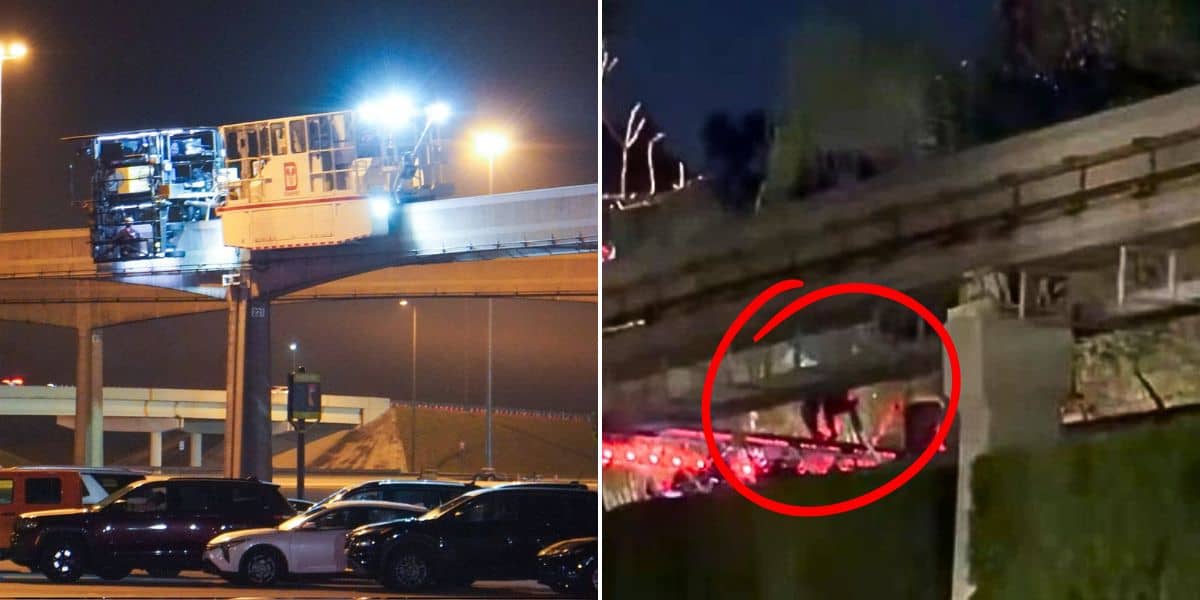
The January 8 power failure that grounded two monorail trains serves as a reminder that even Disney’s most reliable transportation systems require constant attention and modernization. The incident, which occurred just before 5 p.m. as guests flowed toward Disneyland Park for evening festivities, resulted in emergency crews responding to assist with elevated evacuations.
According to reports, the monorail beam itself lost electrical power, affecting both trains simultaneously rather than indicating individual vehicle malfunctions.
The evacuation process showcased both the complexity of managing elevated transportation emergencies and Disney’s extensive safety protocols. Anaheim Fire Department crews worked methodically to safely remove guests from trains stopped above ground level, a process far more involved than standard station unloading.
The location near the park entrance likely facilitated faster response times compared to more remote sections of the monorail route, but the incident still required careful coordination between fire crews, Disney operations teams, and security personnel.
Guest reports on social media platforms suggested the power interruption may have affected other transportation systems as well. Some visitors noted the Disneyland Railroad appeared temporarily closed around the same time, with empty trains and roped-off stations observed near New Orleans Square.
While Disney has not officially confirmed system-wide impacts beyond the monorail, the correlation points to the interconnected nature of resort operations and the precautionary measures Disney takes when infrastructure issues arise.
Understanding Monorail Power Systems
The Disneyland Monorail operates differently from ground-based transportation, relying on electrical power distributed directly through the concrete beam that serves as both guideway and power source. When that supply is interrupted, trains immediately lose propulsion and stop wherever they are positioned on the route.
This design means that power failures affect entire sections of track rather than individual vehicles, explaining why both trains stopped simultaneously during the January incident.
Former cast members familiar with monorail operations have noted that the beam infrastructure, now several decades old, occasionally requires power to be shut off intentionally during emergencies at stations or the roundhouse maintenance facility.
Restoring power is not always instantaneous, and if trains are positioned on track switches, towing them back to stations may not be feasible. These scenarios necessitate full guest evacuations from elevated positions, a procedure that prioritizes safety over convenience despite the dramatic visuals it creates.
How Digital Signage Fits Into Safety Protocols
While digital turnstile signs won’t prevent power failures or mechanical issues, they represent an important layer in Disney’s comprehensive approach to guest safety and communication. During emergencies, clear and immediate information at entry points helps manage guest flow, prevent overcrowding at closed attractions, and direct visitors toward alternative transportation options.
The permit filing indicates this upgrade is part of Disney’s ongoing effort to standardize guest-facing technology throughout the resort. Other turnstile locations have already received similar digital display installations, creating a consistent experience regardless of which attraction or transportation system guests are accessing.
This standardization also simplifies cast member training, as the systems operate uniformly across different locations.
Digital displays also support Disney’s broader operational goals around capacity management and guest distribution. By providing real-time information about wait times, operational status, and directional guidance, these systems help optimize guest flow throughout the resort. During peak attendance periods or special events, the ability to dynamically adjust messaging becomes particularly valuable for managing crowds effectively.
What Guests Can Expect
The installation of digital turnstile signs at the Disneyland Monorail stations will likely be subtle enough that many guests won’t immediately notice the change. The displays will occupy the same overhead positions currently used by printed signs, maintaining the familiar layout while upgrading functionality. Guests should expect clearer, more up-to-date information about boarding procedures, operational status, and any relevant advisories.
For visitors planning trips to Disneyland Resort, the monorail remains one of the most enjoyable ways to travel between Downtown Disney and Tomorrowland. The recent evacuation incident, while dramatic, resulted in no injuries and demonstrated that Disney’s emergency protocols function exactly as designed.
The addition of digital signage represents one more incremental improvement in how the resort communicates with guests and manages operations efficiently.
Transportation systems at theme parks face unique challenges compared to standard public transit. They must handle enormous guest volumes while maintaining strict safety standards and providing an experience that feels magical rather than merely functional.
Small upgrades like digital turnstile signage contribute to that balance, improving operational flexibility while preserving the iconic character that makes the Disneyland Monorail special.
Next time you’re headed to the parks and considering whether to take the monorail, remember that behind every smooth operation are countless small improvements like this one.
And if you happen to notice those new digital signs when you pass through the turnstiles, take a second to appreciate the thought Disney puts into even the smallest details of your visit. Safe travels, and may all your monorail rides be uneventful in the best possible way.