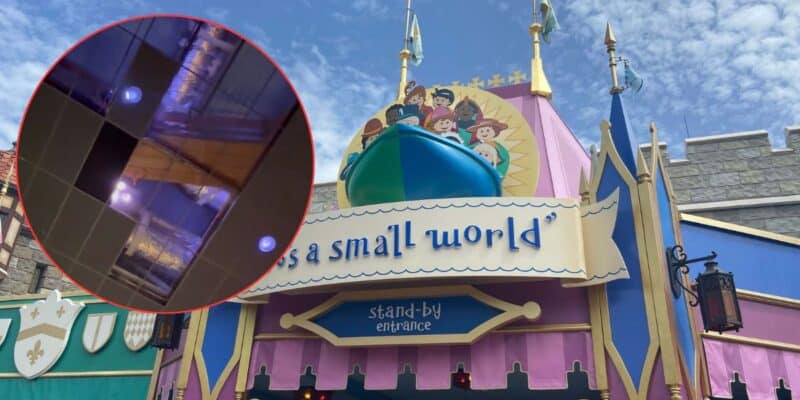
 Credit: Edited by Inside the Magic
Theme park attractions require constant maintenance to preserve the illusion of magic that guests pay premium prices to experience. Behind every colorful facade and whimsical animatronic lies an intricate network of mechanical systems, electrical components, and structural elements that must remain hidden from view to maintain the carefully crafted fantasy environment.
When these behind-the-scenes elements become visible to guests during their ride experience, it represents not just an aesthetic failure but a fundamental breakdown in the standards that separate Disney parks from every other entertainment venue in the world.

The expectation at Disney parks has always been that guests should never see the machinery behind the magic. Imagineers spend countless hours designing sightlines, concealing show buildings, and ensuring that nothing breaks the immersive spell they’re trying to cast. This obsessive attention to detail extends from the grandest vista down to the smallest touch, from ensuring you can’t see Space Mountain from Frontierland to making certain that every inch of visible surface inside an attraction contributes to the story being told.
When guests start noticing exposed infrastructure, peeling paint, or broken effects, it signals that maintenance standards have slipped to a degree that would have been unthinkable during earlier eras of Disney park operation.
Recent guest reports from Magic Kingdom suggest that one of the park’s most beloved classic attractions has reached a concerning state of disrepair. ‘It’s a small world”, the whimsical boat ride that has been charming visitors since the park’s opening in 1971, is showing visible signs of serious neglect that raise questions about Disney’s current approach to maintaining its older attractions.
For an attraction that processes thousands of guests daily and represents a cornerstone of the Magic Kingdom experience, the deterioration is both surprising and disappointing to longtime fans who remember when such visible maintenance issues would have been addressed immediately rather than allowed to persist where guests can clearly see them.
Exposed Infrastructure Visible to Guests

According to recent social media posts from guest Kdodgers24 on X, the ceiling inside “it’s a small world” is in serious disrepair, with sections ripped apart and infrastructure completely exposed to guests riding through the attraction. The guest shared both photos and video documenting the condition, writing “Don’t look at the ceiling on small world like i did. Unless you wanna see the pipes.”
Don’t look at the ceiling on small world like i did. Unless you wanna see the pipes pic.twitter.com/4qQAWU8ppG
— Kdodgers24 (@Kdodgers24) December 14, 2025
The images reveal significant portions of the attraction’s ceiling missing or damaged, with piping and mechanical systems that should be concealed now fully visible as boats pass underneath. This isn’t a matter of a single broken effect or a minor cosmetic issue. The visible damage represents a fundamental failure to maintain the show quality that guests expect from a Disney attraction, particularly one as iconic and heavily trafficked as “it’s a small world”.
For guests experiencing the attraction, seeing exposed pipes and missing ceiling panels immediately breaks the carefully constructed illusion. Instead of being transported into a celebration of global cultures and childhood innocence, riders find themselves acutely aware that they’re in a warehouse-like show building with mechanical systems overhead. The magic disappears the moment you can see the infrastructure that creates it.
The fact that this condition has apparently persisted long enough for guests to document and share on social media suggests the damage isn’t brand new. Ceiling panels don’t just disappear overnight, and the kind of deterioration visible in the posted images typically develops over time through water damage, structural settling, or simple wear and tear that hasn’t been addressed through regular maintenance cycles.
A Pattern of Deferred Maintenance

The visible deterioration at “it’s a small world” isn’t happening in isolation. Magic Kingdom and other Walt Disney World parks have faced increasing criticism in recent years over apparent maintenance issues at classic attractions. Faded paint, broken effects, and outdated technology that once would have been refreshed regularly now seem to persist for extended periods before being addressed.
Part of the challenge is simply the age of these attractions. “It’s a small world” opened with Magic Kingdom in 1971, making it over 50 years old. Maintaining a constantly operating attraction for that length of time requires continuous investment in infrastructure that guests never see. Mechanical systems need replacement, structural elements require inspection and repair, and the cosmetic surfaces that guests do see need regular refreshing to maintain show quality.
However, age alone doesn’t explain visible damage like missing ceiling panels and exposed piping. These are issues that should be caught during routine inspections and addressed before they become noticeable to guests. The fact that they’ve reached a state where riders are specifically warning others not to look up suggests a concerning gap in maintenance protocols or priorities.
Competing Priorities at Magic Kingdom
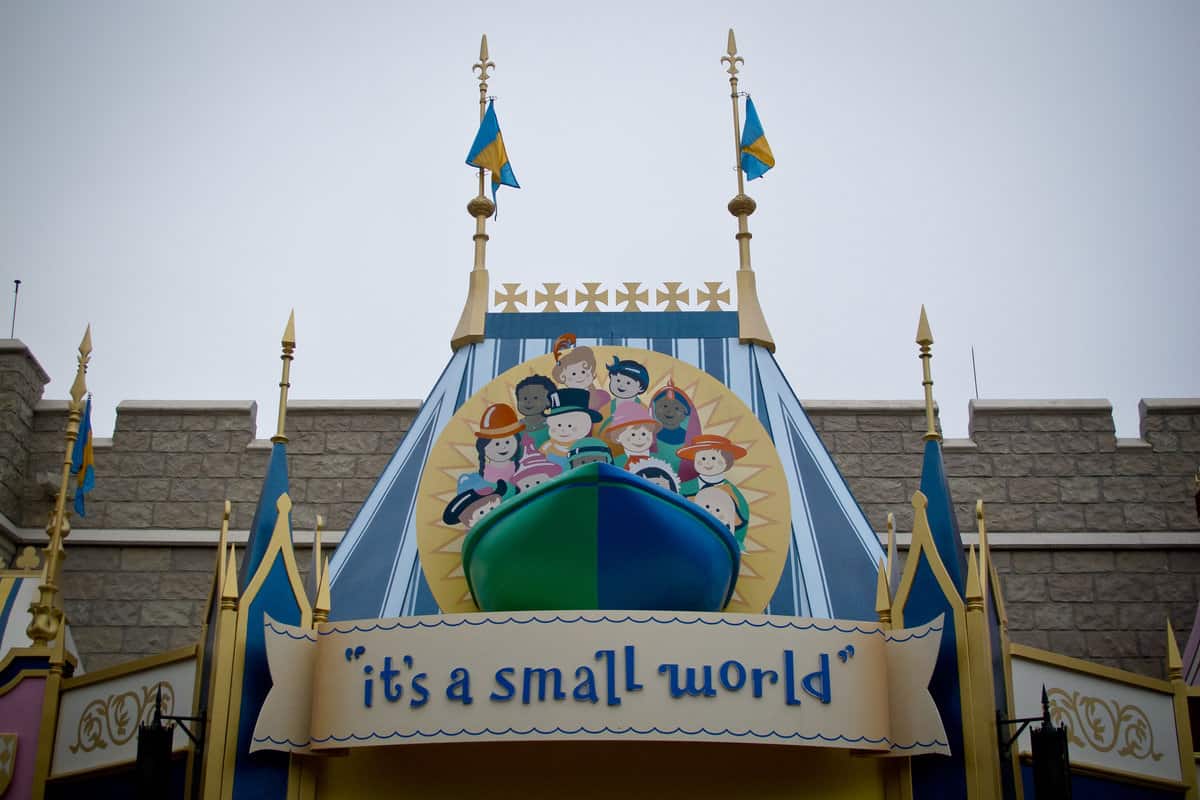
The timing of these maintenance issues at “it’s a small world” is particularly notable given the massive construction projects currently underway at Magic Kingdom. The park is experiencing its largest expansion in history with two major new lands on the horizon: Piston Peak, the new Cars-themed area replacing the Rivers of America, and the highly anticipated Villains Land.
These expansions represent billions of dollars in investment and will fundamentally reshape the Magic Kingdom experience when they open. Construction officially began in July 2025 when the Rivers of America, Tom Sawyer Island, and the Liberty Square Riverboat closed permanently. Since then, significant tree removal and land preparation has been visible throughout Frontierland and Liberty Square.
The scale of these projects raises questions about resource allocation. When Disney is simultaneously investing heavily in new construction while allowing existing attractions to show visible signs of neglect, it suggests a prioritization of expansion over maintenance. New lands and attractions generate headlines and marketing opportunities. A refurbished ceiling on “it’s a small world” does not, even though it’s arguably more important to the daily guest experience.
Guests visiting Magic Kingdom today are more likely to encounter “it’s a small world” than they are to experience Piston Peak or Villains Land, neither of which will open for years. Yet the visible condition of the classic attraction suggests it’s not receiving the maintenance attention required to preserve show quality standards.
The Sightline Problem
Beyond the immediate maintenance issues at “it’s a small world’, Magic Kingdom is facing broader challenges to the immersive experience that has defined the park since opening. The construction of Piston Peak and Villains Land is requiring significant tree removal throughout Frontierland and Liberty Square, fundamentally changing sightlines that have been carefully maintained for over 50 years.
Guests have already noticed that Big Thunder Mountain Railroad is now far more visible from other areas of the park than it was previously, thanks to the removal of mature trees that once provided natural screening. When the new lands are complete, the situation will likely be more dramatic. Piston Peak’s described “dramatic peaks” and “soaring geysers” will tower over the relatively low-profile buildings of Liberty Square and Frontierland, potentially creating visual intrusions that would have been unthinkable in earlier eras of Disney park design.
The principle has always been that each land exists in its own thematic bubble, with carefully controlled sightlines preventing guests from seeing elements that don’t belong. You shouldn’t see Space Mountain from Frontierland, and you shouldn’t see Colonial Liberty Square from Fantasyland. But the geographic constraints of building massive new lands within Magic Kingdom’s existing footprint are making that kind of separation increasingly difficult to maintain.
Combined with visible maintenance issues like the deteriorating ceiling at “it’s a small world”, these changes signal a shift in priorities at Magic Kingdom. The park that once obsessed over every sightline and every visible surface now seems more focused on capacity expansion and new attraction development than on preserving the meticulous standards that made it special in the first place.
What This Means for the Future
The exposed infrastructure at “it’s a small world” serves as a visible symbol of a broader question facing Walt Disney World: can the resort maintain its reputation for exceptional show quality while simultaneously pursuing aggressive expansion and managing increased operational pressures?
Classic attractions like “it’s a small world” represent the foundation of the Magic Kingdom experience. These are the rides that multiple generations have experienced together, the attractions that define what Disney parks mean to millions of visitors. When they fall into visible disrepair, it erodes trust in the brand and diminishes the overall experience in ways that no amount of new construction can offset.
“It’s a small world” needs a comprehensive refurbishment that addresses not just the visible ceiling damage but likely numerous other maintenance issues throughout the attraction. The fact that such obvious deterioration has been allowed to persist suggests that refurbishment either isn’t prioritized or isn’t scheduled in the near future, both of which are concerning for an attraction this significant to the park’s lineup and this visible to guests.