Credit: Disney
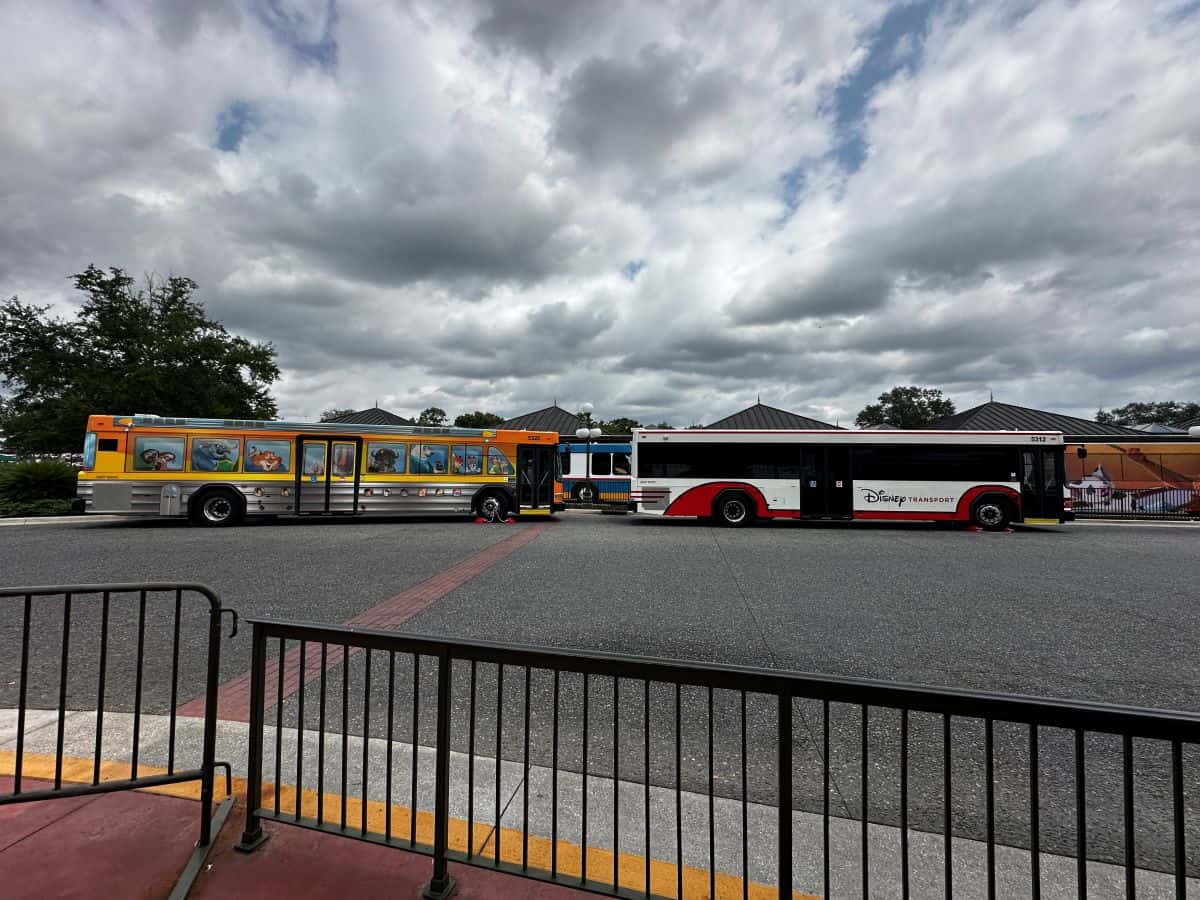
When guests book their magical vacation to Walt Disney World Resort, transportation safety is likely the last thing on their minds. The iconic Disney buses—those white and colorful vehicles adorned with beloved characters that ferry millions of guests annually between resort hotels and theme parks—are as synonymous with the Disney experience as Cinderella Castle or Space Mountain.
For decades, Disney’s complimentary transportation system has been a cornerstone of the resort experience, offering convenience and eliminating the need for rental cars or rideshares for many visitors.

However, a recent incident on Buena Vista Drive has brought the realities of operating a massive transportation network into sharp focus. Two Disney World resort buses were involved in a collision that left both vehicles with significant damage and has sparked conversations across social media about the challenges of navigating Disney’s notoriously complex road system.
Images shared on Reddit show substantial front-end damage to one bus and rear damage to another, painting a stark picture of the impact forces involved when vehicles of this size collide.
The crash occurred on Buena Vista Drive, one of the main thoroughfares that connects various parts of the Walt Disney World property. According to eyewitness reports and social media posts, one of the buses involved was bound for Disney’s Art of Animation Resort, though details about the second bus’s destination remain unclear.
Guests who passed the scene described “a ton of damage” to the front of the second bus, while the rear bus appeared to have crashed into the vehicle ahead of it.
What makes this incident particularly noteworthy isn’t just the collision itself—accidents happen, even at the Most Magical Place on Earth—but rather the broader conversation it has ignited about driving conditions around Walt Disney World property.
The Reddit thread documenting the crash quickly filled with comments from Disney guests, annual passholders, and frequent visitors sharing their own harrowing experiences navigating the resort’s road network. Their stories paint a picture of an area where confused tourists, unfamiliar roads, last-minute lane changes, and high traffic volumes create a perfect storm of dangerous driving conditions.
Understanding the context of this crash requires examining several interconnected factors: the unique challenges of Disney World’s road infrastructure, the behavior patterns of tourists navigating unfamiliar territory, the operational demands placed on Disney bus drivers who must maintain tight schedules while ensuring guest safety, and the broader question of whether Disney’s transportation system adequately addresses these safety concerns.
Walt Disney World spans approximately 25,000 acres—roughly the size of San Francisco—with an intricate network of roads connecting four theme parks, two water parks, dozens of resort hotels, Disney Springs shopping and entertainment district, and various recreational facilities. For visitors accustomed to smaller, more intuitive theme park layouts, navigating this sprawling property can be genuinely overwhelming.
GPS systems don’t always provide accurate directions within Disney property. Signage, while present, can be confusing for first-time visitors trying to process information while driving in unfamiliar territory. And the sheer volume of vehicles—both Disney transportation and private cars—creates traffic conditions that even experienced drivers find challenging.
The recent bus collision serves as a reminder that Disney World, despite its carefully cultivated image as a place where magic happens and dreams come true, operates within the same physical realities as anywhere else. Vehicles traveling at speed can collide. Drivers can make mistakes. And when accidents involve large commercial vehicles like Disney buses carrying dozens of passengers, the potential for serious injuries increases significantly.
In this comprehensive article, we’ll examine the details of the recent bus collision, explore the eyewitness accounts and guest reactions that provide crucial context, analyze the specific challenges of driving around Walt Disney World property, discuss the safety record and operational pressures facing Disney’s transportation system, and consider what this incident means for guests relying on Disney transportation during their vacations.
We’ll also look at whether alternative transportation options might offer safer alternatives and what steps Disney could potentially take to improve safety throughout its road network.
The Collision: What We Know About the Disney Bus Crash

The incident occurred on Buena Vista Drive, a major road running through Walt Disney World property that connects various resorts and serves as a key route for Disney’s transportation network. Based on images shared on social media and eyewitness accounts, the collision involved two Disney resort buses, resulting in substantial damage to both vehicles.
According to posts from guests who witnessed the aftermath, one bus sustained significant front-end damage while the other suffered rear-end impact. One commenter who passed the scene shortly after the collision noted: “Just passed this. Wow! A ton of damage to the front of that second bus.” The force of the impact was clearly substantial, suggesting this was not a minor fender-bender but a collision involving considerable speed or momentum.
One of the buses involved was confirmed to be bound for Disney’s Art of Animation Resort, one of the Value resort hotels located in the ESPN Wide World of Sports Area of the property. The destination of the second bus remains unclear from available reports, though the nature of the damage suggests it was the trailing vehicle that rear-ended the bus in front of it.
The immediate concern following any vehicle collision is the welfare of those involved. One Reddit commenter expressed this priority clearly: “I hope everyone on the bus was okay. Why do people always assume that a 10 ton vehicle can stop as quickly as their little coupe??” While specific information about injuries has not been publicly released by Disney or local authorities, the question raises an important point about the physics involved when large commercial vehicles are forced to brake suddenly or take evasive action.
Disney buses are substantial vehicles, typically weighing between 25,000 to 40,000 pounds depending on the model and passenger load. When fully loaded with guests, luggage, and equipment, stopping distances for these vehicles are significantly longer than standard passenger cars.
A bus traveling at even moderate speeds requires considerably more distance to come to a complete stop, and emergency braking situations can result in passengers being thrown forward in their seats—a particular concern given that Disney buses, like most transit buses, don’t require passengers to wear seat belts.
The timing of the crash—just two days before the Reddit post was shared—means the incident is relatively recent, and official statements or incident reports may still be forthcoming from Disney or local law enforcement. However, the lack of major news coverage suggests that while the collision was significant enough to cause substantial vehicle damage, injuries were either minor or unreported to media outlets.
Guest Reactions: The Reddit Thread That Reveals Deeper Concerns
The Reddit post documenting the bus collision quickly became a forum for Disney guests to share their own experiences and concerns about driving conditions around Walt Disney World property. The comments reveal a pattern of dangerous driving behaviors, near-misses, and a general consensus that navigating Disney’s road network presents unique and significant challenges.
One of the most comprehensive observations came from a commenter who explained the fundamental problem facing drivers on Disney property:
“No one knows where they’re going around there unless you frequent the parks a lot like passholders do. Driving around there I assume that everyone will cut you off or merge into your lane because they are missing a turn off. They don’t understand that uturns are a thing and just miss your turn instead of reckless veering into other lanes. You have to be very defensive driver there.”
This comment captures the essence of the problem: Disney World attracts visitors from around the globe, many of whom are unfamiliar with both the property layout and potentially American driving conventions. When drivers realize they’re about to miss a crucial turn that might add 10-15 minutes to their journey, panic can set in, leading to dangerous last-second lane changes, sudden braking, or illegal maneuvers.
The commenter’s note about defensive driving is particularly telling—experienced Disney visitors have learned to anticipate erratic behavior from other drivers because it happens so frequently.
The chaos isn’t limited to daytime hours or high-traffic periods. Another guest described their experience arriving at night:
“Driving that area is pure chaos. We came in in the middle of the night with literally not one other car around. I told my husband that I was happy we were alone on the road so I could do what I needed to do and take the right roads.”
Even with minimal traffic, the complexity of Disney’s road system created anxiety for this driver. The fact that they felt relieved to be alone on the road “so I could do what I needed to do” suggests that navigating the correct routes requires concentration and potentially unusual maneuvers that become more stressful when other vehicles are present.
Specific locations around Disney property have developed reputations as particularly dangerous. One commenter shared a personal close call:
“That left turn from Western onto Buena Vista is a white knuckler. I was run off the road onto a service trail because the person in the left lane had no clue I was right next to them.”
Being run completely off the road onto a service trail represents a serious safety incident that could easily have resulted in a collision or injury. The fact that this commenter specifically identifies this intersection suggests it’s a known trouble spot where poor visibility, confusing lane configurations, or inadequate signage creates recurring problems.
Perhaps most disturbing is the comment that touches on a psychological factor that may contribute to dangerous driving at Disney:
“Everybody drives crazy at Disney because they have bought into the idea that it’s all a fantasy. Nothing bad will happen to them at Disney. People DIE here, people.”
This observation suggests that the carefully cultivated Disney magic—the idea that Disney World is a place apart from the real world where everything is perfect and controlled—may actually contribute to dangerous behavior.
If guests subconsciously believe they’re in a protected bubble where normal rules and consequences don’t apply, they may take risks they wouldn’t consider in other contexts. The commenter’s stark reminder that “people DIE here” serves as a necessary reality check.
Not all commenters were quick to assign blame without full information. One thoughtful response questioned the immediate assumption that a car caused the bus collision:
“I’m a little confused why everyone is saying it’s the cars fault. I do see the car in the second picture, but the bus lane is also the right most lane. Is it not possible that the car was turning right so they had to be in that lane? It’s hard to tell exactly where this accident happened along the road, so it’s possible there’s no right turn coming up. Regardless, if the car actually cut off the bus, which we can’t tell from the picture, they’re obviously in the wrong. Would love a summary of what happened from someone who witnessed the accident.”
This measured response highlights an important point: without complete information about how the collision occurred, assigning fault based solely on photos is premature. However, it also reflects the general assumption among Disney visitors that erratic behavior from passenger vehicles is the most likely explanation for transportation incidents.
The thread also included accounts of previous incidents demonstrating the real consequences of these dangerous driving conditions. One commenter shared a personal experience from approximately 15 years ago:
“The drivers around this area are awful. This happened about 15 yrs ago-my mom, dad, and i were on a bus headed back to OKW. A car cut us off, and the bus ran into the rear of the car. We were all slammed forward and my dad hit his head very hard on the seat in front of him. Got a nasty gash and needed stitches. Take ubers!”
This account is particularly significant because it describes exactly the kind of injuries that can occur on buses even when the collision itself might seem relatively minor. Without seat belts, passengers can be thrown forward with considerable force during sudden stops or impacts.
The father in this story required stitches for a head laceration—an injury that could have been much worse depending on the angle and force of impact. The commenter’s conclusion—”Take ubers!”—suggests their family’s experience permanently changed their approach to Disney transportation.
One commenter even noted witnessing the aftermath from an unusual vantage point: “Flew over this on the skyliner this morning.” This casual observation reminds us that Disney’s transportation network includes multiple systems—buses, monorails, boats, and the Skyliner gondola system—all operating simultaneously across the property, adding additional complexity to the overall transportation picture.
The Challenges of Navigating Walt Disney World’s Road Network
To understand why incidents like this bus collision occur, it’s essential to examine the unique challenges presented by Walt Disney World’s road infrastructure. The property’s sheer size and complexity create conditions unlike typical urban or suburban driving environments.
Property Size and Scale: Walt Disney World encompasses approximately 25,000 acres, making it roughly twice the size of Manhattan. The road network connecting various destinations includes major thoroughfares like World Drive, Buena Vista Drive (where the crash occurred), Epcot Center Drive, and numerous smaller roads serving individual resorts and facilities. For context, the distance from Magic Kingdom to Disney’s Animal Kingdom Lodge is over 10 miles by road—a significant journey that requires navigating multiple intersections, lane changes, and decision points.
Confusing Signage and Road Design: While Disney does provide directional signage, the sheer number of destinations and the frequency of turns can overwhelm unfamiliar drivers. Many roads have multiple lanes with specific designations (bus lanes, resort guest lanes, etc.) that may not be immediately obvious.
Intersections can feature multiple turn options, and missing your turn often means traveling several miles out of your way before finding an opportunity to correct course.
Tourist Driver Behavior: Disney World attracts visitors from around the world, many of whom are dealing with multiple stress factors simultaneously: driving an unfamiliar rental car, navigating an unfamiliar area, managing excited or tired children, trying to make dining reservations or Lightning Lane return times, and processing directions from GPS systems that don’t always account for Disney’s unique road configurations.
This cognitive overload leads to exactly the behaviors described in the Reddit comments—last-second lane changes, sudden stops, and erratic driving.
Mixed Traffic Types: Disney’s roads accommodate an unusual mix of vehicle types: Disney buses, guest vehicles, delivery trucks, maintenance vehicles, rideshare drivers, taxis, and Disney’s own security and operations vehicles. Each type has different capabilities, speed limits, and operational priorities, creating a complex traffic environment.
High Traffic Volumes During Peak Times: During peak vacation periods, traffic on Disney property can reach levels comparable to major urban areas. Morning and evening hours, when guests are traveling to and from theme parks, create traffic congestion that exacerbates all the other challenges.
Limited Alternative Routes: Unlike typical road networks where multiple routes might connect two points, Disney’s property often features limited options for reaching specific destinations. If you miss a turn or take a wrong road, correcting the mistake can add significant time and distance to your journey, creating pressure to make aggressive driving decisions.
Disney Bus Operations: The Pressures Facing Drivers
Understanding the recent collision also requires considering the operational environment in which Disney bus drivers work. These professional drivers face unique challenges that distinguish their jobs from typical commercial driving positions.
Schedule Pressures: Disney transportation operates on relatively tight schedules designed to move guests efficiently between locations. While drivers certainly prioritize safety, they also face pressure to maintain reasonable arrival times, particularly during peak periods when guests are trying to reach parks for opening or return to resorts after closing.
Passenger Management: Unlike standard transit buses where passengers board, sit, and disembark at designated stops, Disney buses often carry excited children, tired families, guests with strollers and wheelchairs, and large amounts of luggage. Managing boarding and ensuring all passengers are safely seated before departing adds complexity to every trip.
Defensive Driving Requirements: As multiple Reddit commenters noted, driving defensively is essential on Disney property. Bus drivers must constantly anticipate erratic behavior from other vehicles while operating large, heavy vehicles with longer stopping distances and larger blind spots than passenger cars.
Weather Conditions: Central Florida’s weather includes frequent afternoon thunderstorms, occasional hurricanes, and heavy rain that can reduce visibility and create hazardous road conditions. Drivers must adjust their operations accordingly while still maintaining service.
Fatigue Factors: Disney’s transportation system operates from early morning through late night, with some services running past midnight during extended park hours. Driver fatigue is a factor in any commercial transportation operation, and managing shift schedules to ensure drivers are alert and capable is an ongoing challenge.
The commenter who asked, “Why do people always assume that a 10 ton vehicle can stop as quickly as their little coupe??” highlights a fundamental misunderstanding many drivers have about commercial vehicle capabilities.
When a car cuts off a bus or pulls suddenly in front of it, the bus driver’s options are severely limited. Emergency braking can throw passengers forward violently. Swerving risks losing control of a top-heavy vehicle. Sometimes, despite the driver’s best efforts, collisions are unavoidable.
Safety Record and Incident Reporting
Disney does not publicly release comprehensive data about transportation incidents, making it difficult to assess whether the recent bus collision represents an isolated incident or part of a broader pattern. However, occasional accidents involving Disney transportation do occur and sometimes make local news when injuries are involved.
The incident described in the Reddit comments from 15 years ago—where a father required stitches after a car cut off a bus—demonstrates that these types of collisions have historical precedent. The severity of outcomes can vary widely depending on factors like speed, angle of impact, whether passengers are standing or seated, and individual passenger positioning.
From a legal and operational perspective, Disney maintains insurance coverage for its transportation fleet and has procedures for documenting incidents, providing medical attention when needed, and investigating causes. However, the company’s preference for handling matters privately means most incidents don’t receive public attention unless they involve serious injuries or fatalities.
Alternative Transportation Options
The Reddit commenter who concluded their story with “Take ubers!” raises the question of whether alternative transportation options might offer safer experiences for Disney guests.
Rideshare Services (Uber/Lyft): These services are widely available throughout Disney property and offer point-to-point transportation in passenger vehicles. However, rideshare drivers face the same road conditions and traffic challenges as everyone else, and many are unfamiliar with Disney property themselves. The safety advantage, if any, may be minimal.
Disney Skyliner: The gondola system connecting several resorts to EPCOT and Hollywood Studios eliminates road travel entirely for those routes. While the Skyliner has experienced its own operational challenges, it removes guests from the road traffic equation.
Monorail: Disney’s iconic monorail system serves Magic Kingdom and several nearby resorts. Like the Skyliner, it operates on dedicated infrastructure separate from road traffic.
Boats: Water transportation connects some resorts to theme parks, offering another alternative to bus travel.
Personal Vehicles: Driving your own car gives you control over timing and routes but subjects you to the same challenging road conditions described throughout this article.
Walking: Some resorts are within walking distance of theme parks, though Florida’s heat and afternoon storms make this impractical for many guests.
Each option has tradeoffs in terms of convenience, cost, capacity, and safety. For most guests, Disney’s complimentary bus service remains the primary transportation method, making incidents like the recent collision particularly concerning.
Magic Meets Reality on Disney World Roads
The collision between two Disney resort buses on Buena Vista Drive serves as a stark reminder that even at the Most Magical Place on Earth, physical realities cannot be suspended. Large vehicles operating in complex traffic conditions carry inherent risks, and those risks increase when confused tourists, tight schedules, and a sprawling road network combine.
The Reddit thread documenting this incident revealed something perhaps more concerning than the crash itself: a widespread recognition among Disney guests that driving on property is genuinely dangerous. When experienced visitors describe the experience as “pure chaos,” warn others about specific “white knuckler” intersections, and share stories of being run off roads or injured in previous collisions, it suggests systemic challenges rather than isolated incidents.
For the millions of guests who visit Walt Disney World annually, understanding these realities is important for making informed decisions about transportation. While Disney’s bus system provides convenient, complimentary service that most guests use without incident, the experience comes with risks inherent to operating in a challenging traffic environment.
As one commenter bluntly stated: “People DIE here, people.” It’s an uncomfortable truth that punctures the Disney bubble, but it’s one worth remembering. Whether you’re driving your own vehicle, riding a Disney bus, or using alternative transportation, staying alert, driving defensively, and prioritizing safety over convenience or schedule pressure can help ensure your Disney vacation remains magical for all the right reasons.
The damaged buses from this recent collision will be repaired or replaced, and Disney’s transportation network will continue operating as it always has. But perhaps this incident and the conversation it generated can serve as a catalyst for examining how safety can be improved throughout Walt Disney World’s complex transportation ecosystem—because every guest deserves to arrive at their destination safely, ready to experience the magic they came for.