 1
1
 Credit: Kaleb Tapp, Unsplash
It’s not often that a beloved Disney World land fades quietly into the background. But as the company races ahead with massive new projects, one area in particular has taken a significant hit—forgotten in the shadow of what’s next. Disney’s latest moves signal a bold new era for the parks, yet for longtime fans, it feels like the dream that once existed for this corner of the resort has been abandoned entirely.
A New Era, A Forgotten Past
Over the last year, Disney has doubled down on its future—investing heavily in expansions that promise to reshape the resort for decades. Villains Land at Magic Kingdom, a Piston Peak aviation-themed area inspired by Planes, the long-teased Monstropolis expansion connected to Monsters, Inc., and the confirmed Tropical Americas transformation at Animal Kingdom have all dominated headlines.
Each of these projects feels ambitious and exciting, the kind of sweeping overhaul that reminds guests why Disney remains the industry leader in storytelling. But in chasing what’s next, the company has unintentionally drawn a clear line between what gets attention—and what doesn’t.
Certain existing lands are being left behind, with no upgrades, no refurbishments, and no acknowledgment of what made them special in the first place.
For some fans, that’s the real heartbreak: watching Disney pour energy into new experiences while quietly ignoring the ones that still have untapped potential.

When Expansion Overshadows Legacy
Disney’s expansion strategy has become laser-focused. Every new project seems tied to the latest hit or revitalized IP, leaving original or cult-classic concepts in the dust. Villains Land is a prime example—a fan-demanded concept finally moving forward, drawing cheers from those eager to step into the dark side of Disney storytelling.
Monstropolis offers a playful, Pixar-forward future, while Piston Peak injects energy and thrills into Disney’s ongoing aviation theme park ambitions.
Meanwhile, Animal Kingdom is getting the most significant transformation of all. The Tropical Americas project, slated to replace the DinoLand U.S.A. area, has taken center stage.
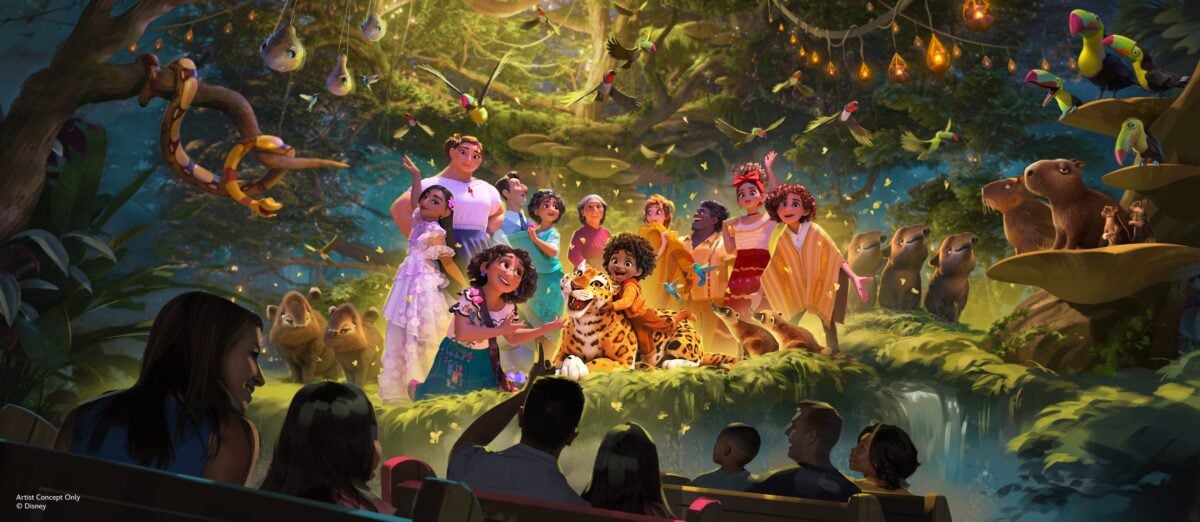
With Indiana Jones and Encanto serving as its centerpiece attractions, this new expansion promises lush environments, vibrant storytelling, and massive crowd appeal. But as all eyes turn to what’s coming next, one existing land at Animal Kingdom has found itself quietly pushed aside.

A Quiet Divide
Animal Kingdom has always been a park built around balance—between adventure, education, and the natural world’s beauty. Guests journey from the African savannas of Kilimanjaro Safaris to the mythical realm of Asia’s Expedition Everest. Yet even within this harmony, one area has struggled to maintain its identity amid Disney’s ever-changing priorities.
Pandora – The World of Avatar opened in 2017 to immense fanfare. It was unlike anything Disney had built before—lush, otherworldly, and visually stunning.
Floating mountains towered above, bioluminescent pathways glowed at night, and two attractions—Na’vi River Journey and Avatar Flight of Passage—quickly became must-do experiences. The land instantly became a hit with guests, but over time, the shine has started to fade.

The Beauty and the Limits of Disney’s Forgotten Land
While Pandora remains one of Animal Kingdom’s most visually striking areas, some fans have voiced their disappointment in how the land has evolved—or rather, how it hasn’t. For a land inspired by one of the most visually breathtaking films ever made, the experience can feel somewhat muted compared to what it could be.
Many guests have pointed out that the nighttime bioluminescence doesn’t match the scale or brilliance of James Cameron’s film. The glowing plants rely on subtle lighting effects rather than fully integrated, movie-accurate designs. Some Disney parkgoers believe the realism of Animal Kingdom’s setting limits how immersive Pandora can truly feel.
“If it were built in another park,” one fan suggested online, “they could’ve created entirely artificial landscapes—full of glowing, alien vegetation—without worrying about preserving real flora.”
That sentiment captures what many feel: Pandora is beautiful, but it’s restrained. Guests can still sense the tension between Disney’s dedication to nature and the science-fiction wonder of Avatar. It’s a stunning achievement, but also one that never quite hit the cinematic magic it aspired to recreate.

What Could Have Been
Fans often look back and wonder what Pandora might have been if it had landed elsewhere—say, in Disney’s Hollywood Studios. That park’s emphasis on world-building and immersive storytelling could have allowed Imagineers to go all-in on the alien atmosphere, building every plant, structure, and creature from scratch. The result might have been something closer to stepping inside the movie itself.
Instead, Pandora remains an impressive but imperfect experiment—one that, despite its success, seems to have been quietly left off Disney’s list of priorities. While other lands are receiving complete makeovers, new attractions, or seasonal updates, Pandora feels stuck in time. Its once-groundbreaking design hasn’t evolved since its debut, even as other Disney parks around the world push technology and theming further.

Disney’s Focus Shifts South
The reason for that shift is apparent: Tropical Americas. Disney’s next significant expansion will transform Animal Kingdom’s landscape, combining two powerhouse stories—Indiana Jones and Encanto. The plans are ambitious, promising intricate environments, advanced ride systems, and cultural depth that ties perfectly to the park’s overall theme.
In many ways, this new land embodies everything that made Pandora so exciting in 2017: innovation, immersion, and stunning design. However, it also signals that Disney’s attention is firmly fixed on the future, not the past. For Pandora, that means fewer updates, fewer chances for improvement, and little room for the creative evolution fans hoped for.
The Fans Still Believe
Despite the shift in focus, Pandora continues to draw massive crowds. Flight of Passage remains one of Disney World’s most in-demand attractions, and guests still marvel at the floating mountains and glowing walkways. But beneath the surface, there’s a growing sense of disappointment that the land’s full potential may never be realized.
Some still hope Disney will revisit the area someday—perhaps with new lighting technology, expanded storylines, or even an additional attraction inspired by Avatar: The Way of Water (2022) or the upcoming Avatar: Fire and Air (2025). Yet as construction ramps up elsewhere across Walt Disney World, the odds of Pandora getting that kind of love seem increasingly slim.

A Land Left Behind
Disney is moving full steam ahead with its next era, and that’s undeniably exciting. However, in doing so, it has left behind a land that once promised to redefine immersion at Walt Disney World. For many fans, that’s the true “crushing blow.”
Pandora deserved to keep growing—to evolve alongside Disney’s ambitions, not get overshadowed by them. Instead, it stands as both a technical triumph and a reminder that even in the most magical place on Earth, some dreams quietly fade while others rise to take their place.