 Credit: Disney
A shocking clip captured inside Disney’s Hollywood Studios on Friday, November 20, 2026, has ignited a firestorm across theme park social media. In the video—originally posted to Instagram by user drdisneyland and swiftly shared across X and TikTok—a woman riding an electric mobility scooter drives straight into a stationary young boy standing beside his family as they finish speaking with a Disney PhotoPass cast member.
As the boy’s right leg becomes pinned beneath the front of the scooter and he cries out in pain while his mother rushes to his side, millions of viewers online have demanded answers. Across comment sections, frustrated guests are calling on Walt Disney World Resort to restrict who can rent mobility scooters, enforce strict screening requirements, or ban the vehicles from crowded theme park walkways altogether. Despite the intense backlash, however, the legal and operational reality is clear: Disney has virtually no control over who rents or operates a mobility scooter, and the company is never going to ban them from its parks.
Inside the Viral Hollywood Studios Scooter Collision
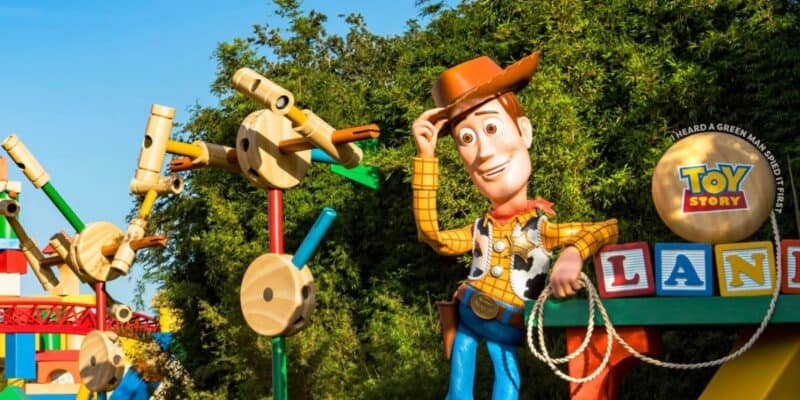
According to the eyewitness who recorded the November 20 footage—who explained in his caption that he happened to be standing near the PhotoPass photographer because she was his wife’s college roommate—the young boy was standing completely still next to his relatives in Toy Story Land while his mother finalized their PhotoPass scan. Within seconds, a woman driving an electric mobility scooter collided directly with the child, trapping his right leg under the device before bringing the scooter to a halt.
Fortunately, the creator who shared the video confirmed that the young boy was okay and avoided serious injury. Even so, the footage rapidly garnered more than 207,000 likes and nearly 10,000 comments on Instagram alone before spreading across X and TikTok, sparking a fierce debate over pedestrian safety at Walt Disney World.
While the eyewitness urged viewers to stay fair and remember that mobility scooters are vital for many theme park visitors, thousands of commenters shared personal accounts of clipped ankles, sudden collisions, and reckless scooter driving in congested areas.
Mounting Backlash Over Scooter Abuse in the Parks
The November 20 collision is only the latest flashpoint in a year marked by growing tension over Electric Conveyance Vehicles—known at Disney as ECVs. Back in August 2026, multiple TikTok and Instagram videos went viral, showing groups of seemingly able-bodied visitors renting mobility scooters together at EPCOT and Disney’s Animal Kingdom, riding side by side, bumping into one another, and joking that renting scooters was the best money they had spent all day.
Those viral clips fueled widespread resentment among park regulars, many of whom accuse some guests of treating $65-a-day rental scooters like theme park bumper cars rather than essential medical mobility aids. Combined with wall-to-wall holiday crowds, the backlash has led many visitors to demand that Disney require medical verification, mandate driving tests, or eliminate non-essential scooter rentals.
Why Federal Law Strips Disney of Control Over Who Uses a Scooter
Regardless of how loud the online outcry becomes, Walt Disney World’s hands are tied by federal civil rights legislation. Under the Americans with Disabilities Act (ADA) and official U.S. Department of Justice guidelines, theme parks and public venues are required to treat electric mobility scooters and power wheelchairs the same way they treat manual wheelchairs—meaning they must permit individuals with mobility disabilities to operate them in virtually all public guest areas.
Most importantly, federal law strictly forbids businesses from questioning guests about the nature or severity of their disability, demanding medical documentation, or requiring a doctor’s note before renting or admitting a mobility device. Because countless legitimate disabilities are invisible—including heart disease, respiratory conditions, chronic fatigue, neuropathy, or recovering surgical injuries—Disney Cast Members cannot legally evaluate guests at the rental counter to decide who appears “disabled enough” to need an ECV.
Walt Disney World’s official ECV rental rules are therefore limited to basic operational standards:
- Renters must be at least 18 years old and present a valid government-issued photo ID.
- Only one rider is allowed on an ECV at any time, and the vehicle carries a maximum weight capacity of 450 pounds.
- Daily rentals cost $65 per day at Walt Disney World theme parks, water parks, and Disney Springs, accompanied by a refundable $20 deposit at theme parks or a $100 deposit at water parks and Disney Springs.
- Rentals are distributed on a first-come, first-served basis with no reservations.
Furthermore, even if Walt Disney World shut down its own rental counters tomorrow, the number of mobility scooters inside the parks would barely change. Thousands of vacationers bring their own personal scooters from home or rent multi-day units from third-party Orlando mobility providers—such as Disney’s featured provider, ScooterBug—which deliver scooters directly to Walt Disney World Resort hotels. Under federal accessibility rules, as long as a personal or third-party scooter has at least three wheels, carries a single rider, travels at a walking pace, and measures no more than 36 inches wide by 52 inches long, Disney is legally obligated to allow it through the gates.
Why Walt Disney World Will Never Ban Mobility Scooters
Beyond strict federal compliance, Walt Disney World has zero intention of banning mobility scooters because doing so would shut the gates on hundreds of thousands of guests who rely on them to enjoy a Disney vacation. A standard day at Magic Kingdom or EPCOT routinely involves walking between seven and twelve miles in Central Florida heat and humidity. This physical endurance test would be impossible for seniors, injured guests, and visitors living with chronic mobility conditions without powered assistance.
While Disney cannot demand medical proof or ban scooters from the property, park officials do enforce behavioral expectations outlined in every rental agreement. Disney prohibits distracted operation—such as texting, browsing a phone, or eating while driving an ECV—bans carrying children or pets in the front basket or on a rider’s lap, and instructs operators to maintain a walking speed and exercise caution on ramps, hills, and wet surfaces. Cast Members also hold the authority to step in if an operator is visibly intoxicated or driving in a way that actively endangers others.
Practical Ways Both Drivers and Pedestrians Can Prevent Collisions
Because mobility scooters are an essential and permanent part of Walt Disney World operations, preventing accidents like the November 20 crash at Hollywood Studios ultimately comes down to shared vigilance on busy walkways. First-time scooter renters—many of whom have never operated an ECV before arriving at the park—can make a major difference by practicing turning and braking in an open plaza before entering dense crowds, turning the speed dial down to its lowest setting in tight corridors like Toy Story Land, and keeping their eyes off their smartphones while moving.

At the same time, pedestrians can help protect their families by keeping young children close in high-traffic zones, avoiding sudden stops in the middle of main pathways, and stepping completely off to the side when checking the My Disney Experience app or posing for PhotoPass pictures. As viral videos continue to stir passionate debate across social media, patience and situational awareness from everyone sharing the walkways remain the only realistic way to keep every guest safe at Walt Disney World.