
 Credit: Disney
For more than a decade, snapping a colorful rubber strap around your wrist has been a familiar sign that your Walt Disney World vacation has officially begun. Since their game-changing debut in 2013, Disney MagicBands—and their newer, feature-rich counterpart, MagicBand+—have helped define the modern theme park experience. With a simple tap of your wrist against an illuminated Mickey touchpoint, you can unlock your hotel room door, enter the parks, redeem Lightning Lane return windows, and charge a Mickey Premium Ice Cream Bar directly to your resort folio, where eligible.
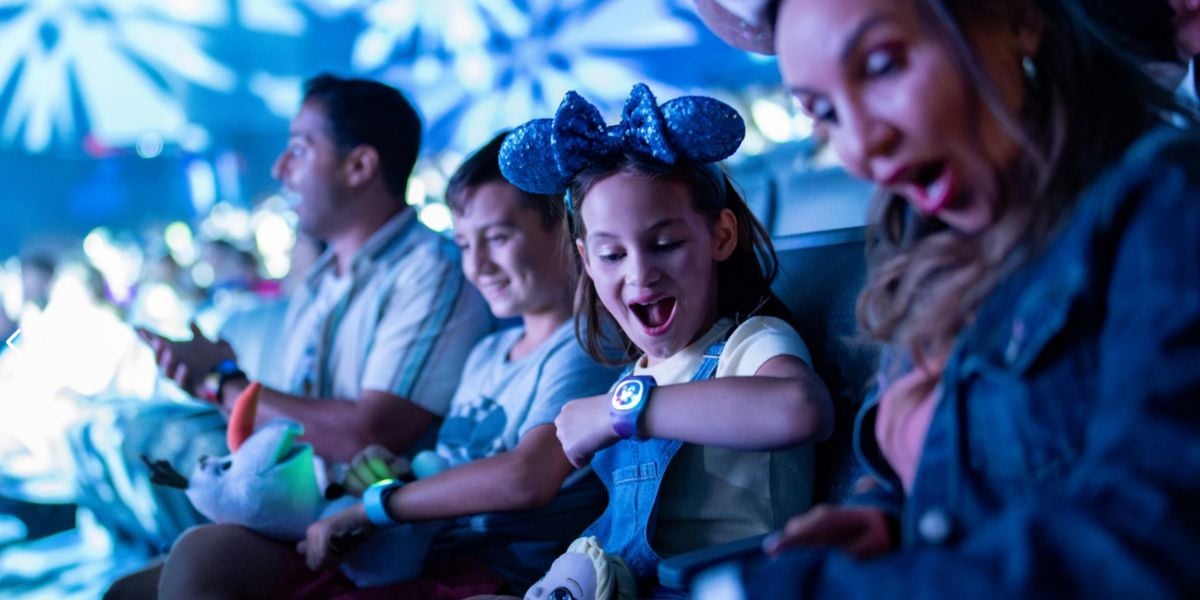
MagicBands represented a major investment in the future of guest convenience, with the broader MyMagic+ initiative reportedly costing around $1 billion. But what if the man credited with spearheading their development is now building technology that could change how guests interact with theme parks altogether?
John Padgett, the former Disney executive credited with leading the original MagicBand project, has unveiled his next frontier: Spaxial, a venture developing what its creators describe as the world’s first “experiential artificial intelligence platform.”

As first detailed in a comprehensive Forbes report, Padgett’s new software aims to rethink how physical leisure destinations operate. By combining connected sensors, permission-based identity systems, precision location technology, and artificial intelligence, Spaxial seeks to coordinate more personalized guest service while reducing reliance on repeated physical interactions and smartphone screens. Although the platform is not a confirmed replacement for MagicBands, its approach could change how some functions currently handled by wearables and mobile apps are delivered.
The Mastermind Behind Disney’s Biggest “Game Changers”
To understand why Spaxial poses such an interesting challenge to the theme park status quo, one has to look at the track record of its creator.

Padgett spent 18 years at The Walt Disney Company, eventually rising to Head of Game-Changer Experience Development. During his nearly two-decade tenure, he helped steer several influential guest-experience initiatives:
- The MagicBand & MyMagic+ Infrastructure: Disney’s landmark investment in RFID-enabled wearables and connected vacation planning, with the broader MyMagic+ initiative reportedly costing around $1 billion.
- FastPass+: The digital line-management system that preceded today’s Lightning Lane offerings.
- Be Our Guest Restaurant: The interactive dining experience in Magic Kingdom’s Fantasyland, where technology-assisted service helped Cast Members associate orders with guests’ tables and deliver food without relying solely on conventional table-number systems.
- Bibbidi Bobbidi Boutique: The experiential transformation salon where young guests can receive princess- and knight-themed makeovers.

After leaving Disney, Padgett brought his wearable-technology philosophy to the high seas as Chief Experience and Innovation Officer at Carnival Corporation before becoming President of Princess Cruises. There, he helped develop the OceanMedallion—a quarter-sized wearable disc that became part of Princess Cruises’ MedallionClass experience. The technology supports a range of guest services, including stateroom access, purchases, and location-based features, depending on the ship and service being used.
Now, through his innovation development arm, SpaxialWorks, Padgett is exploring how technology can deliver more personalized experiences without requiring every interaction to begin with a wearable or a smartphone.
What Is Spaxial? Inside the World’s First Experiential AI Platform
For years, the hospitality and leisure industries have leaned heavily on wearable devices or smartphones to bridge the gap between digital information and real-world interactions. Wearables can introduce practical inconveniences: they may need to be purchased, charged, tracked, tapped, and worn. Meanwhile, relying on smartphone apps can keep guests looking at screens instead of enjoying their vacations.

Spaxial takes a different approach. Rather than relying exclusively on guests to initiate interactions by tapping physical sensors, the platform is designed to combine connected devices and location technology across a physical property—whether that is a theme park, a cruise ship, an integrated resort, a casino, or a sports stadium.
According to Forbes, Spaxial operates through a patent-pending combination of three core capabilities:
- Secure Identity: Permission-based guest recognition intended to identify visitors and provide relevant information without requiring constant credential scanning.
- Precision Location Services: Location technology designed to help establish where visitors are within a physical environment.
- Proprietary Generative & Contextual AI: AI models intended to interpret guest information, location data, preferences, and operational context to help employees deliver more relevant service.

Historically, leisure businesses have often relied on separate digital systems for different parts of the guest experience. A theme park’s dining reservation software, hotel booking system, mobile app, admission scanners, and point-of-sale registers may store information in different places, making real-time coordination more difficult.
Spaxial is designed to operate as an intelligent layer over an operator’s existing systems. By bringing relevant information together, the platform aims to help businesses identify guests, interpret the circumstances, and provide employees with useful guidance on how best to respond. The extent of that integration and its performance will depend on how the technology is implemented at individual properties.
The company describes its approach as the world’s first experiential AI platform, although that industry-wide distinction has not been independently established across every comparable technology.
Invisible Tech: Elevating Humans Instead of Replacing Them
In an era when many corporate AI initiatives focus on replacing frontline employees with automated kiosks and robotic checkouts, Padgett stresses that Spaxial is designed around a different philosophy.

Speaking to Forbes, Padgett highlighted that true hospitality value happens face-to-face:
“The leisure travel and entertainment industry is infusing AI into the call centers and the back office, and that certainly helps with cost efficiencies, but true topline value is created in front of the guest via better service delivery. That’s where Spaxial is focused.”
Rather than substituting Cast Members or frontline hospitality hosts, Spaxial aims to provide them with useful, timely information. Imagine walking up to a concierge desk, quick-service counter, or guest relations lobby where a team member can greet you by name and, with your permission and appropriate access to your information, understand relevant details about your visit.

For example, a system might help an employee identify a recorded dietary requirement, recognize that a maintenance breakdown delayed a guest’s morning ride reservation, or identify an opportunity to offer assistance before the guest has to explain the situation again. These are illustrative possibilities rather than confirmed, universally available Spaxial features, and sensitive information such as severe food allergies would still require reliable records and appropriate staff verification.
By helping coordinate guest identification, contextual information, and service responses, the technology aims to reduce the time employees spend switching between systems and allow them to focus more on personal interaction. The extent to which it can automate verification or payment processing will depend on the capabilities and integrations available at each implementation.
Where Could We See This New Theme Park Tech First?
While Padgett helped shape Disney’s guest-experience infrastructure, Spaxial is an independent venture rather than a Disney product. There is no official indication that Disney World or Disneyland will adopt the software. Disney continues to support its MagicBand+ ecosystem alongside the My Disney Experience and Disneyland mobile apps, so Spaxial’s emergence does not mean those existing services are about to disappear.

So where might Spaxial find its first major customers?
One potential market is Miral, the government-backed asset management and entertainment operator behind the extensive attractions and leisure developments on Yas Island in Abu Dhabi. Miral operates major attractions, including Ferrari World Abu Dhabi, Warner Bros. World Abu Dhabi, SeaWorld Yas Island, and Yas Waterworld.
Yas Island’s concentration of theme parks, hotels, sporting events, shopping, and other entertainment experiences makes it an example of the kind of interconnected leisure destination where coordinated guest services could be valuable. However, the available reporting does not establish that Miral is a Spaxial customer or that it has committed to deploying the platform. Nor does Miral’s broader investment in Yas Island independently establish a specific investment of hundreds of millions of dollars in biometric or spatial-AI infrastructure.

The region has also attracted attention from Disney. In May 2025, The Walt Disney Company announced plans to collaborate with Miral on a new Disney-branded theme park resort on Yas Island. Miral will develop and build the resort, while Disney will lead creative design and provide operational oversight. The announcement establishes a significant Disney–Miral partnership, but it does not indicate that Spaxial will be used at the future resort.
Abu Dhabi may therefore be a useful example of the kinds of large, interconnected entertainment environments where experiential AI could eventually find a market. For now, any suggestion that Spaxial will debut there remains speculation rather than a confirmed development.
The Future of the Theme Park Vacation
From physical paper tickets and stamped hand-passes to plastic room keys, FastPass paper slips, and ultimately MagicBands, the tools used to navigate theme parks have continually evolved toward reducing friction for guests.

If John Padgett’s latest venture delivers on its ambitions, the next stage of that evolution may involve less reliance on repeated taps and manual interactions. Instead, artificial intelligence could help resorts coordinate guest information and operational systems to make service feel more personal and responsive.
That does not mean wristbands or smartphone apps are about to disappear. Spaxial is still developing its approach, and its practical impact will depend on adoption, technical integration, privacy safeguards, and performance in real-world settings.
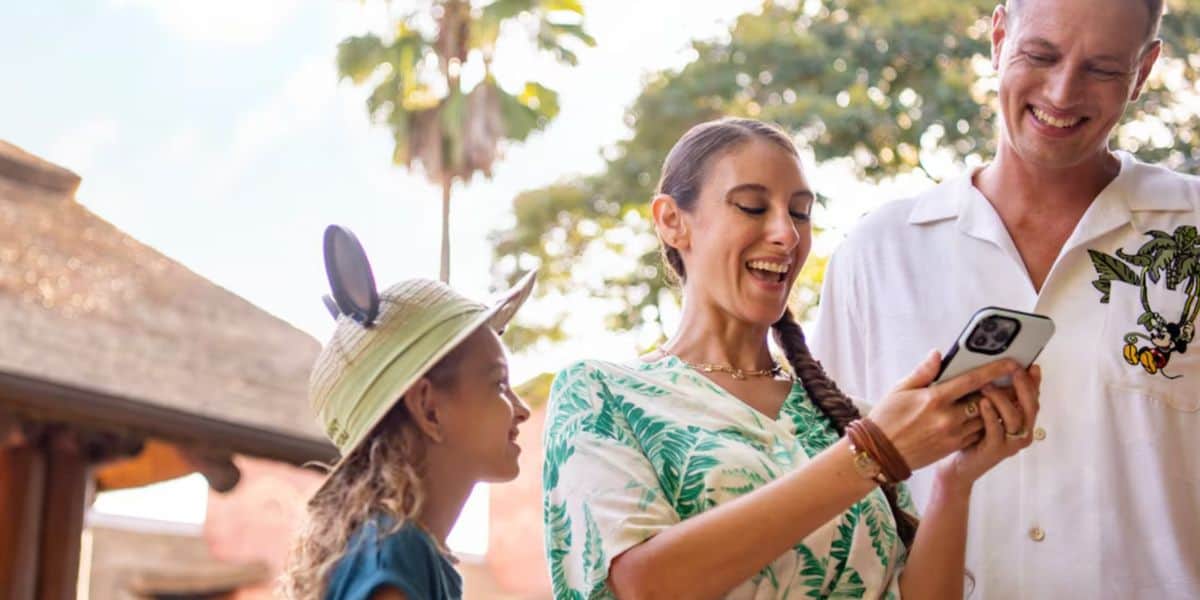
But the underlying idea is significant: rather than simply connecting a guest to a digital system, the next generation of leisure technology could help a whole destination respond more intelligently to the people moving through it. For an industry built around creating memorable experiences, that is a future worth watching.