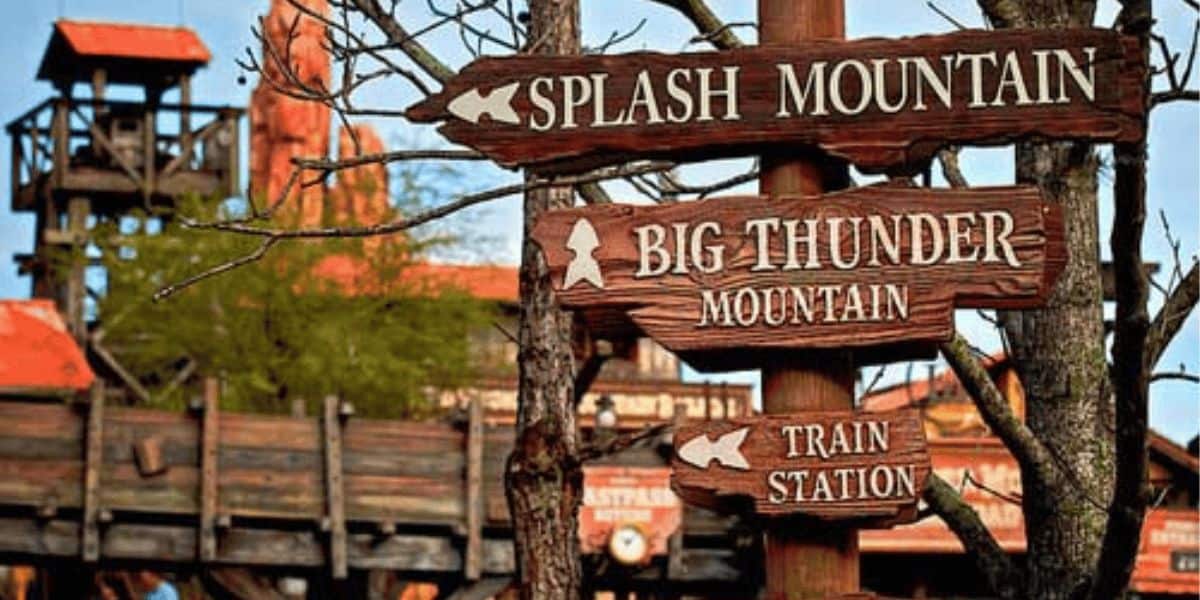
"It Was an Undeniable Masterpiece": Disney Fans Erupt After Former Imagineer Calls Splash Mountain a "Horrible Idea," Reigniting Online Furor Over the Ride
“It Was an Undeniable Masterpiece”: Disney Fans Erupt After Former Imagineer Calls Splash Mountain a “Horrible Idea,” Reigniting Online Furor Over the Ride
Even years after its final drops dried up at Disneyland and Walt Disney World, Splash Mountain remains one of the most fiercely contested cultural flashpoints in modern theme park history. While the physical flumes at Magic Kingdom and Disneyland have since been transformed into Tiana’s Bayou Adventure, the emotional debate surrounding the attraction’s legacy has never truly disappeared.
Credit: Inside The Magic
That underlying tension ignited once again after retired Walt Disney Imagineer Kathy Mangum spoke candidly about her decades-long career. During an appearance on the Dream Chasing podcast, hosted by former Walt Disney Imagineering president Bob Weis, Mangum shared her regrets regarding the creation of the 1989 log flume, calling the decision to greenlight the attraction “a horrible idea.”
Her blunt admission circulated across social media, prompting passionate responses from theme park fans who rushed to defend the shuttered classic.
“A Horrible Idea”: What Kathy Mangum Said
Kathy Mangum, who spent 42 years at The Walt Disney Company, including approximately 40 years in Imagineering, reflected on projects that made her uneasy. Among them was the development of Splash Mountain in the late 1980s.
Credit: Disney
The attraction drew its narrative, animated characters, and Oscar-winning anthem “Zip-a-Dee-Doo-Dah” from Disney’s 1946 film Song of the South. The movie has long been criticized for its romanticized portrayal of the post-Civil War South and its racial stereotypes. Although Disney re-released the film theatrically several times, it has never released the complete movie on home video or streaming in the United States.
Mangum explained that she had misgivings about tying a major, permanent theme park headliner to a film the studio would not make available for home viewing.
Credit: Disney
“I knew building Splash Mountain based on a movie we would not show was not a great idea,” Mangum admitted. “It was a horrible idea.”
She noted that she was “not proud” of her involvement in the project, recalling a moment during a dialogue-recording session for Br’er Fox when she felt “so uncomfortable.” Looking back from a modern perspective, Mangum added, “I wouldn’t do it today. Neither would Disney, but we did it.” She praised the eventual retheming to The Princess and the Frog, calling the transformation “the right thing.”
Social Media Fires Back: “A Revisionist Narrative”
While Mangum’s reflections were framed as personal creative regret, Disney fans across X, Reddit, and theme park forums responded with fierce pushback. Rather than finding common ground, many viewed her comments as an attempt to rewrite the historical reality of the ride’s overwhelming popularity.
“Calling it a ‘horrible idea’ when it literally stood as one of the most beloved, high-capacity, iconic rides in theme park history for over 30 years is wild revisionism,” wrote one commenter on X. “You can acknowledge the issues with the source film while admitting the attraction itself was an undeniable masterpiece of Imagineering.”
For many defenders, the central counterargument rested on the sheer scale of the ride’s success. Opening it at Disneyland in 1989 nd expanding to Florida’s Magic Kingdom and Tokyo Disneyland in 1992, Splash Mountain became a major attraction at all three resorts. It was known for long queues, distinctive merchandise, and a place in the vacation memories of generations of parkgoers.
Fans also pushed back against the narrative that public sentiment had universally turned against the attraction before Disney’s 2020 announcement:
Separation of Art from Source: Many fans echoed the argument that the attraction deliberately decoupled Br’er Rabbit, Br’er Fox, and Br’er Bear from the live-action Uncle Remus framing of Song of the South. For many children who rode the flume, the attraction was remembered primarily as a fable about an underdog rabbit outsmarting two bumbling predators, with memorable songs, animated characters, and an elaborate log-flume ride.
The “Vocal Minority” Argument: A frequent refrain across comment threads was that Disney “caved to a small, vocal fraction on the internet.” Commenters pointed to the hours-long lines that formed during the ride’s final days in California and Florida, where fans waited for hours to take one final plunge down Chickapin Hill, as proof of its deep, enduring popularity. Disneyland’s final day in May 2023 did see exceptionally long waits. However, that example alone does not establish the scale of opposition to the retheming or the views of all park visitors.
Merchandise Frenzy: Fans noted that Splash Mountain merchandise remained sought after throughout the attraction’s operation, especially around its closure. Commemorative pins, T-shirts, and plush toys attracted interest from collectors, with some items offered for hundreds of dollars on resale marketplaces. Those individual resale prices, however, do not establish record-breaking sales across the merchandise line.
Tony Baxter vs. Modern Rethinking
Mangum’s perspective also highlights a contrast between the views of former Disney Imagineers.
All images are credited to Disney
While Mangum voiced deep personal discomfort, Disney Legend Tony Baxter—the visionary designer credited with conceiving Splash Mountain in 1983 to populate Critter Country and reuse Audio-Animatronics from America Sings—has publicly stood by the attraction.
Speaking on the Zeitgeist’s Spirit of the Time podcast, Baxter previously defended the thematic content inside the flume, arguing that Imagineering took great care to focus on the animated folklore.
“There was nothing in the ride that in any way was detrimental to anybody,” Baxter stated. “Whatever the controversy is that has come up with it is more related to what the film is. And I think we’re way overboard on that kind of sensitivity.”
Credit: Disney
The contrast between Baxter’s defense and Mangum’s candid regret illustrates how differently two prominent former Imagineers view the project. Their comments reflect a broader debate about whether the attraction’s entertaining ride experience could be separated from the film that supplied its characters and music.
The Never-Ending theme park Culture War
The debate triggered by Mangum’s remarks also arrives at a delicate moment for the parks. With Tiana’s Bayou Adventure now operating at both Magic Kingdom and Disneyland, discussion of Splash Mountain’s legacy continues alongside the transition to Princess Tiana’s musical trek through the Louisiana bayou.
Credit: Cory Doctorow, Flickr
Reports of operational interruptions on Tiana’s Bayou Adventure have sometimes renewed comparisons between the two attractions. However, the scheduled refurbishment at Magic Kingdom should be distinguished from individual reports of technical issues: Disney lists the attraction as closing on November 2, 2026, for routine refurbishment, with reopening expected in December.
The official notice does not establish that the closure is intended to address animatronic failures or other specific technical problems.
For some fans, operational interruptions bring back memories of Splash Mountain’s original storyline, animated characters, music, and climactic drop. Others welcome the new attraction and its connection to The Princess and the Frog. Without comparative downtime data, nostalgia and individual experiences cannot establish that one attraction has been mechanically more reliable than the other.
Credit: Disney / Inside the Magic
Meanwhile, Splash Mountain is not entirely extinct. At Tokyo Disneyland, the original attraction continues to operate in Critter Country under its Splash Mountain theme. Tokyo Disney Resort is owned and operated by the Oriental Land Company under a licensing agreement with The Walt Disney Company. The attraction remains open, although claims that it is one of the resort’s highest-rated rides would require supporting rankings or guest-survey data.
Ultimately, Kathy Mangum’s comments did not close the book on Splash Mountain; they demonstrated that its cultural footprint runs far deeper than standard theme park nostalgia.
To some, building a multi-million-dollar headliner around characters and music from a film Disney would not release on home video or streaming was a mistake that eventually demanded reconsideration. But to a vast, vocal segment of Disney fans, Splash Mountain remains an untouchable triumph of practical Imagineering—one whose legacy they are still more than willing to fight for.
 1

 Credit: Andrew Dupont, Flickr