Credit: Walt Disney Imagineering
Imagine visiting Walt Disney World and sharing a special memory with your favorite Disney character. Instead of responding with a scripted line, the character could recognize the emotion behind your story and respond in a surprisingly personal way.
It sounds like something straight out of a Disney movie, but new technology could make interactions like this possible.
Disney has spent years making its theme parks more immersive, from advanced animatronics to interactive attractions.
Now, the company is exploring something more personal.
Recently granted patents describe artificial intelligence that could help Disney characters analyze conversations, recognize emotional information, and use shared memories to create personalized responses.
However, the technology also raises questions about how Disney might collect and use personal information.
Disney’s Latest Technology Goes Beyond Ordinary Character Interactions
Disney has secured two patents describing AI systems designed to make virtual characters more emotionally responsive.
Rather than following a script, these characters could use information shared during conversations to generate natural responses.
One patent, titled “Emotionally Responsive Artificial Intelligence Interactive Character,” describes technology that uses machine learning to analyze conversations between people and AI characters.
The system could identify information about personal memories and use it to determine how characters respond.
Another patent, “AI Generated Creative Content Based on Shared Memories,” explores how AI characters could encourage people to share personal memories.
For example, someone might describe a birthday celebration. The AI could identify details, consider the story’s emotional tone, and create personalized content.
Both patents were filed in March 2023 and granted on September 8, 2026.
Essentially, Disney is exploring technology that could make character conversations feel more emotionally connected.
However, the patents don’t establish that Disney characters could automatically recognize returning guests or remember conversations from previous vacations.
That would require additional technology capable of identifying someone and retrieving earlier conversations.
Disney hasn’t announced plans to introduce either system inside its theme parks.
Imagine What Could Happen During Your Next Disney Vacation
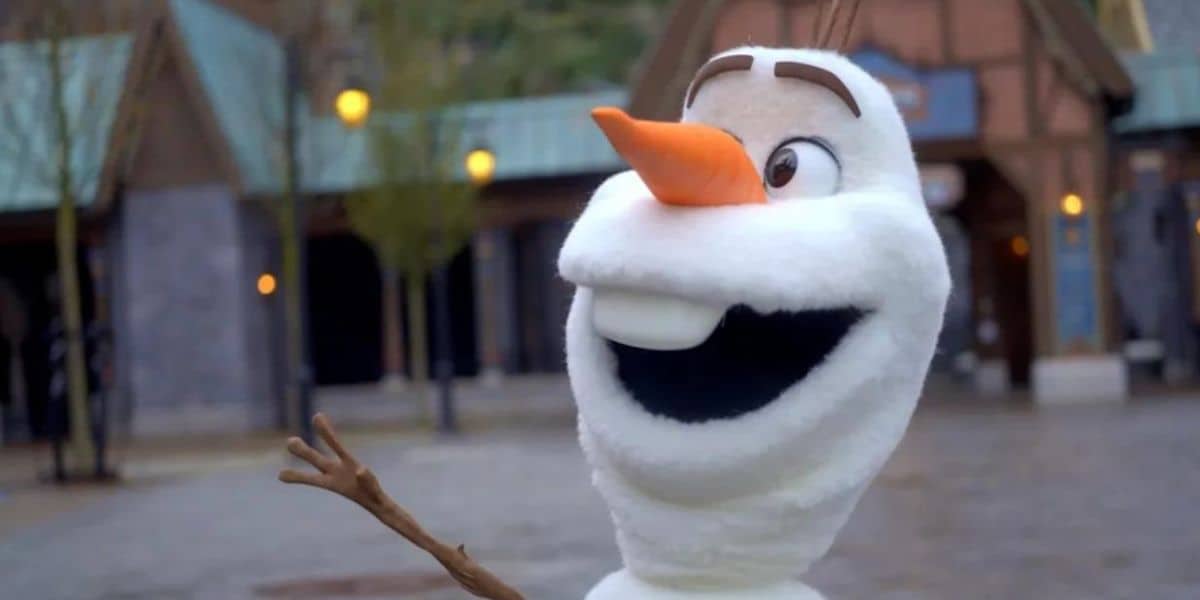
Imagine your child meeting Olaf and telling him about their favorite birthday celebration.
Instead of offering a generic response, an AI-powered Olaf could recognize details in the story and respond to your child’s excitement.
Perhaps the character asks what made the birthday special or incorporates information from the conversation into a personalized interaction.
For a young Disney fan, that could feel magical.
The same idea could extend to other Disney characters.
Mickey Mouse might respond to a family sharing memories of an anniversary, while a Disney princess could incorporate details from a child’s favorite story into their conversation.
These are hypothetical examples, not experiences Disney has announced.
It’s also possible to imagine a more advanced system that remembers someone across multiple vacations.
However, the patents don’t confirm that Disney has developed such long-term guest recognition technology.
Instead, they describe technology that could make conversations more responsive to shared information and emotions.
Disney has always built its theme park experiences around storytelling and emotional connections. Personalized responses could make those interactions more meaningful.
But there’s another side to this technology.
There’s Another Side to Disney’s Plans
While personalized character interactions sound wonderful, they could raise privacy concerns.
For an AI character to respond to someone’s memories, the system would need to process information shared during conversations.
That could include names, family stories, emotional experiences, and other personal details.
However, processing information doesn’t necessarily mean Disney would permanently store it or connect it to an individual guest.
Those decisions would depend on how Disney implements the technology.
If Disney introduced a system capable of remembering guests across multiple visits, it would need to retain and retrieve information from earlier encounters.
That raises additional privacy questions, especially when children are involved.
Parents might want to know whether conversations are recorded, how long information is stored, and whether they could control what an AI character remembers.
Disney hasn’t announced a theme park implementation or explained what privacy protections would accompany one.
There’s also the question of whether information collected through character interactions could serve other purposes.
For example, emotional responses and conversation trends might help Disney understand which experiences guests enjoy or how families respond to characters.
However, Disney hasn’t confirmed plans to use these systems for those purposes.
Just because AI can analyze personal information doesn’t mean Disney intends to collect or permanently store everything guests share.
Disney’s Next Big Idea Comes With Important Questions
Disney’s latest patents offer a glimpse at how artificial intelligence could reshape future character experiences.
Rather than giving every guest predetermined responses, AI-powered characters could react to personal stories, recognize emotional cues, and create interactions based on shared information.
For families visiting Walt Disney World or another Disney park, that could make character encounters more memorable.
At the same time, processing personal memories and emotional information raises questions about transparency and privacy.
For now, Disney hasn’t announced plans to bring this technology into its parks.
Whether these concepts eventually become part of the guest experience remains uncertain. The patents demonstrate Disney’s interest in making AI characters more responsive to shared memories and emotions, not a confirmed system that tracks individual guests across multiple visits.