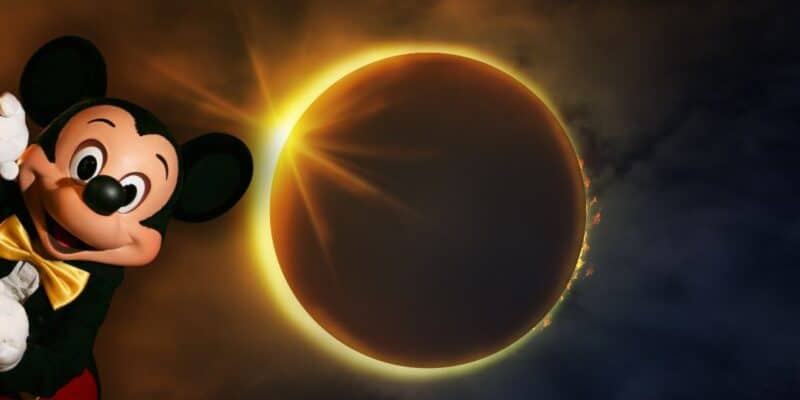
 Credit: Inside The Magic
For the first time in over 20 years, a major event stalled plans to visit this Disney Resort, as the entire world watched in shock.
Disney Resort Stalls out All Vacations as Major Event Shocks Entire World
Warm August daylight over Sleeping Beauty Castle faded in an unusual way Wednesday evening. Guests looking west from Disneyland Park saw the Sun narrow to a bright crescent as the Moon crossed in front of it.
The Disneyland Paris eclipse was a deep partial eclipse, not totality. NASA calculated 92% solar coverage in Paris at the 8:17 p.m. CEST peak on August 12, placing one of Europe’s busiest vacation resorts under noticeably dimmer skies during an active park evening.
The spectacle was real. Claims that it caused major traffic delays or disrupted thousands of vacations, however, have not been confirmed by Disneyland Paris, French transportation authorities, or another permitted primary source.
Disneyland Paris Eclipse Reached 92% Coverage
According to NASA’s official August 12 eclipse timetable, the partial phase began in Paris at 7:22 p.m. CEST. Maximum coverage came 55 minutes later, and the eclipse ended at 9:09 p.m., shortly before sunset.
That 92% figure matters. Paris sat outside the path of totality, so a thin portion of the Sun remained visible throughout the event; guests could not safely remove certified eye protection at any point. Totality crossed eastern Greenland, western Iceland, northern Spain, and a small section of northeastern Portugal, according to the European Space Agency’s path map.
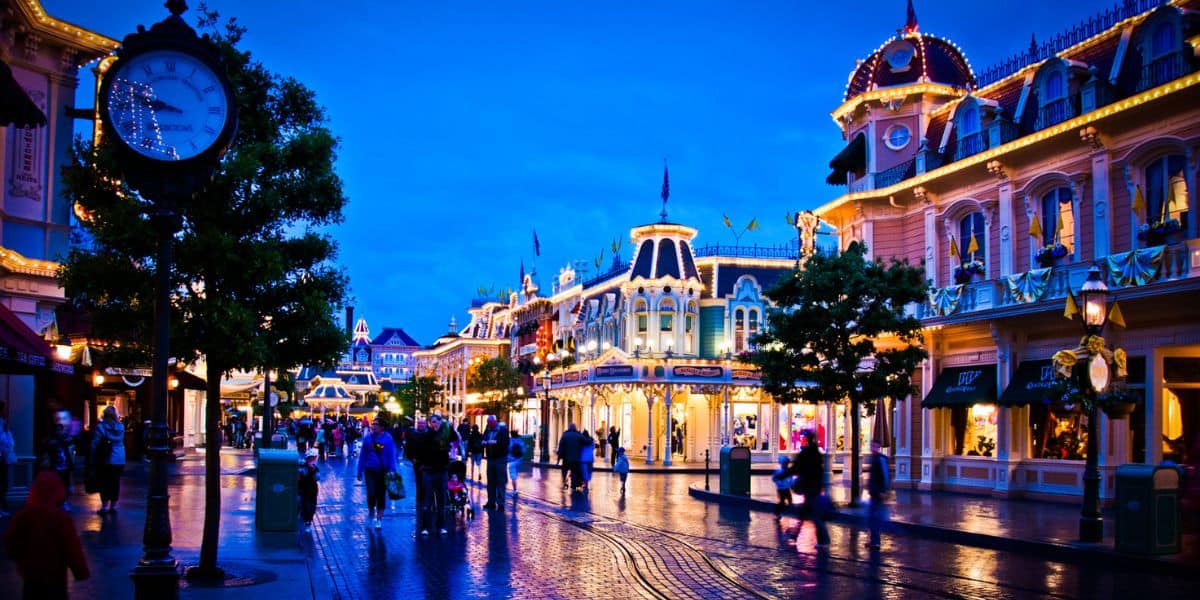
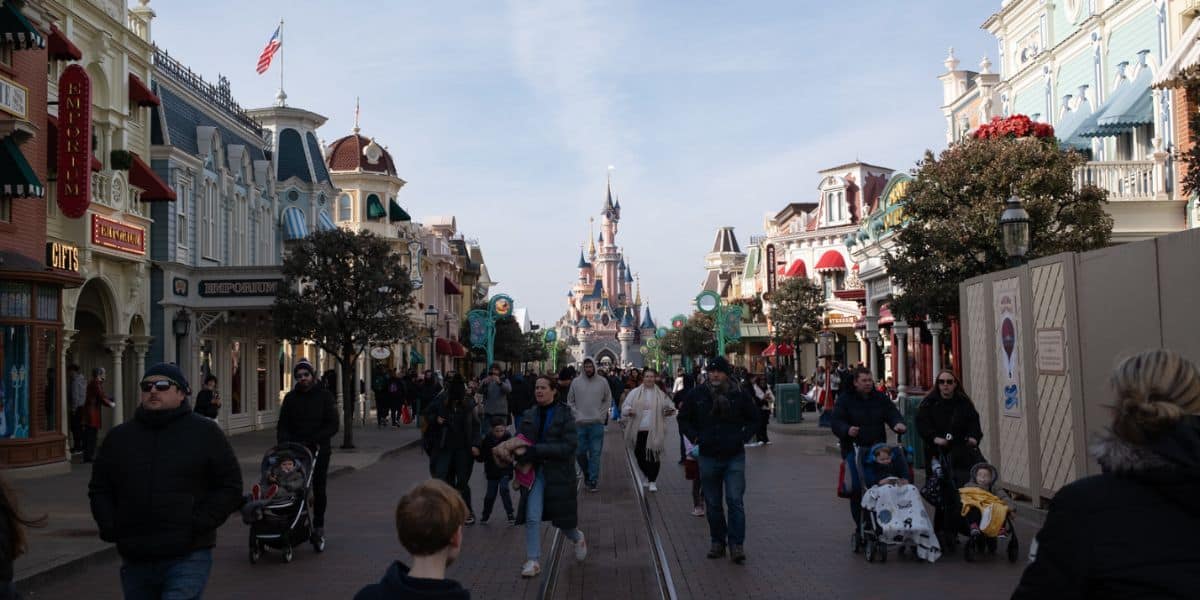
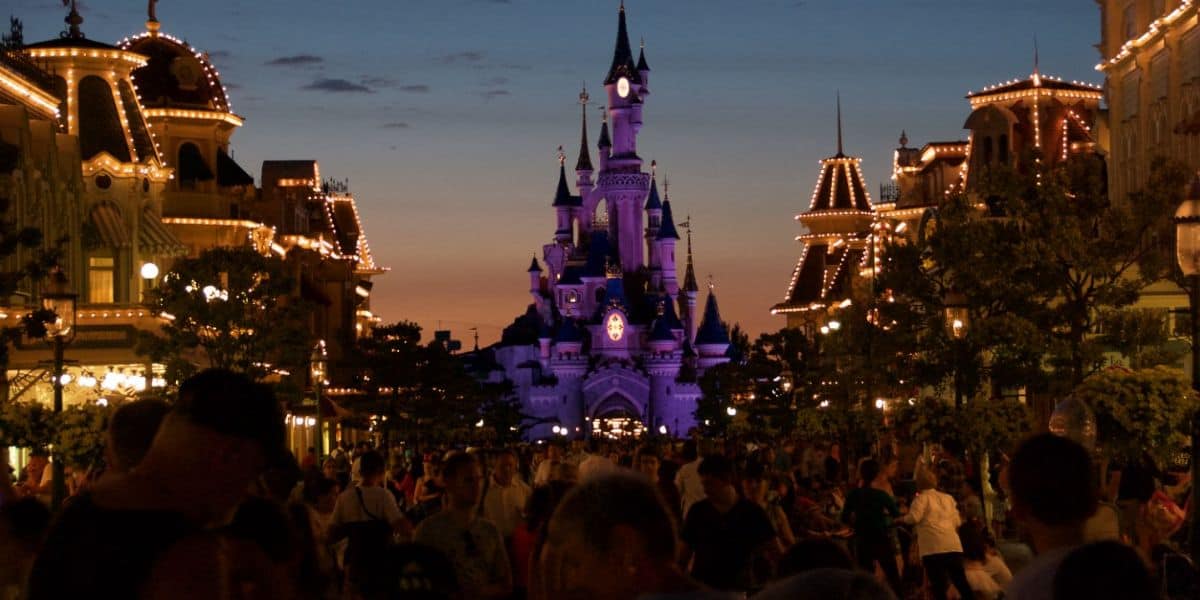
For Disney fans, the setting made the partial eclipse distinctive even without total darkness. Sleeping Beauty Castle, Main Street, U.S.A., and the open sightlines around Central Plaza offered recognizable foregrounds, even as ongoing Sleeping Beauty Castle work continued elsewhere in the area.
What Guests Inside Disneyland Park Experienced
A partial eclipse that deep can flatten the warmth of late-day light and create an early-evening appearance, but it does not produce the full darkness associated with totality. Inside Disneyland Park, the peak arrived during the evening stretch of a summer park day.
Disneyland Paris has not announced an eclipse-specific attraction shutdown, schedule change, or resort-wide viewing event. Its official park-hours guidance says operating times vary by season and points guests to current show and parade schedules. Any claim that rides stopped because of the Disneyland Paris eclipse needs separate confirmation.
Still, an unplanned crowd pause can affect a park day in small ways. Guests who stopped near the hub or along west-facing walkways may have temporarily changed pedestrian flow, much as popular entertainment can pull people from queues and then release them at once. That is an operational inference, not a reported closure or documented crowd-control action.
The timing also overlapped with the evening stretch when many families shift toward dinner, parade viewing, and castle entertainment. Those routines carry more weight after Disney Adventure World opened as the resort’s transformed second gate and Disneyland Paris extended evening operations around its expanded entertainment lineup.
No Confirmed Travel Disruption Around Marne-la-Vallée
Social interest in a rare celestial event can draw spectators to open viewing areas. But Disneyland Paris was not a totality destination.
There is currently no permitted primary-source evidence showing that eclipse traffic delayed resort arrivals, interrupted regional rail service, or forced guests to change vacation plans. The responsible read is narrower: the Disneyland Paris eclipse became an unusual in-park moment during an already busy summer evening.
Guests who did encounter a delay should check the Disneyland Paris app and their transportation provider for service-specific information. That distinction is especially important because a separate RER A travel warning was already affecting the usual route between central Paris and Marne-la-Vallée during this period.
Summer crowd conditions also existed independently of the eclipse. Earlier Disneyland Paris capacity restrictions show why a busy park can require careful planning without proving that a celestial event caused the pressure.

Eclipse Glasses Were Required Throughout
The most important distinction between Paris and the totality path was eye safety. NASA’s eclipse safety guidance says viewers must use safe eclipse glasses or a handheld solar viewer whenever any part of the bright Sun remains visible. Ordinary sunglasses are not sufficient.
NASA says solar viewers should comply with the ISO 12312-2 international standard. Cameras, binoculars, and telescopes require solar filters attached to the front of the optics; looking through them while wearing eclipse glasses can still cause serious injury.
That guidance applied for the full Disneyland Paris eclipse. Parents also needed to supervise children using viewers, particularly as the event competed with rides, characters, and the visual distractions of Main Street, U.S.A.
Europe Gets Another Total Eclipse in 2027
Europe’s wait for another total solar eclipse will be short. NASA lists August 2, 2027, as the next one, with totality crossing southern Spain, parts of North Africa, Saudi Arabia, and Yemen.
Disneyland Paris has not announced any programming tied to that event, and Paris will again sit outside totality. For now, guests should watch for official resort photos or statements that document how the August 12 sky appeared over the parks.
That evidence would sharpen the story beyond the astronomy tables. Until then, the confirmed account is striking enough: a 92% partial eclipse passed over the resort at sunset, giving visitors a rare backdrop without establishing the sweeping travel disruption circulating in early descriptions.