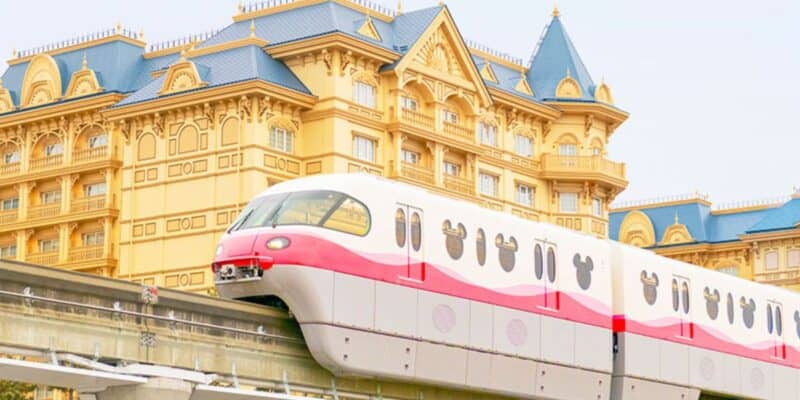
 Credit: Disney
Tokyo DisneySea is not the kind of place that invites casual disrespect. The park, which sits alongside Tokyo Disneyland at the Oriental Land Company resort outside Tokyo, is widely considered the most beautifully designed theme park in the world by a significant number of people who have spent serious time evaluating that question.
The attention to detail across its themed ports, from the Mediterranean Harbor to the Mysterious Island to the newly opened Fantasy Springs land, reflects a level of craft and intentionality that most theme parks aspire to and very few approach. Guests plan trips to Tokyo specifically to experience it. International visitors save for years. The park earns that devotion.

Which is why what happened recently on Kick landed the way it did.
A streamer named Aishinosuke, who was reportedly working toward participating in an audition for content creator opportunities, illegally entered Tokyo DisneySea after the park had closed and live streamed the entire thing on the Kick platform.
The footage, which circulated widely after being flagged by Japanese YouTuber Joe Magic, who posts as @joejoemagic on X, showed the streamer hiding inside the park after closing, moving through restricted areas, and eventually running away after being spotted by cast members.
Joe Magic’s post addressed the footage directly and with appropriate alarm: “Footage has been circulating of someone hiding in Tokyo DisneySea after closing time, then running away after being spotted by the cast. If you look closely at the beginning, you can also see that they are outside the fence in the Lost River Delta area.”
🚨絶対にマネしないでください🚨
閉園後の東京ディズニーシーで隠れ、
キャストに見つかったあと走って逃げる映像が出回っています。冒頭をよく見ると、ロストリバーデルタの柵の外側にいる事もわかります。
・配信をする
・閉園後パーク内に残る
・立ち入ってはいけない場所へ入る…— 【ジョマジ】ジョー・マジック【YouTuber】 (@joejoemagic) July 26, 2026
He listed the violations captured in the short clip: streaming and broadcasting without authorization, remaining in the park after closing, entering areas that are off-limits to guests, and running from cast members when approached.
His message to anyone watching was unambiguous: “Absolutely do not imitate this. It’s not okay just because it’s the ‘dream country.’ If you do bad things, of course you’ll get caught like normal. The police will come in full force too.”
What Was Actually Violated and Why It Matters

The streamer’s actions involved multiple layers of rule-breaking that compound on top of each other.
Staying in a theme park after closing is trespassing. That applies at any theme park in any country and the legal framework around it is not subtle. Entering areas of the park that are not accessible to guests during operating hours, let alone after closing, is a separate and more serious violation. Running from cast members who have identified you as an unauthorized presence does nothing to improve the legal situation and confirms the intentional nature of the intrusion.
The live streaming element adds another dimension. Tokyo Disney Resort maintains strict rules about commercial filming, public transmissions, and any recording that creates inconvenience for other guests or constitutes profit-driven content creation. The resort’s official policy prohibits unauthorized commercial activities within the parks.
A live stream on a platform where the streamer is generating views, building an audience, and potentially monetizing the content falls squarely within what those rules prohibit. The resort permits casual personal photos and videos. It does not permit broadcast content, commercial recording, or streaming intended to benefit the creator professionally or financially.
The Lost River Delta detail in Joe Magic’s account is worth noting. The footage showed the streamer outside the fence in that area, meaning the unauthorized access extended to spaces that are physically separated from guest areas by park infrastructure, not just temporal separation from operating hours.
The Broader Pattern of Streamer Behavior at Theme Parks

The Tokyo DisneySea incident exists within a growing pattern of content creators treating theme parks as locations for increasingly boundary-pushing stunts. The specific appeal for a streamer is understandable in a calculated way. Tokyo DisneySea is visually extraordinary.
After-hours footage of an empty, closed theme park is inherently compelling to an audience that loves the subject matter. The combination of forbidden access, high-stakes detection risk, and a visually stunning location makes for content that generates clicks.
What it also generates is a police response. Joe Magic’s warning that “the police will come in full force” is not rhetorical. Japan’s approach to trespassing, particularly at a high-profile commercial property like Tokyo DisneySea, involves serious and efficient law enforcement engagement.
Oriental Land Company has both the legal standing and the operational infrastructure to ensure that unauthorized access results in real consequences rather than social media notoriety and a content library.
What This Means for Legitimate Tokyo Disney Resort Visitors

Tokyo Disney Resort has been publicly active about addressing unauthorized activities recently.
The resort posted a formal warning on its official website about private tour guides operating through social media without resort affiliation: “Please Be Aware of Private Tours Unaffiliated with Tokyo Disney Resort. It has been confirmed on social media platforms that reservation sites for private tours where tour guides, unaffiliated with Tokyo Disney Resort, are offering tours of Tokyo Disneyland and Tokyo DisneySea. Please do not book or purchase from such sources. Additionally, Tokyo Disney Resort prohibits any unauthorized commercial activities.”
Legitimate guided experiences at the resort are available only through the official VIP Tour Services channel on the Tokyo Disney Resort website. The unauthorized tour guide situation and the after-hours streaming incident are different in scale but reflect the same underlying category of problem: people using the resort’s extraordinary appeal to generate commercial content or financial benefit without authorization.
For guests visiting the resort through legitimate means, the enforcement environment reflects how seriously Oriental Land Company takes the integrity of the experience it has built. The resort’s policies around recording exist partly to protect the guest experience for everyone present, not only to protect the park’s commercial interests.
Other ongoing updates for international visitors planning Tokyo Disney Resort trips: the highest-ever one-day passport prices have been announced under the resort’s dynamic pricing model, reaching 12,400 yen per day for either park, approximately $76. The Sky Full of Colors fireworks spectacular is in seasonal suspension from June 15 through September 14 and again on September 25 and November 27. The 1-Day Park Hopper Passport is available from July 1 through September 14, allowing movement between both parks after 11 AM with expanded Fantasy Springs access.
What Happened to the Streamer
The footage ends with the streamer running from cast members. Joe Magic’s account and the circulating clips do not provide a definitive documented outcome for the individual involved, but the combination of identifiable footage, a live stream that was broadcast publicly, and a clear trespassing incident at one of Japan’s most high-profile commercial properties does not create favorable conditions for avoiding consequences. Joe Magic’s observation that “if you do bad things, of course you’ll get caught like normal” reflects the practical reality of the situation accurately.
The content that was generated by the intrusion circulated as a cautionary example rather than the aspirational highlight reel the streamer may have intended.
If you have visited Tokyo DisneySea or Tokyo Disneyland and want to share what made the experience worth the trip the right way, drop a comment below. And if you are planning a visit and have questions about the park’s recording policies or what the current enforcement environment looks like for guests, ask in the comments.