 Credit: Inside The Magic
A few Six Flags parks shut down operations immediately following dangerous conditions, as more than 5 states in the U.S. are being impacted by a thick blanket of smoke.

Six Flags Theme Parks Begin Closing Across the U.S. As ‘Remain Indoors’ Warnings Get Issued
The summer soundtrack at an amusement park is unmistakable: roller coasters roaring overhead, children laughing, music drifting across crowded midways. But this week, another detail began creeping into the experience—one guests could smell before they fully understood it.
The sky above parts of the Midwest and Northeast turned gray and strangely muted. Familiar skylines disappeared behind a smoky curtain. At some parks, the air carried the unmistakable odor of something burning, despite the fires raging hundreds of miles away.
For families who had saved, planned, and driven hours for a summer escape, the situation created an uncomfortable decision. Was the haze merely unpleasant—or had an ordinary park day quietly become a legitimate health risk?

Several Six Flags Parks Ultimately Made the Call to Close
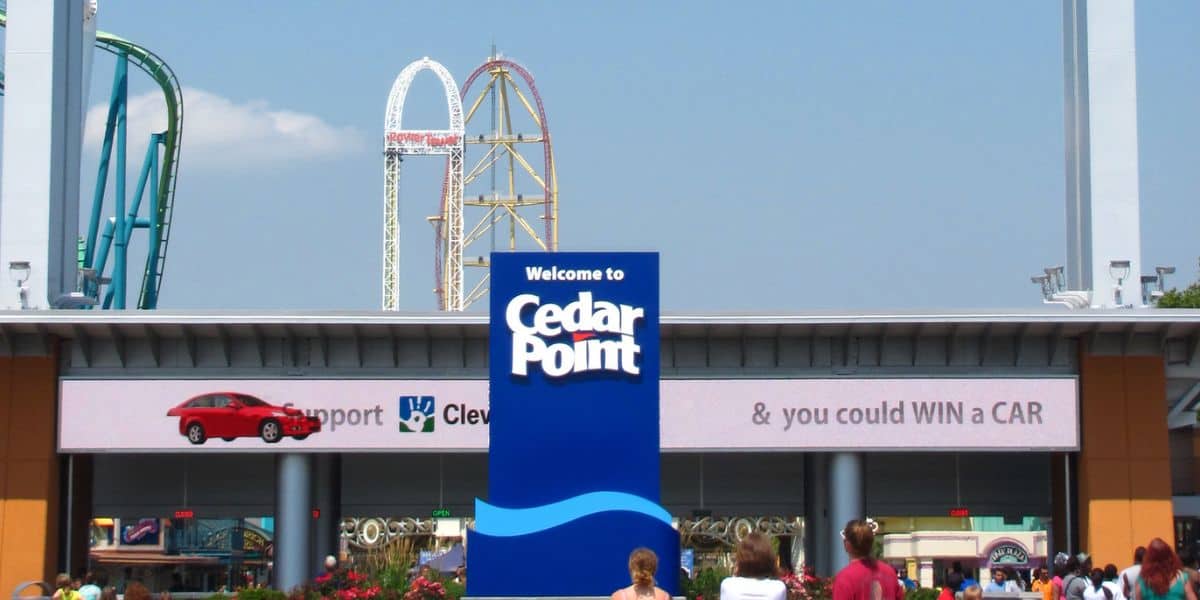
On July 16, Cedar Point in Sandusky, Ohio, announced that it would close at 7 p.m., three hours earlier than scheduled, because of poor air quality caused by wildfire smoke. The decision came as smoke from massive fires in Canada and northern Minnesota pushed south, producing unhealthy and, in some locations, hazardous conditions.
JUST IN: Cedar Point has CLOSED EARLY due to the Canadian wildfire smoke that rolled into the Sandusky, Ohio area today. The amusement park made the announcement and posted this statement: “Due to the poor air quality caused by the Canadian wildfires, @CedarPoint – @marcusleshock on X
JUST IN: Cedar Point has CLOSED EARLY due to the Canadian wildfire smoke that rolled into the Sandusky, Ohio area today.
The amusement park made the announcement and posted this statement:
“Due to the poor air quality caused by the Canadian wildfires, @CedarPoint will be… pic.twitter.com/PRnFbky980
— Marcus Leshock (@marcusleshock) July 16, 2026
will be closing at 7PM tonight July 16, 2026.” It is unclear if the hours of tomorrow’s operating day will be affected. The EPA had the air quality in Sandusky rated at a “Hazardous” level as of 7pm eastern time.
https://x.com/marcusleshock/status/2077903236678176846?s=20
Cedar Point was not alone. Six Flags Great America and Hurricane Harbor Chicago closed at 3 p.m. Thursday before remaining closed on Friday, July 17. Michigan’s Adventure did not open Thursday and announced another full-day closure Friday because of the continuing conditions.
UPDATE: Six Flags Great America plans to operate as usual today, as Canadian wildfire smoke has moved into the area. Statement from @SFGreat_America: “We are scheduled to operate today and will continue to monitor conditions. We encourage guests and team members who have any concerns during their visit to stop by Guest Services or First Aid for assistance.” As of 10:00am, the EPA has classified the air conditions in Gurnee, IL as “Hazardous.” – @marcusleshock on X
UPDATE: Six Flags Great America plans to operate as usual today, as Canadian wildfire smoke has moved into the area.
Statement from @SFGreat_America:
“We are scheduled to operate today and will continue to monitor conditions. We encourage guests and team members who have any… pic.twitter.com/CbRUTbFc5m
— Marcus Leshock (@marcusleshock) July 16, 2026
These closures matter because all three properties operate under Six Flags Entertainment Corporation, the company formed through the 2024 merger of Six Flags and Cedar Fair. They also complicate the suggestion that the corporation simply ignored the danger. Several parks clearly responded, but not simultaneously—and that uneven timeline is where the scrutiny begins.
Guests saw some properties close immediately, others shorten their operating days, and still others continue welcoming visitors in regions covered by air-quality alerts. Six Flags Great Adventure in New Jersey, for example, listed its theme park as operating while its Wild Safari was closed on July 17.
A company overseeing dozens of regional parks will naturally encounter different conditions in each market. Still, wildfire smoke does not respect corporate boundaries, and families are now watching how quickly individual properties respond when the threat cannot be seen as easily as lightning or severe wind.

The Greatest Risk May Be Standing Behind the Ride Controls
Guests can decide to leave. Many employees cannot make that choice so easily.
Ride operators, security personnel, food-service workers, lifeguards, maintenance teams, and character performers may spend hours outside. Their exposure is not limited to the time it takes to ride a roller coaster. It can last through an entire shift, often combined with heat and physical activity.
The U.S. Department of Labor warns that workers exposed to wildfire smoke may experience eye and respiratory irritation, heat stress, and other respiratory hazards. Employers are encouraged to establish plans for reducing exposure when smoke reaches dangerous levels. AirNow also advises people to reduce outdoor exercise and avoid strenuous activity when conditions are smoky.
That creates a difficult contradiction for outdoor entertainment businesses. A theme park depends on physical activity: employees walking long distances, guests climbing stairs, children running between attractions, and performers completing demanding routines. The very behavior parks are designed to encourage can increase the amount of polluted air someone breathes.
For Six Flags, the central question is no longer simply, “Can the rides operate?” It is, “Can thousands of people safely remain outside long enough to operate the park?”
Wildfire Smoke Can Harm More Than Sensitive Guests
It is tempting to view air-quality warnings as a concern only for people with asthma or other preexisting conditions. Health officials say the reality is broader.
Wildfire smoke contains fine particulate matter known as PM2.5—particles small enough to travel deep into the lungs and potentially enter the bloodstream. Exposure can cause coughing, wheezing, shortness of breath, headaches, chest tightness, and irritated eyes or throats. It can also aggravate asthma and cardiovascular disease.
Children, older adults, pregnant people, and those with heart or lung conditions face elevated risks, but extremely poor air can affect anyone. During this smoke event, officials across affected states advised residents to limit time outdoors, move activities inside, and wear properly fitted N95 or KN95 masks when exposure could not be avoided. The Associated Press reported that conditions reached unhealthy or hazardous levels across a vast stretch of the United States.
That guidance is difficult to reconcile with a full day spent on an exposed midway. Even healthy guests may not realize how much smoke they are inhaling until symptoms begin.

Families Are Being Forced to Make Expensive Decisions
A park closure can derail an entire vacation. Hotel reservations, gasoline, airfare, dining plans, and nonrefundable add-ons can turn one canceled day into a costly disappointment.
But remaining open transfers much of the decision—and anxiety—to guests. Families must weigh the money already spent against a threat they cannot easily measure. Some may assume an operating park signals that conditions are safe, even though opening the gates is not the same as issuing a medical guarantee.
Clear communication is therefore as important as the operating decision itself. Guests need timely updates, flexible ticket policies, visible air-quality information, and an honest explanation of what protections are available for employees and visitors.

Extreme Air Could Become the Industry’s Next Operational Test
Theme parks have established procedures for thunderstorms, hurricanes, extreme heat, and mechanical interruptions. Recurring wildfire smoke is now forcing the industry to confront another disruptive reality.
Six Flags’ closures show that the company is willing to halt operations when local conditions deteriorate. What fans will watch next is whether those decisions become faster, more consistent, and easier to understand across the chain.
The larger issue extends far beyond one difficult week. If severe smoke increasingly reaches major population centers, air quality could become another factor families must check before buying tickets—just like rain, heat, or hurricanes. Theme parks sell escape, but the industry’s future may depend on how responsibly it responds when the outside world follows guests through the front gate.