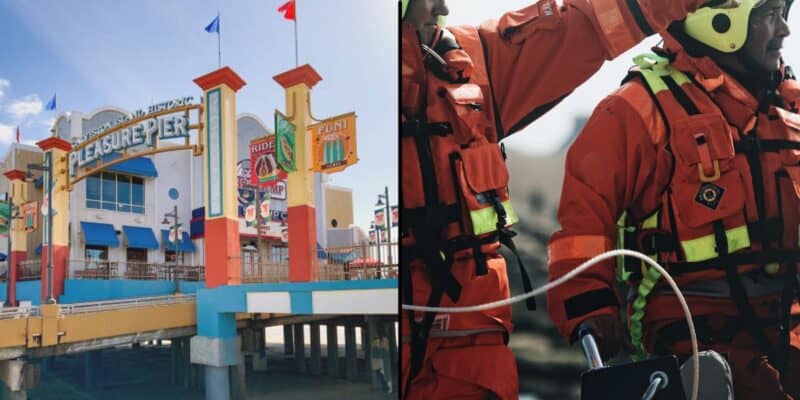
 Credit: Inside The Magic
For many families, a theme park field trip is supposed to be one of those easy childhood memories: the kind filled with laughter, nervous excitement, group photos, and the kind of stories students talk about for weeks afterward.
That is part of what makes amusement parks feel so powerful. They are built on trust. Guests climb into ride vehicles, pull down restraints, and surrender themselves to massive steel machines because the fear is supposed to be controlled. The scream is supposed to end in laughter. The drop is supposed to lead back to the station.
But on Thursday evening in Galveston, Texas, that familiar thrill suddenly took on a far more serious meaning. What began as a school outing at one of the Gulf Coast’s most recognizable amusement destinations became a tense emergency scene, drawing first responders, closing part of the park, and leaving families waiting for the only update that mattered: everyone was safe.
A School Field Trip Suddenly Became the Center of a Major Rescue Operation
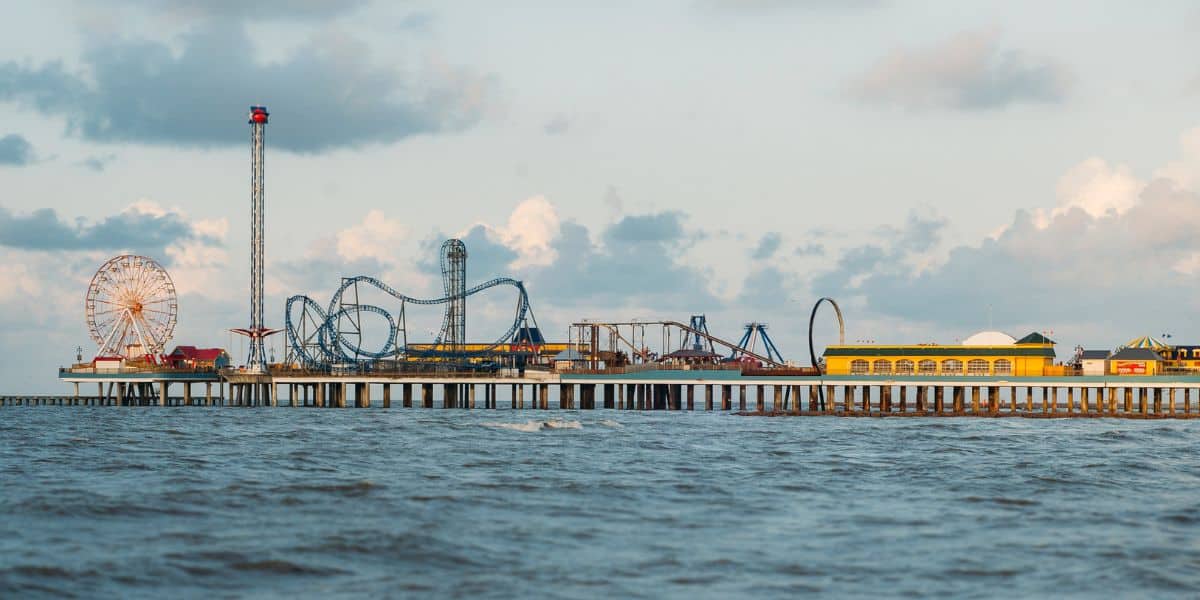
Crews rescued eight students who had been stuck for hours on the Iron Shark roller coaster at Galveston Island Historic Pleasure Pier after the ride experienced a malfunction Thursday evening.
According to reporting from ABC13/KTRK and ABC7 Eyewitness News, the Galveston Fire Department received the call at 5:37 p.m. after riders became stranded on the coaster. Houston ISD later confirmed the eight riders were students participating in a field trip organized by Energized for STEM Academy Middle School and STEM Academy High School.
A terrifying roller coaster rescue is underway in Galveston, Texas Thursday. A car became stuck on a vertical track, leaving eight people dangling at the very top of the ride. Firefighters are using a long-ladder truck to reach the riders several stories above the ground. Crews are working to remove each rider from the ride by gently catching them and lowering them into the basket at the end of the ladder, before walking them down an incredibly steep structure to safety. – @abc7newsbayarea on X
A terrifying roller coaster rescue is underway in Galveston, Texas Thursday. A car became stuck on a vertical track, leaving eight people dangling at the very top of the ride. Firefighters are using a long-ladder truck to reach the riders several stories above the ground. Crews… pic.twitter.com/Wma3RxQMWQ
— ABC7 News (@abc7newsbayarea) May 29, 2026
That detail changes the emotional weight of the story.
This was not just a ride malfunction involving anonymous thrill seekers. These were students on what should have been a memorable end-of-school-year-style outing, surrounded by classmates, chaperones, and teachers. For parents, that kind of update is the one no family wants to receive: a fun trip has turned into an emergency response.
HISD said Thursday night that all students, staff, and chaperones were safe, adding that school administration was in direct contact with the families of those involved.
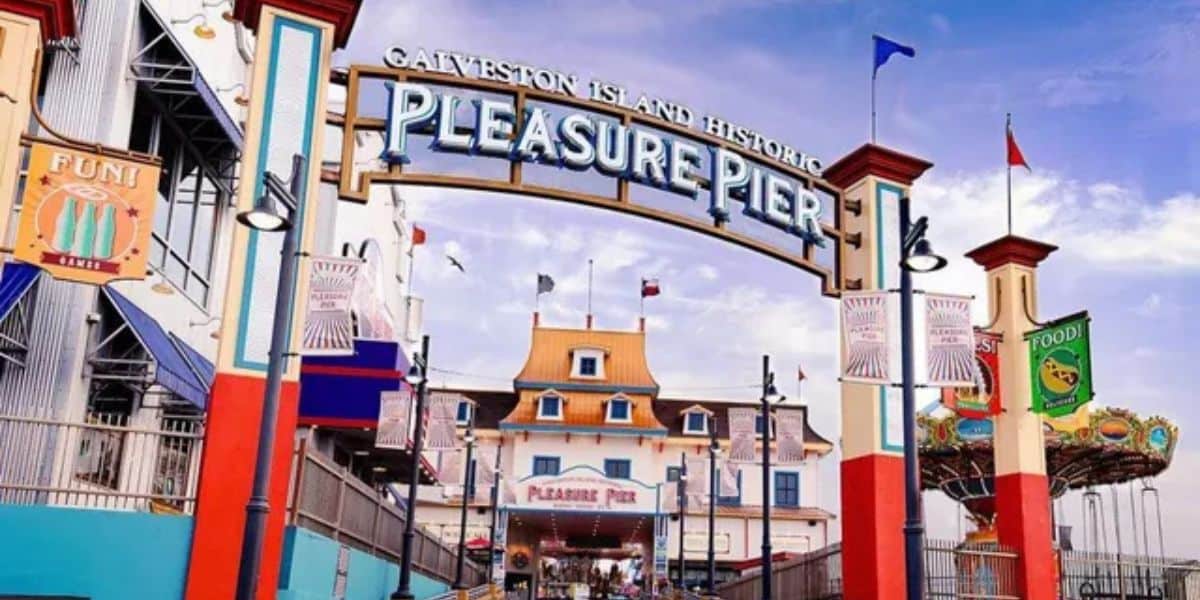
The Iron Shark Is One of Pleasure Pier’s Most Intimidating Attractions
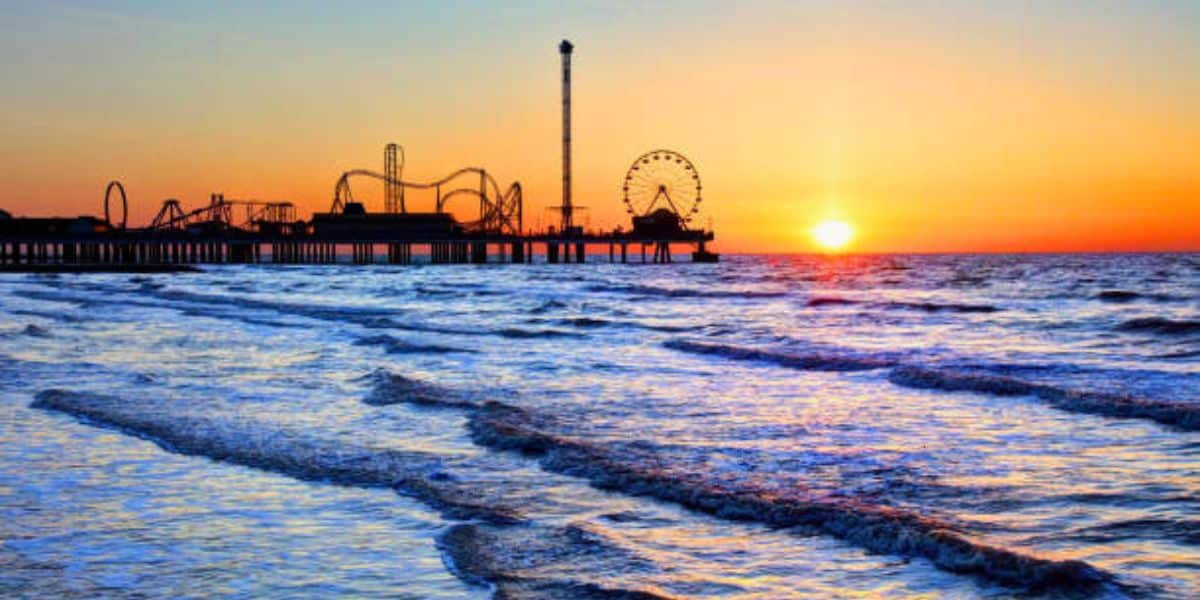
Iron Shark is not a quiet family ride tucked into the corner of the pier. It is one of Pleasure Pier’s signature thrill attractions and the tallest roller coaster on the pier.
The coaster features a 100-foot vertical lift hill, a beyond-vertical drop, speeds of up to 52 miles per hour, 1,246 feet of track, and multiple inversions. It is the kind of compact, aggressive steel coaster designed to make riders feel like they are being thrown directly into the Gulf Coast skyline.
That is exactly why this incident is already striking a nerve with theme park fans.
The Iron Shark is built to create a very specific emotional response: anticipation, panic, release, and relief. But when a ride stops unexpectedly, especially high above the ground, the entire psychology of the attraction changes. The thrill no longer feels theatrical. The fear becomes real.
Fans are noticing that this is the kind of incident that lingers beyond the rescue itself because it taps into a universal theme park anxiety. Most guests understand that ride systems are designed with safety protocols, sensors, and emergency stops. Still, seeing students stranded on a high-profile coaster can be deeply unsettling.
First Responders Turned a Terrifying Scene Into a Careful, Controlled Rescue
Video from a live camera in Galveston reportedly showed the ride had stopped around 5:21 p.m., before firefighters received the emergency call. SkyEye13 footage later showed the rescue response unfolding from above as emergency crews worked on the pier.
The amusement park was closed during the rescue operation, according to the report, as Galveston Fire Department’s Tower 1 engine occupied space on the pier so first responders could safely reach the riders.
That part of the story matters because it shows how complicated amusement ride rescues can be. These are not simple evacuations. When a coaster stops in an elevated or awkward position, crews must deal with height, access, restraint systems, rider stress, heat, wind, equipment placement, and the emotional state of those trapped.
Guests are already reacting to the sheer length of time involved. For anyone watching from below, minutes can feel like hours. For the students sitting on the ride, the wait must have felt even longer.
Officials have indicated the students were safely removed, and the broader relief around this story is obvious. The outcome could have been far worse. Instead, the rescue became a slow, deliberate operation focused on getting every student down safely.
The Ride Reportedly Stopped the Way It Was Designed to Stop
Landry’s Inc., which owns Pleasure Pier, confirmed that Iron Shark experienced a malfunction but said the ride stopped as designed in that type of situation.
That distinction is important.
In theme park operations, a stopped ride does not automatically mean a catastrophic failure occurred. In many cases, ride systems are designed to halt when sensors detect an issue or when the system determines that continuing is not safe. To guests, that can still feel terrifying. To operators, however, an emergency stop can be a sign that the ride’s safety systems are doing what they are supposed to do.
Still, the optics are difficult.
A coaster stopped with students onboard for hours is the kind of image that travels quickly across social media. It raises questions from parents, guests, and casual theme park visitors about inspections, emergency planning, ride maintenance, and how amusement destinations communicate during moments of uncertainty.
Landry’s said a thorough inspection would take place before Iron Shark is placed back in service.
That will likely be the next major point of attention for guests watching this story unfold. The rescue is over, but public confidence depends heavily on what happens before the coaster reopens.
This Incident Could Reshape How Guests Think About Thrill Ride Safety
For longtime theme park fans, this feels significant because it hits at the emotional contract between guests and amusement parks.
People expect thrill rides to scare them. They do not expect to wonder whether the ride will finish. And while serious ride incidents remain uncommon compared to the millions of guests who safely visit amusement parks each year, highly visible malfunctions can leave a lasting impression.
Parents may now look at field trips differently. Students who watched the rescue unfold may remember Pleasure Pier for something far more intense than a day by the water. Even guests who were not there may hesitate the next time they see a vertical lift hill slowly pulling a coaster car toward the sky.
That does not mean Iron Shark will not recover from this. Many major attractions have experienced temporary closures, inspections, and operational issues before returning to normal service. Theme park fans often understand that machines require maintenance and that safety systems sometimes stop rides precisely to prevent something worse.
But this moment will likely follow Pleasure Pier for a while.
What started as a small window of uncertainty on a Thursday evening became a dramatic reminder of how quickly a day of fun can shift into something far more serious. The students are safe, and that is the most important outcome. Now, attention turns to the inspection, the explanation, and whether future guests will feel ready to trust the climb again when Iron Shark eventually returns to the Galveston skyline.