8
8
 Credit: Lucasfilm
With new leadership at Lucasfilm, the Star Wars franchise could head in a wholly new direction as The Acolyte makes a surprising comeback.

This year will see the return of Star Wars to the big screen with Jon Favreau’s The Mandalorian and Grogu debuting on May 22, 2026. Next year, the movie journey will continue with Lucasfilm’s first official “standalone,” Star Wars: Starfighter (2027), directed by Shawn Levy and starring Ryan Gosling in the lead role.
Of course, Lucasfilm will keep pushing its Disney+ entries, with Ahsoka Season 2 coming sometime in the near future, and Star Wars: Maul–Shadow Lord headlining the animation arm presently. Since its release on the Mouse House’s streaming platform, Maul–Shadow Lord has continued to attract large audiences and has only bolstered the already stellar reputation of Lucasfilm Animation projects.
In fact, Maul–Shadow Lord has topped the Disney+ streaming charts for multiple weeks, proving that creator Dave Filoni’s eye for entertaining, emotional, and lore-building animated series is as strong as ever. Per streaming data tracker FlixPatrol, it can be seen that for the week commencing April 23, 2026, Maul–Shadow Lord topped the Disney+ TV charts, coming in second overall after the special look at The Devil Wears Prada 2 (2026).
This is a major win for Lucasfilm, which has, for the most part, had a rocky time on the streaming platform. While some releases have been major hits like Star Wars: Andor, others–such as The Book of Boba Fett and The Acolyte–drew significant criticism. The latter was significantly review-bombed, with many of the diverse cast members being victims of harmful comments made online.

The Acolyte starred Amandla Stenberg as twins Mae and Osha Aniseya, alongside Lee Jung-jae as Master Sol, Rebecca Henderson as Vernestra Rwoh, Jodie Turner-Smith as Mother Aniseya, and Manny Jacinto as The Stranger/Qimir. While it challenged perceptions of the established Star Wars lore, Leslye Headland’s ambitious High Republic-era series charted unknown territory in a brave and bold fashion.
That said, Disney unceremoniously canceled the show, despite the first season leaving multiple open-ended questions. Since its cancellation, new information has come to light about what would have been featured in Season 2, including Qimir’s connection to the sequel trilogy, the exploration of Darth Plagueis, and a morally gray Jedi Master, Yoda.
At the time, Disney Entertainment Co-Chairman Alan Bergman explained that The Acolyte‘s cost structure did not allow for a second season (the show reportedly had a massive $200+ million budget). But has new data proven that The Acolyte‘s fanbase is still there?

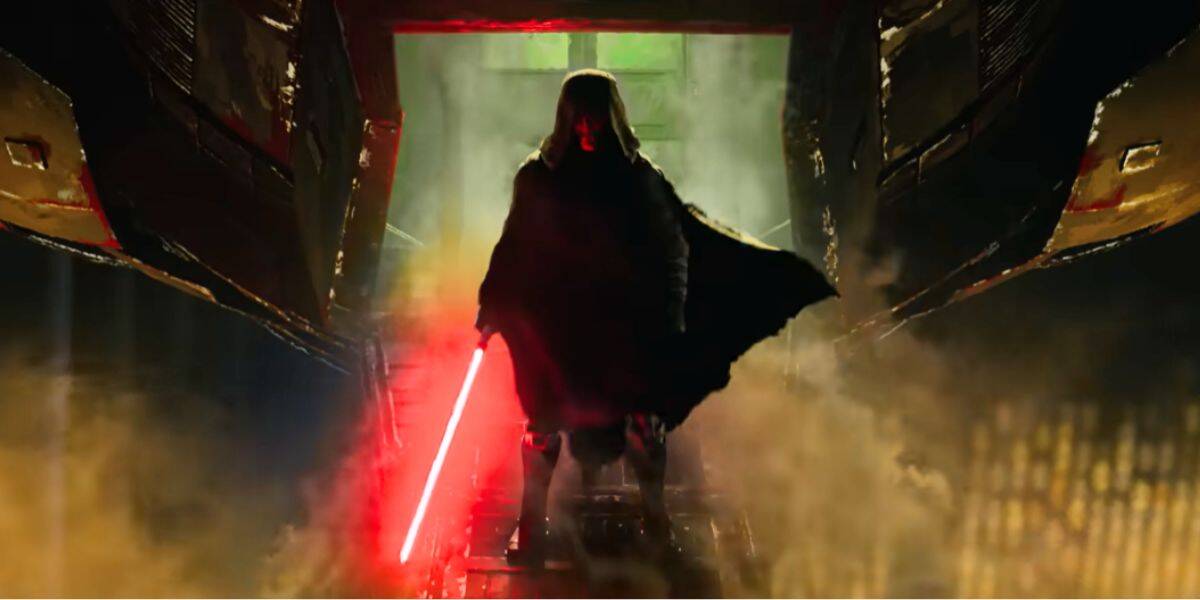
Per the same FlixPatrol report that revealed Maul‘s domination of the TV chart, The Acolyte–almost two years after its first season–placed ninth. With a streaming catalog the size of Disney’s, The Acolyte‘s position is notable, not least because of the show’s highly publicized cancellation in 2024. The success of Shadow Lord, with its exploration into the Force and murky Jedi/Sith practices, could have steered Star Wars fans to rewatch the series in earnest, or could have piqued the curiosity of those who had originally pushed against it.
Thanks to recent media, as well as comments from creator Leslye Headland, Star Wars fans already have a sense of where the second season of The Acolyte would go–and it could make for some of the most interesting storytelling the franchise has ever explored in live-action.

Now, with Dave Filoni and Lynwen Brennan at the helm of Lucasfilm as co-Presidents after replacing Kathleen Kennedy, will the Disney era of Star Wars pivot its current course of action?
The Acolyte Season 2, Explained
The planned second season of The Acolyte was shaping up to be one of the franchise’s most ambitious—and controversial—story expansions before its cancellation. Set during the High Republic era, long before the Skywalker saga, the series set out to explore a time when the Jedi Order stood at the height of its power, while darker forces quietly began to take root beneath the surface.
From the outset, the show distinguished itself by leaning into moral ambiguity rather than the traditional good-versus-evil dynamic that has long defined Star Wars storytelling. That creative direction proved divisive among fans, drawing comparisons to the polarized reception of other Star Wars media, including the latter two entries in Disney’s sequel trilogy and the first season of Dave Filoni’s Ahsoka. Despite generating conversation and maintaining a dedicated audience, the series ultimately struggled with viewership expectations relative to its high production costs, leading to its early end.

However, the most intriguing developments tied to The Acolyte were not fully realized on screen. Plans for Season 2, along with supplementary material, point to a significant expansion of the saga’s mythology—one that would have reached directly into the sequel trilogy timeline. At the center of this proposed evolution was the character Qimir. The narrative strongly suggested that he could have been the original “Ren,” effectively establishing the foundation for the group later associated with Kylo Ren (played by Adam Driver in the sequel trilogy).
This connection would have reframed the origins of the Knights of Ren, positioning them not simply as followers of Kylo Ren, but as part of a much older dark-side tradition. Rather than operating within the strict hierarchy of the Sith, the Knights were depicted as a more chaotic, cult-like faction driven by instinct and raw power. By tracing their roots back to the High Republic era, The Acolyte appeared poised to bridge a major gap between the prequel and sequel trilogies, offering a new lens through which to interpret the rise of dark-side movements across generations.

Season 2 was also expected to deepen the role of the Sith within this evolving landscape. The inclusion of Darth Plagueis signaled a deliberate effort to reinforce long-standing lore, particularly the Rule of Two, which dictates that only a master and apprentice may exist at any given time. By weaving Plagueis into the story, the series would have laid early groundwork for the eventual emergence of Emperor Palpatine, while simultaneously suggesting that other dark-side sects operated in parallel to the Sith, each contributing to a broader, more complex web of influence.
Beyond its larger mythological implications, the show aimed to further explore Qimir as a character, hinting at connections to the galaxy’s criminal underworld and raising questions about his true allegiance. His ambiguous nature—neither fully Sith nor entirely separate from their teachings—embodied the show’s central theme of blurred lines and hidden truths.

Ultimately, the cancellation of The Acolyte leaves these ideas in a state of unfinished potential. What remains is the outline of a narrative that could have retroactively enriched the sequel trilogy without rewriting it outright—a “soft retcon” designed to add depth rather than contradiction. In doing so, the series might have provided a clearer throughline connecting the High Republic era to the rise of Kylo Ren and the conflicts seen in the later films.
While the future of these specific story threads is uncertain, The Acolyte stands as a reminder of the risks and rewards of pushing the boundaries of established franchises. Its unrealized second season, in particular, represents a bold attempt to reshape how audiences understand the evolution of power, legacy, and the dark side within the Star Wars universe.
How do you feel about The Acolyte getting canceled? Do you think Lucasfilm should revisit and release a second season? Let Inside the Magic know in the comments down below!
The Acolyte’s cast includes Amandla Stenberg (Mae/Osha Aniseya), Manny Jacinto (The Stranger/Qimir), Lee Jung-jae (Master Sol), Dafne Keen (Jecki Lon), Rebecca Henderson (Vernestra Rwoh), Charlie Barnett (Yord Fandar), Jodie Turner-Smith (Mother Aniseya), Carrie-Anne Moss (Master Indara), and Dean-Charles Chapman (Torbin). All episodes are now streaming on Disney+.