62
62
 Credit: Disney
On Wednesday, The Walt Disney Company’s shareholders voted against a proposed investigation of the current Disability Access Service (DAS) at Disneyland Resort and Walt Disney World Resort. The program has been the subject of controversy since early 2024, when Disney cracked down on what it saw as abuse of the accessibility offering and vastly reduced the number of guests that qualified.
DAS Changes
In early 2024, Disneyland Resort and Walt Disney World Resort updated the Disability Access Service registration guidelines and FAQ on their websites to state that the program was only for guests who struggled to wait in a conventional queue due to a “developmental disability like autism or similar.”
Disney also limited the approval period to one year, so theme park guests who use the accessibility program must reapply for eligibility after 365 days. Third-party medical professionals review cases on a case-by-case basis via live video chat.

It would be inaccurate to say that DAS wasn’t being abused, especially after the Disney parks introduced the paid Lightning Lane program (formerly known as Disney Genie+), which replaced free FastPasses.
DAS allows users and their parties to book a return time on the My Disney Experience or Disneyland Resort app, then wait “virtually” elsewhere in the park, shopping, dining, or experiencing low-wait attractions, fireworks, or parades before returning and using the Lightning Lane for their selected ride.
It’s easy to see why this would be desirable, especially in a world where Lightning Lane access can cost over $100 per day for a family of four in addition to the base ticket price.
Still, many Disney Parks fans feel that the company restricted the program too much, instructing some guests who were denied to practice waiting in line at home, rent wheelchairs or scooters, or to re-join someone else in their family in the queue, which is hard to do when there are thousands of other guests waiting who might not believe you’re joining someone ahead of them. That solution also excludes solo Disney Park guests.
Proposal 7

In response to the controversial changes, Disney shareholder Erik Paul introduced Proposal 7, which demanded a “Review and Report on Disability Inclusion and Accessibility.” It asked the company to retain a third-party investigator to review the updated DAS policies from a legal, financial, reputational, and enterprise risk perspective and share the results with shareholders. However, it did not demand directly that Disney make any changes to the DAS program.
“Accessibility policies influence brand trust, customer loyalty, regulatory exposure, guest safety, and repeat visitation,” Paul wrote. “When policies are misaligned or inconsistently implemented, the resulting impact extends beyond guest experience to operational and reputational risk.”
At first, Disney asked the Securities and Exchange Commission (SEC) to allow it to exclude the resolution, writing that it was “materially false and misleading” and “relates to the Company’s ordinary business operations.” However, just two weeks later, the SEC implemented a new policy that meant Disney no longer had to seek the agency’s approval to exclude the resolution.
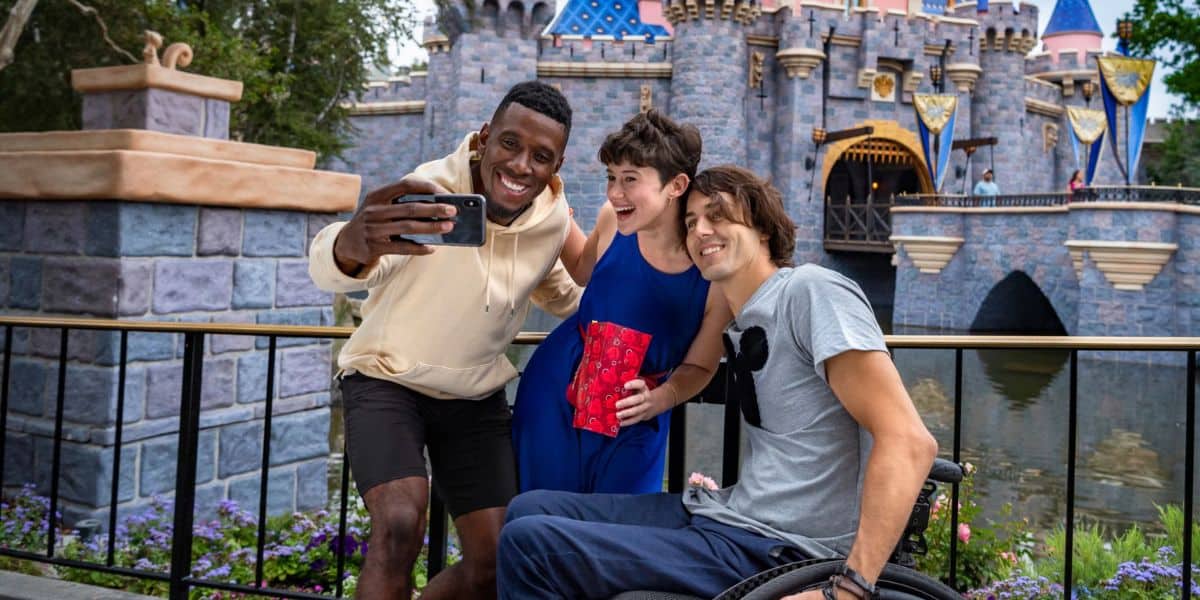
Disney agreed to allow shareholders to vote on the resolution after Paul issued the following statement:
“Disney has long told stories where the powerless rise, villains fall, and wrongs are made right. Its brand is built on magic, inclusion, and the belief that every voice deserves to be heard. Yet now, in a twist worthy of its darkest tales, the company risks becoming the villain of its own story—using newfound power to silence the very shareholders it should be listening to. Disney now faces a clear choice: live up to the values it sells to the world, or step into the role of villain silencing the disabled community.”
Still, in early 2025, Disney urged shareholders to reject the proposal.
Disney Shareholders Reject Proposal to Investigate Disability Program

After officially naming Josh D’Amaro as CEO during The Walt Disney Company’s annual shareholders meeting on March 18, shareholders voted against the proposed third-party investigation into the risks posed to the company by the 2024 changes to the Disability Access Service. Roughly 5% of shareholders voted in favor of Proposal 7.
In 2025, a Disneyland Resort guest filed a class-action lawsuit against the park over the changes to DAS. Those legal proceedings are ongoing.
What do you think about the current Disability Access Service program at Walt Disney World Resort and Disneyland Resort? Share your opinion with Inside the Magic in the comments!