1
1
 Credit: gardener41, Flickr
If you’re planning to be at Disney World, Universal Orlando, or literally any Central Florida theme park Sunday evening, you need to know about this weather situation because it could seriously mess with your plans.

A strong cold front is moving through the area tonight and it’s bringing the kind of weather that closes outdoor attractions, cancels fireworks shows, and sends everyone running for indoor shelter. We’re not talking about those typical afternoon Florida thunderstorms that last 20 minutes and then you’re back to normal. This is legit severe weather with multiple threats happening during what’s usually prime theme park time.
The WESH 2 First Warning Weather team just issued an Impact Weather alert for the region, and when meteorologists use words like “damaging winds,” “hail,” and “isolated tornadoes,” that’s your sign to pay attention and adjust your plans accordingly.
Here’s the thing about Florida weather: it can go from totally fine to absolutely terrible in what feels like minutes, and if you’re stuck outside in a theme park when severe weather hits, you’re going to have a bad time.
Understanding what’s coming, when it’s coming, and what it means for your park day can be the difference between having a great visit where you work around the weather versus spending your evening huddled in a gift shop wondering why you didn’t just go back to your hotel when you had the chance.
Central Florida gets weather alerts pretty regularly, but this particular setup with the timing, the threats, and the fact that it’s hitting right during peak park hours means this is one you actually need to take seriously instead of just hoping it won’t be that bad.
The severe weather window runs from 5 p.m. to 11 p.m. Sunday, starting in northern counties and moving south through the evening. That timing is BRUTAL for theme parks because it’s exactly when most people are settling in for the evening portion of their park day.
What’s Actually Threatening You
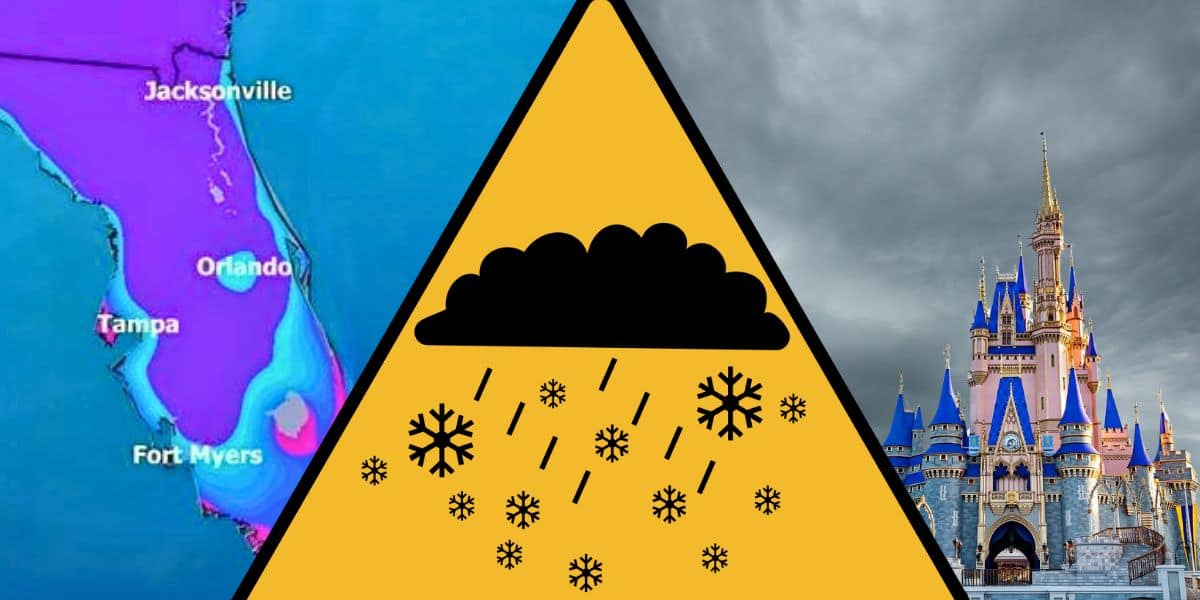
Let’s break down the specific weather threats because they’re not all created equal in terms of how they affect theme parks.
Damaging Winds (Primary Threat): This is the big one according to meteorologists. We’re talking winds strong enough to break tree branches, send loose objects flying, and make outdoor attractions genuinely dangerous. Disney and Universal will close roller coasters, skyrides, anything elevated where you’d be exposed to high winds. Even some covered areas become hazardous when winds get strong enough.
Hail: Ice falling from the sky. Size depends on storm intensity, but even small hail hurts when it hits you, and larger hail can cause actual injuries. If you’re outside when hail starts, get inside immediately. Don’t stand under trees or in open pavilions.
Isolated Tornadoes: “Isolated” means not every storm will produce tornadoes, but the atmospheric conditions are right for it to happen. If a tornado warning gets issued for your park location, this becomes the most serious threat. Theme parks have designated shelter areas, and you need to know where they are and actually go there if warnings are issued.
Lightning: Not specifically mentioned in the severe weather threats but it’s Florida, so lightning is basically guaranteed with these storms. Theme parks close outdoor attractions when lightning gets within a certain distance, which can happen before you even see the storm.
The Timeline You Need to Know

Meteorologists are forecasting strong to severe storms between 5 p.m. and 11 p.m., beginning in northern counties before pushing south through the evening.
Translation for theme park guests: if you’re at Magic Kingdom, EPCOT, Animal Kingdom, any of the Universal parks, or basically anywhere in the Orlando tourism corridor, expect weather to hit sometime during that evening window. Northern areas might see storms earlier in that timeframe, southern areas potentially later.
Here’s what that timing means practically:
Before 5 p.m.: Warm and windy but storms haven’t arrived yet. This is your window to hit outdoor attractions you absolutely don’t want to miss. Get them done NOW.
5 p.m. to 11 p.m.: Storm time. Outdoor attractions will close. Fireworks shows might get canceled. You’ll want to be indoors.
After 11 p.m.: Cold front should have passed, conditions improving. But by then most parks are closed or closing anyway.
The fact that NASCAR moved up the Daytona 500 start time by an hour specifically because of this weather should tell you how seriously people are taking this forecast.
What’s Going to Close at the Parks
When severe weather hits, here’s what typically shuts down:
Outdoor Roller Coasters: Space Mountain is fine because it’s enclosed, but Big Thunder Mountain, Expedition Everest, VelociCoaster, Hagrid’s Motorbike Adventure, all the outdoor coasters close when weather gets bad.
Elevated Attractions: Skyliner, anything with significant height where wind is a factor.
Outdoor Shows and Entertainment: Kiss your parade plans goodbye. Fireworks are questionable at best.
Some Outdoor Queue Lines: Even if the ride itself is indoors, if the queue is outside and exposed, they might stop loading.
Indoor attractions stay open as long as conditions don’t create broader safety issues. So stuff like Rise of the Resistance, Flight of Passage, Spider-Man, all the simulator rides, those keep running during storms.
What You Should Actually Do
If you’re visiting theme parks Sunday, here’s your game plan:
Morning and Early Afternoon: Hit ALL your outdoor must-dos. Everything you absolutely want to experience that’s not indoors, do it before 5 p.m. Don’t wait, don’t assume storms will miss your area, don’t gamble with it.
5 p.m. to 11 p.m. Window: Schedule indoor activities. Table service dinner reservations are PERFECT for this timeframe. Indoor attractions, shows in theaters, shopping, anything that keeps you inside. This is also when wait times for indoor rides often drop because people either leave the parks or are sheltering in place elsewhere.
Download Weather Apps: Get the WESH 2 News app or similar severe weather alert apps. You need real-time notifications because conditions can change faster than you think.
Know Where Shelter Is: If you’re at a park when severe weather hits, identify the nearest indoor location. Shops, restaurants, indoor attractions, anywhere with actual walls and a roof. Not outdoor covered areas, actual enclosed buildings.
Don’t Be Stupid: If tornado warnings get issued or if damaging winds arrive, GET INSIDE. No attraction, no parade spot, no fireworks viewing location is worth getting hurt over. Theme parks will be there tomorrow. You only get one you.
What Impact Weather Actually Means
The “Impact Weather” designation from WESH 2 is basically their way of saying “this weather is going to mess with your plans and daily activities.” It’s not the most severe category they have, but it’s serious enough to warrant alerts and preparation.
For theme park guests, Impact Weather typically means:
- Temporary attraction closures
- Modified or canceled entertainment
- Crowded indoor spaces as everyone shelters
- Potential transportation delays (buses, Skyliner, boats)
- Generally disrupted plans that you built around evening park time
It does NOT necessarily mean total park closures or evacuations, though those are possible if conditions get severe enough.
The Bigger Weather Picture
Sunday’s going to start warm and windy before the cold front arrives. That pre-storm weather can feel nice, almost deceivingly pleasant, which might tempt you to think “this doesn’t seem that bad, maybe the forecast is wrong.”
Don’t fall for it. The nasty weather comes AFTER the front moves through, and fronts can move faster or slower than forecasts predict. Just because it’s nice at 3 p.m. doesn’t mean it’ll stay that way at 6 p.m.
The WESH 2 First Warning Weather team (Chief Meteorologist Tony Mainolfi, Eric Burris, Marquise Meda, and Cam Tran) will keep updating throughout the day, so check back regularly for the latest timing and severity expectations.
Real Talk About Theme Parks and Weather
Here’s what nobody tells you about severe weather at theme parks: it’s WAY more disruptive than you think it’ll be, especially if you didn’t plan for it.
You’ve paid for park tickets (expensive). You’ve planned your whole vacation around this. You don’t want weather ruining your one night at Magic Kingdom or your Universal evening you’ve been looking forward to for months.
But severe weather doesn’t care about your vacation plans. And honestly, trying to force outdoor experiences during genuinely dangerous conditions is how people get hurt.
The good news? If you’re strategic about it, you can actually have a GREAT evening despite the weather. Indoor rides often have shorter waits during storms because crowds thin out. Table service restaurants are cozy during rain. And there’s something kind of magical about experiencing theme parks during weather if you’re safe and dry inside.
The bad news? If you ignore the forecast, insist on staying outside, and get caught in damaging winds or hail, you’re going to be miserable and potentially unsafe.
Your Move
If you’re visiting Central Florida theme parks Sunday evening, you’ve got a clear decision to make: adapt to the weather forecast or pretend it’s not happening and hope for the best.
Adaptation looks like: outdoor attractions before 5 p.m., indoor activities 5-11 p.m., weather apps downloaded, shelter locations identified.
Hoping for the best looks like: ignoring forecasts, getting stuck outside during severe weather, attractions closing around you, scrambling for shelter, ruined evening plans.
Your choice, but only one of those options is smart.
Check WESH 2 updates throughout the day because timing and severity can shift. Stay flexible with your plans. Prioritize safety over attractions. And remember that theme parks are there for future visits even if this particular evening doesn’t go as originally planned.
Seriously though, if you’re planning to hit the parks Sunday evening, adjust your strategy NOW before you’re standing in line for Big Thunder Mountain at 5:30 when the ride closes and storms roll in.
Front-load your outdoor stuff early, embrace indoor experiences during the storm window, and you’ll be way happier than if you try to pretend severe weather isn’t a thing. And for the love of everything, if you hear tornado sirens or get tornado warnings on your phone, stop whatever you’re doing and get to actual shelter immediately because no Instagram photo is worth that risk.