
 Credit: H. Michael Miley, Flickr
Central Florida is experiencing weather so abnormal that it’s rewriting the record books and forcing Walt Disney World to make operational decisions the resort almost never faces. For the second consecutive day, temperatures across the region have shattered daily records, with some locations experiencing the coldest February readings in their entire recorded history.
The National Weather Service has issued multiple freeze warnings, windchill advisories, and extreme cold alerts for an area that typically worries more about sunburn than frostbite. Against this backdrop of truly unprecedented winter conditions, Disney has extended the closure of Typhoon Lagoon water park through Tuesday, February 3, with plans to reopen Wednesday, February 4.
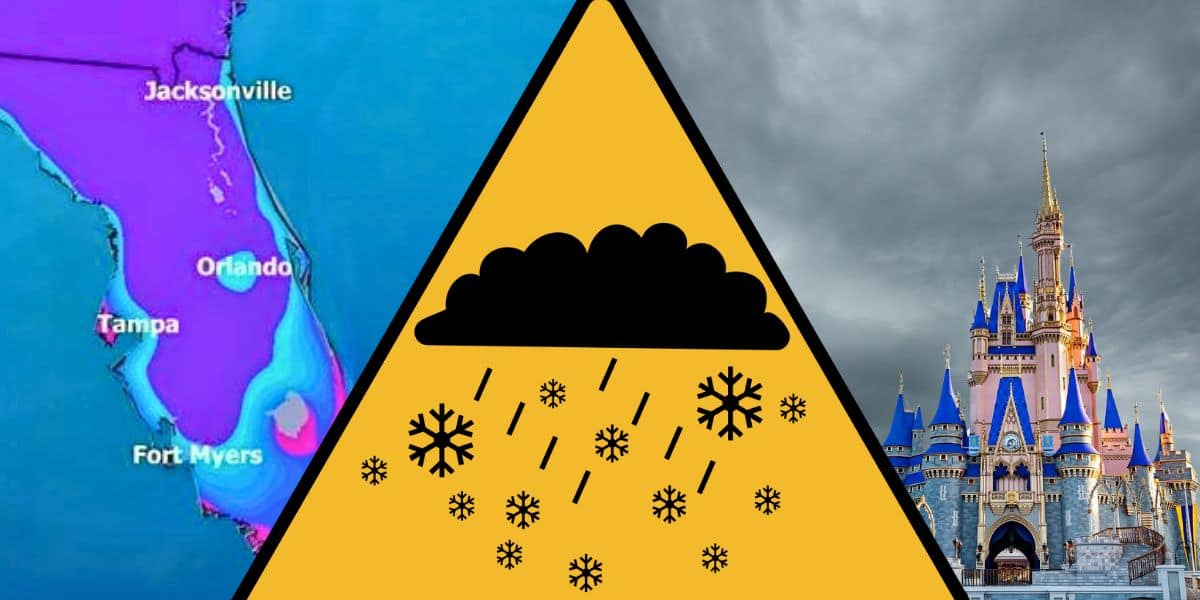
The extension represents an additional day beyond the water park’s originally planned closure period, which was set to run from January 31 through February 2. Disney’s decision to keep Typhoon Lagoon shuttered for one more day reflects both the severity of the current cold snap and the reality that operating a water park in near-freezing temperatures isn’t just uncomfortable but potentially unsafe for guests and cast members alike.
When you factor in windchills dropping into the teens and actual air temperatures hovering in the upper 20s, the idea of anyone voluntarily spending time in swimwear becomes absurd.
What makes this situation particularly remarkable is the scope and duration of the cold. This isn’t a brief overnight freeze followed by rapid warming. Central Florida has been locked in an arctic pattern that has persisted for days, with multiple rounds of freeze warnings and temperatures that would be unremarkable in Atlanta or Charlotte but are genuinely shocking in Orlando.
The Orlando Sentinel reported that Monday morning saw record-breaking lows across virtually every major reporting station in Central Florida, with some locations experiencing their coldest February temperatures since record-keeping began in the late 1800s.
Disney’s water parks typically close for brief refurbishment periods throughout the year, but those closures are planned months in advance and coordinated to ensure at least one water park remains open for guests. This closure is different. It’s reactive, weather-driven, and uncertain in terms of exactly when conditions will improve enough to safely resume operations.
The extension through February 3 suggests Disney’s meteorologists and operations teams are taking a conservative approach, preferring to err on the side of guest safety rather than rushing to reopen only to face continued problems.
For guests who had planned to visit Typhoon Lagoon during this closure period, the situation represents yet another disruption in what’s already been an unusually challenging week across all Central Florida theme parks. Universal Orlando faced similar weather-related closures and operational adjustments. SeaWorld dealt with ride downtime due to cold.
And now Disney extends its water park closure as the freeze continues its grip on the region. The cumulative effect creates an atmosphere where flexibility has become the most valuable asset any theme park visitor can possess.
Record-Breaking Cold Defines Monday Morning
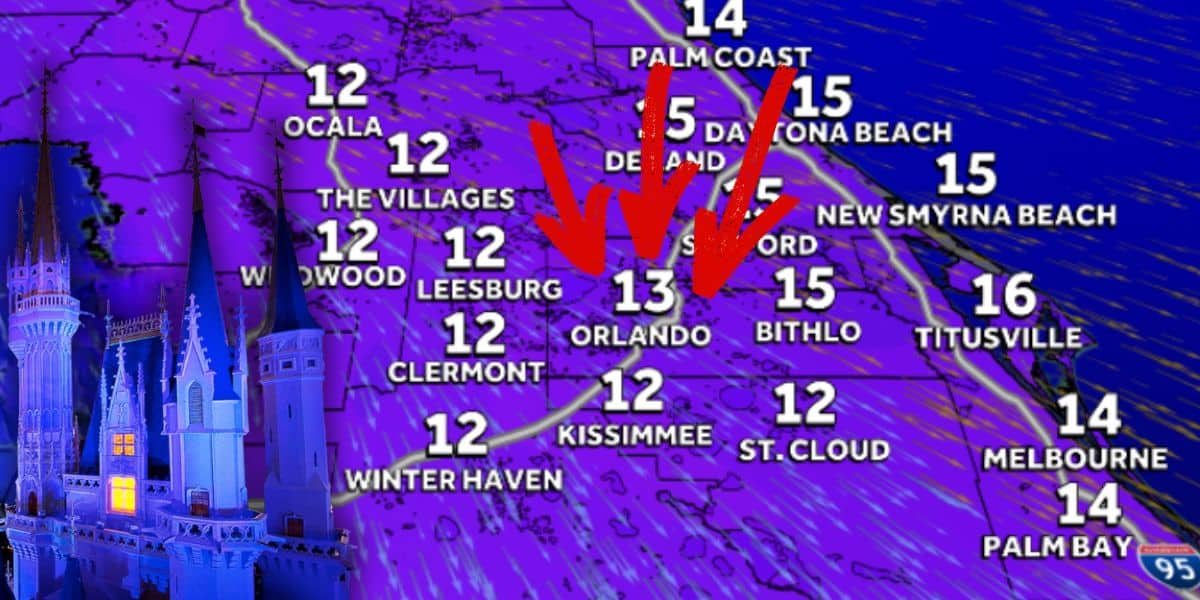
The numbers from Monday morning tell a story that Central Florida residents will remember for years. Orlando recorded a low of 28 degrees, breaking the previous record of 32 degrees set in 1980. Sanford dropped to 27 degrees, crushing its 1980 record of 33 degrees. Daytona Beach hit 25 degrees, well below its previous record of 32 degrees also from 1980.
Even more dramatically, Melbourne and Fort Pierce set all-time low temperature records for the entire month of February. Melbourne’s 24 degrees broke a record of 25 degrees set just last year, while Fort Pierce’s 23 degrees shattered a record of 25 degrees that had stood since February 1996. These aren’t marginal improvements over previous records. These are temperatures that represent genuinely unusual conditions for the region.
The only major reporting station that didn’t break its daily record was Leesburg, which tied its 1980 record with a low of 29 degrees. Even that tie represents exceptionally cold conditions for Central Florida in early February.
Beyond the raw temperature numbers, windchill factors made conditions feel even more severe. The National Weather Service reported windchills as low as 15 to 20 degrees Monday morning, adding another layer of discomfort and danger to what were already historic conditions.
Multiple Freeze Warnings Compound Challenges
The National Weather Service hasn’t issued just one freeze warning and called it done. The agency has issued multiple overlapping warnings as wave after wave of cold air continues affecting the region.
Monday morning brought an Extreme Cold Warning in effect through 10 AM alongside a Freeze Warning lasting through 11 AM. Temperatures during this period sat in the mid to upper 20s across most of Central Florida, with those brutal windchills making it feel even colder.
The warnings didn’t stop there. Another Freeze Warning was issued for Monday night through Tuesday morning, covering the period from 11 PM Monday through 9 AM Tuesday. This warning anticipates temperatures dropping into the upper 20s to low 30s with a 30 to 50 percent chance of hard freeze conditions in typically colder locations. Widespread frost is expected across the entire region.
For Disney’s operations teams, these warnings provide critical information for planning purposes. Knowing that Tuesday morning will bring another round of freezing temperatures helps explain why extending Typhoon Lagoon’s closure through Tuesday makes operational sense. Why attempt to reopen only to face continued challenges?
Temperature Outlook Remains Uncertain

High temperatures Monday barely reached the 50s despite full sunshine, well below normal for early February in Central Florida. Tuesday’s forecast shows improvement with highs climbing into the 60s, and Wednesday looks even better with temperatures expected to reach the 70s.
However, the reprieve appears temporary. Another cold front is forecast to arrive Wednesday night into Thursday, bringing cooler conditions back to the region by late week. The National Weather Service projects that lows Thursday night could drop into the mid-30s to low 40s, which while not as severe as current conditions, still represents below-normal temperatures for Central Florida.
This pattern of brief warming followed by renewed cold likely influenced Disney’s decision to target Wednesday, February 4 for Typhoon Lagoon’s reopening. By Wednesday, temperatures should be warm enough during the day to make water park operations viable, and the worst of the current arctic outbreak should have moved through the region.
What This Means for Disney Guests
Anyone planning to visit Walt Disney World through Tuesday should adjust expectations accordingly. Typhoon Lagoon will not be available, and outdoor attractions at the main theme parks may experience periodic closures or delayed openings if temperatures remain problematic.
The good news is that Disney’s four main theme parks continue operating, and indoor attractions provide plenty of options for guests looking to escape the cold. Shows, restaurants, and climate-controlled queue lines offer refuge from temperatures that feel more appropriate for a ski resort than a Florida vacation destination.
Guests should pack layers, including items they might not normally consider bringing to Florida in February. Jackets, long pants, and closed-toe shoes become essential rather than optional when temperatures hover near freezing. Early morning and evening hours will be particularly cold, so plan accordingly.
Planning Around Unpredictable Weather
Disney typically provides updates about park hours and closures through its official app and website. Guests should check these resources regularly for the most current information about Typhoon Lagoon’s status and any other weather-related impacts to their visit.
While this level of cold is extremely rare for Central Florida, it serves as a reminder that weather can be unpredictable anywhere. Building flexibility into vacation plans, maintaining realistic expectations, and preparing for various weather scenarios all contribute to a better experience when conditions don’t cooperate.
Typhoon Lagoon will reopen when conditions allow safe operations. Until then, guests have plenty of other Disney experiences to enjoy, even if those experiences require more clothing than originally anticipated.
If you’re currently at Disney World dealing with this cold snap or have a trip coming up soon, honestly just roll with it and maybe share your frozen Florida stories with us. Sometimes the weird trips end up being the most memorable ones, even if they’re not what you originally planned. Stay warm out there and keep checking those weather updates.