2
2
 Credit: Gage Skidmore, Flickr (Donald Trump) / Inside the Magic
In a move that will forever alter the landscape of American sports media, the Trump Administration has officially cleared the way for a seismic merger between the “Worldwide Leader in Sports” and the world’s most powerful sports league.

This week, federal regulators announced the formal approval of Disney’s multi-billion-dollar acquisition of the NFL’s media assets. Under the terms of the landmark agreement, ESPN (a subsidiary of The Walt Disney Company) will take complete control of NFL Network and the crown jewel of Sunday afternoons, NFL RedZone. In exchange, the National Football League will receive a significant equity stake in ESPN, valued at roughly 10%, effectively making the league a part-owner of the network that broadcasts its games.
This approval marks the end of a high-stakes regulatory saga that began in mid-2025, a journey fraught with political uncertainty and antitrust scrutiny. With the “Green Light” from the Department of Justice (DOJ) and the Federal Trade Commission (FTC), the “Disney-NFL era” has officially begun.
The Hurdles: Why the Trump Administration Held the Keys
To understand the magnitude of today’s approval, one must look back to the summer of 2025. At that time, industry analysts and insiders were skeptical that such a massive consolidation of power would be allowed. As reported by Inside the Magic, the deal’s survival was almost entirely dependent on the regulatory climate of the incoming Trump Administration.
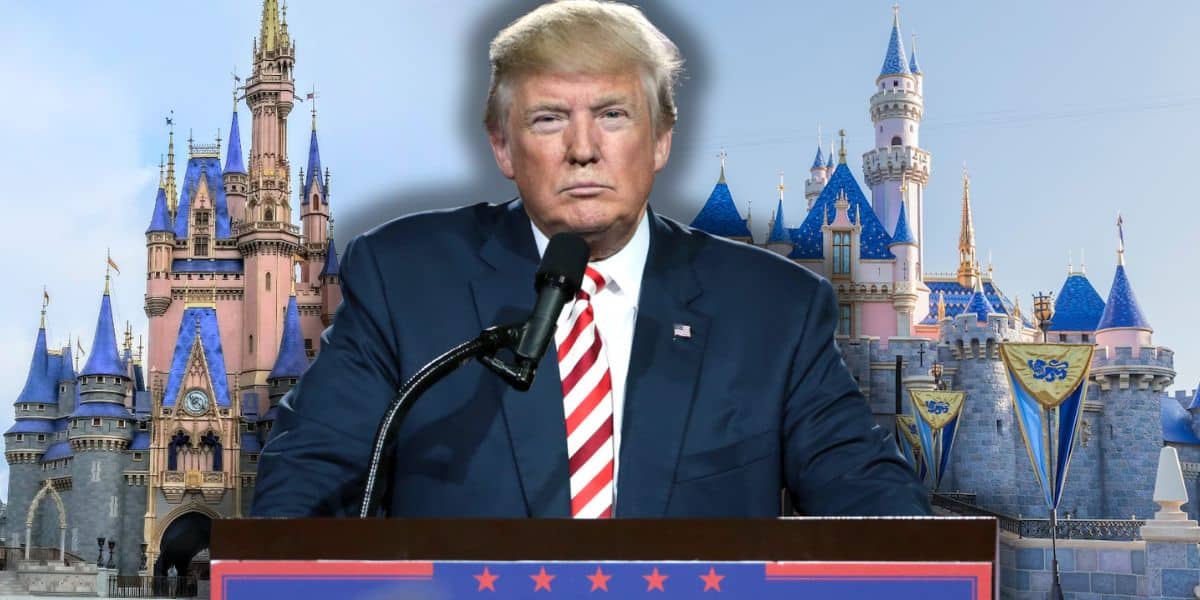
Under the previous administration, antitrust regulators had taken a much more aggressive stance toward “Big Tech” and “Big Media” mergers. However, the shift in Washington brought a new philosophy: one that balanced a traditional “business-friendly” deregulation approach with a specific scrutiny of Disney’s corporate culture.
The primary concern throughout late 2025 was whether the Trump Administration would use its regulatory power to block the deal as a “punishment” for Disney’s perceived political leanings. Conversely, many argued that the administration’s desire to keep American media companies competitive against international tech giants like Amazon and Netflix would outweigh any political friction.
Ultimately, the “business-first” wing of the administration won out. Regulators determined that the ESPN-NFL partnership was a necessary evolution for traditional cable entities to survive the onslaught of Big Tech’s encroachment into live sports.
The Deal Breakdown: What Disney Just Bought
This isn’t just a content licensing agreement; it is a total structural overhaul of sports broadcasting. Here is what is included in the approved multi-billion-dollar package:

- NFL Network: The 24/7 league-owned channel will now fall under ESPN’s operational control. This allows Disney to consolidate production costs and integrate the NFL Network’s deep roster of talent with ESPN’s Sunday NFL Countdown and Monday Night Football teams.
- NFL RedZone: Perhaps the most valuable asset in the deal, the “whip-around” show hosted by Scott Hanson will now be an ESPN property. This gives Disney a massive bargaining chip with cable providers and a nuclear-grade incentive for its streaming platforms.
- NFL Media Equity: The NFL will take an equity stake in ESPN, estimated at 5%. This “partnership” model ensures that the league is financially incentivized to keep its best games on ESPN and ABC, rather than jumping ship to a pure streaming play like YouTube TV or Apple.
- NFL+ Integration: The league’s fledgling streaming service, NFL+, is expected to be folded into ESPN+’s premium tier, creating a “one-stop shop” for football fans.
What This Means for the Fans: RedZone on ESPN+?
For the average viewer, the most immediate question is: How does this change my Sunday?

For decades, NFL RedZone was a premium add-on that required a specific cable package or a subscription to YouTube TV or Fubo. With Disney now holding the keys, the industry expects a significant shift in accessibility. Sources say Disney plans to offer NFL RedZone as a standalone add-on for ESPN+ subscribers.
This move would be a death blow to traditional “sports tier” cable packages. If a fan can get RedZone, Monday Night Football, and college football all within the Disney/ESPN streaming ecosystem, the necessity of a $100-a-month cable bill nearly vanishes.
However, the approval comes with a “pro-consumer” caveat from federal regulators. To avoid a total monopoly on sports information, ESPN must maintain certain “neutrality” standards in its reporting on the NFL—a tricky needle to thread now that the NFL is a part-owner of the network.
The Bob Iger Legacy and the “Anti-Tech” Strategy
For Disney CEO Bob Iger, this deal is the ultimate “Final Act.” After delaying his retirement multiple times, Iger has spent the last two years obsessed with one goal: ensuring ESPN remains the dominant force in sports as the world transitions to streaming.

By partnering with the NFL, Disney has built a moat that Amazon, Apple, and Google will find difficult to cross. While those tech giants have billions to spend on individual “packages” (like Thursday Night Football), Disney now owns the NFL’s media infrastructure.
The Trump Administration’s approval signals a belief that “American Legacy Media” needs to be bigger to fight off the “Silicon Valley” takeover of sports. By allowing Disney to absorb the NFL’s media wing, the DOJ is essentially choosing Disney as the “National Champion” of sports broadcasting.
Political Reactions: A Win for Both Sides?
The reaction in Washington has been surprisingly bipartisan, albeit for different reasons.

Supporters of the administration point to the deal as a win for American workers, arguing that consolidating the NFL’s media assets under ESPN’s headquarters in Bristol, Connecticut, will protect jobs that might otherwise be lost to automated streaming platforms.
On the other side of the aisle, some Democrats expressed concerns about the “monopolistic” nature of the deal but admitted that the NFL-Disney partnership is a more stable outcome than seeing the league’s rights fractured among five different tech companies, which would force fans to subscribe to five other apps just to watch their team.
The Future: Is the NBA Next?
Now that the NFL blueprint has been approved, all eyes turn to the NBA. The basketball league is currently in the midst of its own media rights shakeup, and rumors are already swirling that Disney may look to replicate this “equity-for-assets” model with Commissioner Adam Silver.

For now, the focus remains on the gridiron. As the 2026 season approaches, fans should prepare for a totally rebranded NFL experience. Expect to see the iconic ESPN “E” logo plastered across NFL Network studios, and get ready for a Sunday where “Seven Hours of Commercial-Free Football” is just one click away on the Disney+ app.
Conclusion
The Trump Administration’s approval of the Disney-ESPN-NFL deal is more than a business transaction; it is the beginning of a new media order. By merging the most powerful league with the most powerful network, Disney has secured its future in the streaming wars, and the NFL has secured its place at the center of the American cultural zeitgeist.

In the battle between “Big Tech” and “Big Media,” the Mouse just landed a knockout blow—and they did it with the government’s full blessing.