10
10
 Credit: SeaWorld
The SeaWorld Orlando Resort has confirmed the death.

SeaWorld Orlando opened its gates on December 15, 1973, arriving at a pivotal moment in Central Florida’s tourism boom. With Walt Disney World Resort still in its infancy, the park helped solidify Orlando as more than a one-company destination, offering something distinctly different: a combination of marine animal exhibits, large-scale stadium shows, and educational presentations centered on ocean life.
Early on, SeaWorld positioned itself as both a theme park and a zoological experience, leaning heavily on crowd-pleasing animal encounters that would define its identity for decades.
The park entered a period of significant growth after its acquisition by Anheuser-Busch in 1989. Under Busch’s ownership, SeaWorld Orlando began evolving beyond its show-driven roots, introducing major attractions that blended thrill rides with animal themes.

Additions like Journey to Atlantis, Kraken, Manta, and later Mako marked a clear shift toward competing directly with Orlando’s coaster-heavy parks, while immersive exhibits such as Expedition Odyssey (formerly Wild Arctic), the now-closed Turtle Trek, and Antarctica Realm have expanded the park’s storytelling ambitions over the years.
These changes reflected a broader strategy to appeal to both families and thrill-seekers, without abandoning SeaWorld’s educational foundation.
In the 2010s, SeaWorld Orlando faced increased public scrutiny following the release of Blackfish (2013), prompting a reevaluation of its animal programs—particularly those involving orcas. The park ultimately phased out traditional theatrical whale shows, ended its orca breeding program, and reworked its presentations to emphasize conservation and natural behaviors.

“In 2016, SeaWorld announced that we were ending our killer whale breeding program and that the orcas in our care are the last generation at our park,” the official SeaWorld Orlando website explains. “Our goal is to inspire and educate guests to take action by seeing these magnificent animals up-close to better understand why protecting wildlife and our environment is so critical today.”
Today, as part of United Parks & Resorts, SeaWorld Orlando continues to redefine itself, balancing its legacy as a marine life park with an ever-growing lineup of high-profile attractions and themed lands, including Sesame Street Land, as it works to remain relevant in an increasingly competitive theme park capital.

Beloved Whale Passes Away at SeaWorld
“Our SeaWorld family is mourning the loss of one of our beloved killer whales, Katina. Katina was 50 years old, and her health had begun to significantly decline as she entered her geriatric years,” SeaWorld wrote on social media last weekend.
“Over the last several weeks, our animal care and medical teams have worked around the clock to closely monitor her declining health, and as her condition worsened, the decision was made to prioritize her comfort and welfare.”
“Despite everyone’s extraordinary efforts, she passed away while surrounded by animal care and medical teams who have worked closely with her for nearly 40 years,” the post tragically concluded.
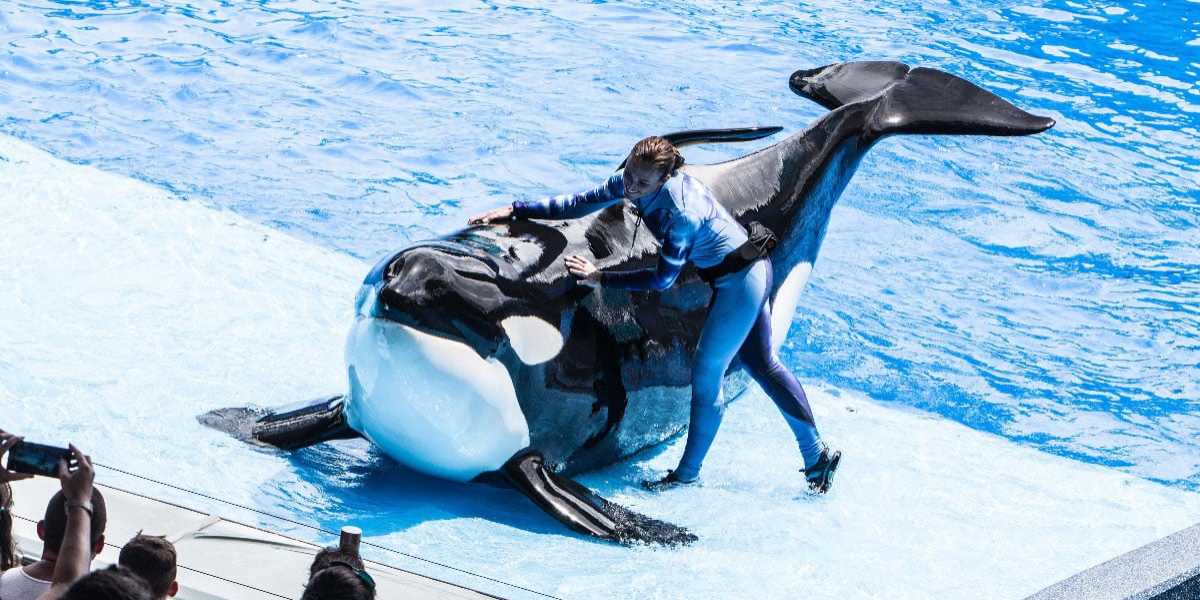
SeaWorld Orlando celebrated Katina’s life and the impact she had on guests visiting the park.
“Katina had a big personality, including being known for her tendency to stick her tongue out and enjoying the ‘speed swim’ to create a cyclone of water,” the post shared.
“For many wonderful years, Katina awed and inspired millions of our guests to appreciate and learn more about this amazing species,” the post concludes. “This is an incredibly difficult time for those who knew and loved Katina. We appreciate the support of the community as we grieve her loss together with her loyal fans everywhere.”
Do you still visit SeaWorld Orlando Resort? Let Inside the Magic know in the comments down below!