13
13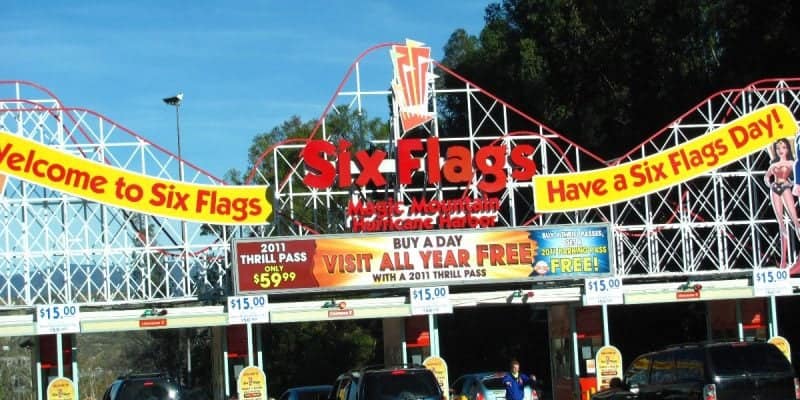
 Credit: Jeremy Thompson, Flickr
In major theme park news, another Six Flags park has closed its doors today, marking the beginning of what could be the end for the newly merged Six Flags Entertainment Corporation. A federal lawsuit has also been filed against the theme park giant. What’s going on? Let’s find out together.

Theme Park News: Six Flags Magic Mountain Closed?
It’s not often that a quiet morning at one of America’s most iconic theme parks triggers a wave of speculation, but that’s exactly what happened as guests woke up today to news that yet another Six Flags property had abruptly shut its gates. Social media lit up almost instantly — confusion, frustration, and a familiar sense of déjà vu rippled across fan communities. After all, one of the company’s parks permanently closed just days ago. Could another one already be joining the list? Or was something deeper driving this sudden turn of events?
A Company Under Intense Scrutiny
To understand why today’s closure stirred such tension, you have to look beyond the turnstiles. The Six Flags organization has been grappling with a series of escalating challenges — challenges now amplified by a federal class-action lawsuit that could reshape the company’s future. And with an $8 billion merger still casting a long shadow, many fans are asking the same question: is this the start of something much bigger?
The answer, as it turns out, is tied to a complex undercurrent of financial strain, alleged mismanagement, and investor outrage that’s beginning to surface publicly for the first time.

The Allegations Behind the Corporate Curtain
On November 5, the municipal pension fund of Livonia, Michigan filed a sweeping lawsuit in the U.S. District Court of Northern Ohio. In it, they accuse the newly formed Six Flags Entertainment Corporation — created through the July 2024 merger with Cedar Fair — of filing a “negligently prepared” merger statement to the U.S. Securities and Exchange Commission.
According to the complaint, executives failed to disclose that multiple legacy Six Flags parks were suffering from chronic underinvestment, requiring millions in deferred maintenance, infrastructure repair, and ride development updates. Instead, investors were reportedly under the impression that the parks had recently undergone “transformational investments.”
The suit names former CEO Selim Bassoul and current CEO Richard Zimmerman, alleging cost-cutting measures that degraded guest experience and operational competence. Investors, the complaint argues, are facing “hundreds of millions of dollars in economic loss.”

Financial Fallout and Shrinking Portfolios
The lawsuit arrived just days before Six Flags posted another disappointing quarterly earnings report. Despite a modest 1% year-over-year attendance increase, the company recorded a staggering $1.2 billion loss for the quarter ending September 28.
Stock performance paints an even clearer picture: where shares sat at $55 on the day of the merger, they’ve now plummeted to about $16 per share as of November 12.
During an earnings call, Executive VP and CFO Brian Witherow stressed the need to become “nimble and strategic” with investment dollars. He openly acknowledged that downsizing — even selling off parks — is now a corporate priority, with the focus shifting toward “highest potential underperforming parks.”
And the consequences are already visible. On November 2, the company permanently closed Six Flags America and its Hurricane Harbor water park in Bowie, Maryland — a property with a history stretching back half a century.
Given that backdrop, any sudden park closure — even a temporary one — was bound to spark concerns.
So Why Did Magic Mountain Close Today?
Here’s where the speculation ends and the facts begin.
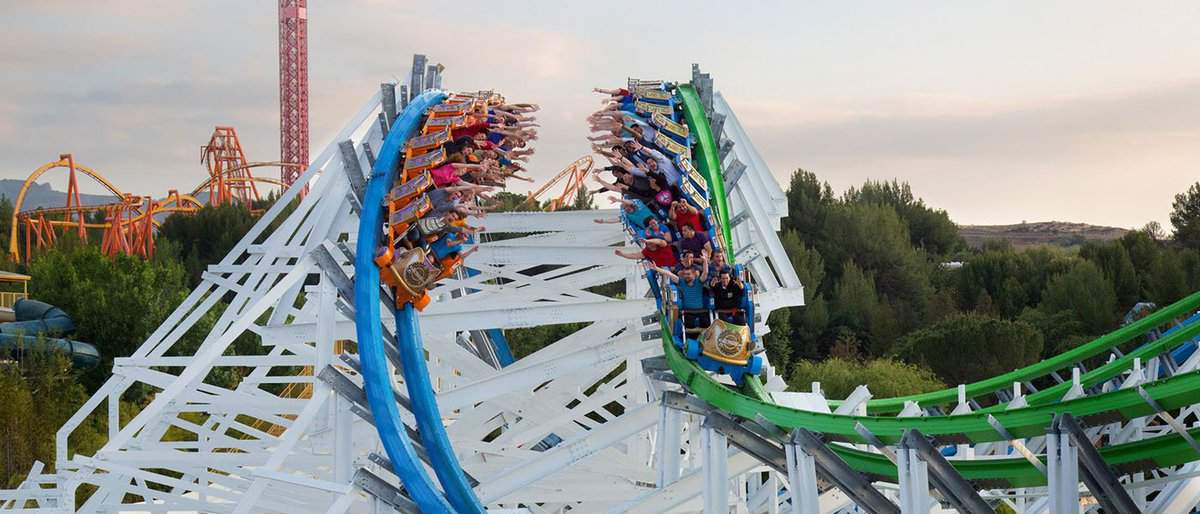
Despite the anxiety rippling across fan forums, Six Flags Magic Mountain is not permanently closing. The park’s shutdown for November 14, 2025, is solely due to inclement weather, not corporate restructuring or fallout from the lawsuit. Six Flags has already confirmed that all tickets dated for today can be used on any public operating day through December 31, 2025.
While it’s a simple weather-related closure, the timing — arriving just days after a high-profile lawsuit, a massive earnings loss, and the shuttering of another park — has made even routine announcements feel ominous. It’s a reminder of how fragile the company’s reputation has become and how closely fans and investors are now watching every move.

Why This Moment Matters for Theme Park News
Today’s brief closure at Magic Mountain highlights a deeper, more uncomfortable truth: Six Flags is entering a period where every operational hiccup will be viewed through the lens of instability. For a company that once defined American thrill-seeking, rebuilding trust may prove as challenging as rebuilding any coaster.
Executives have declined to comment on the lawsuit, citing pending litigation. But with class-action status being sought and a shrinking portfolio now openly acknowledged, the next few months could be among the most defining in Six Flags’ modern history.
For now, the gates at Magic Mountain will reopen. Whether the same can be said for the company’s long-term stability — and investor confidence — remains to be seen.