Credit: Inside The Magic
Disney World and Universal Orlando Resort vacations could be in jeopardy following a significant announcement from the Transportation Secretary regarding portions of the United States’ airspace.
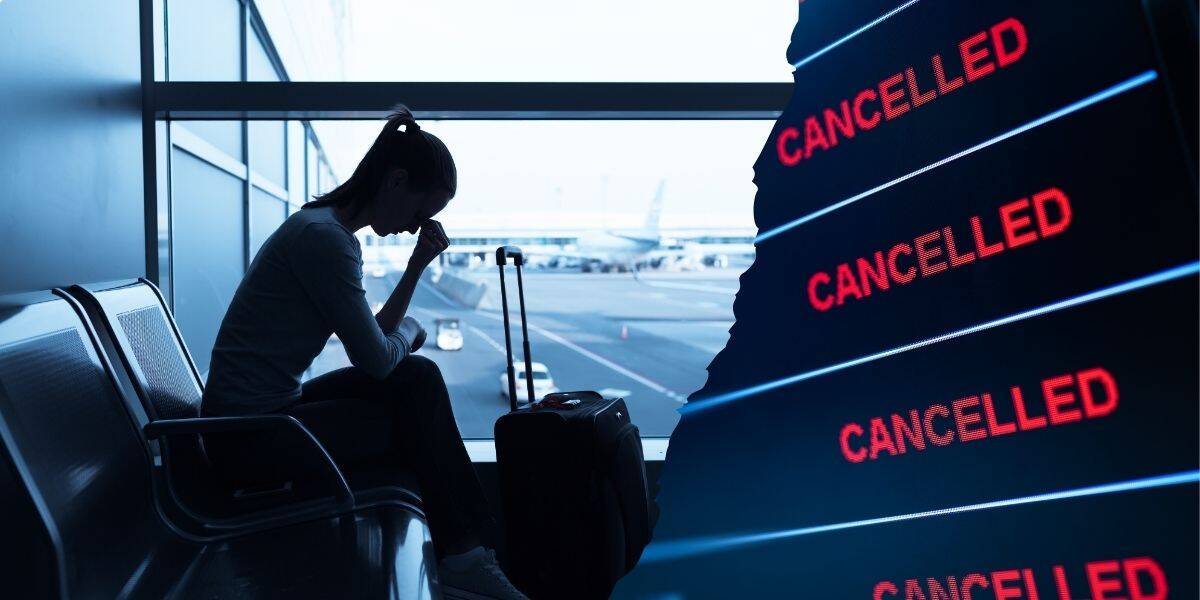
Government Shutdown To Close U.S. Airspace, Putting Disney World, Universal Trips on Alert
Airports across the United States woke up to another jarring reality this week: terminals packed with anxious travelers, departure boards flickering with delays, and an unmistakable edge of uncertainty settling over the country’s busiest hubs.
Families clutching Mickey ears and Hogwarts robes shuffled between gates, hoping their long-awaited Orlando vacations wouldn’t unravel before takeoff. But with federal staffing stretched thinner every day, the looming question grows louder—how much worse might this get?
What threat is now staring down the entire U.S. air travel system?

The Strain Behind the Scenes
As the government shutdown stretches toward its second month, the pressure is mounting—not only in the terminals but in the towers above them. Essential personnel, including air traffic controllers, have been working without pay throughout the shutdown. For many, that’s meant impossible commutes, picking up extra jobs, and in some cases, stepping away entirely.
According to Transportation Secretary Sean Duffy, the U.S. is facing a shortage of approximately 2,000 to 3,000 air traffic controllers. This is not a projection, nor a hypothetical—it is the current operating reality. And as the gap widens, the strain on remaining staff becomes increasingly unsustainable.
But the deeper danger isn’t only about long lines or frustrated passengers. It’s about capacity—how many planes can safely move through American airspace when the people managing that system are at their breaking point?

Why Officials Are Sounding the Alarm
During a Tuesday briefing alongside the SEPTA rail system, Duffy issued his most sobering warning yet: if conditions continue unchecked, the U.S. may have no choice but to temporarily close certain parts of its airspace.
This would not be politically symbolic. It would be operational necessity.
“So if you bring us to a week from today, Democrats, you will see mass chaos,” Duffy said. “You will see mass flight delays. You’ll see mass cancellations, and you may see us close certain parts of the airspace because we just cannot manage it, because we don’t have the air traffic controllers.”
The White House has attributed the ongoing shutdown to Democrats, further fueling political tension as flight delays and cancellations begin to stack across the country.
But while leaders argue, travelers are the ones already feeling the turbulence—literally.

How This Hits Orlando Travelers Specifically
On a normal week, Orlando International Airport (MCO) processes tens of thousands of families traveling to Walt Disney World Resort, Universal Orlando Resort, SeaWorld Orlando, and surrounding attractions. Any disruption to national airspace reverberates quickly through Central Florida, which depends more than most cities on reliable, high-volume air travel.
For guests planning:
-
Disney World vacations
-
Universal Studios Florida or Islands of Adventure trips
-
Adventures at the brand-new Epic Universe (opening next year)
-
Holiday or spring break travel
…even small systemic delays can snowball into costly setbacks.
And if any region of U.S. airspace temporarily closes—even one not directly over Florida—it could trigger nationwide ground stoppages, rerouting, or cascading cancellations.
In short: Disney and Universal guests will feel the impact long before they arrive at their resort hotels.

The Undercurrent Story: A System Near Its Breaking Point
The real issue isn’t only the shutdown—it’s how little margin the air travel system has left. Air traffic control staffing has been tight for years, with training pipelines known to lag behind retirements. The shutdown has turned a long-standing challenge into a full-blown crisis.
The deeper question isn’t whether this moment will affect theme park travel. It’s how dramatically it could reshape the next few weeks.
-
Will airlines reduce schedules?
-
Could guests see widespread holiday or early-spring flight disruptions?
-
Might theme park travel insurance suddenly become essential, not optional?
While these outcomes aren’t guaranteed, the risk is more concrete than travelers have faced in years.

What Travelers Should Expect in the Coming Days
Duffy stated plainly that the situation will worsen the longer the shutdown continues. If staffing shortages intensify, the likelihood of widespread cancellations and delays will rise accordingly. The possibility of partial airspace closures—an extraordinary scenario—cannot be dismissed.
For now, passengers heading to Orlando should:
-
Monitor flights daily
-
Prepare backup travel plans
-
Expect extended airport wait times
-
Book earlier flights when possible
-
Stay alert for policy updates
This is a developing story, and as federal negotiations continue, the travel landscape may shift rapidly.
For millions planning their next magical adventure—whether stepping into Cinderella Castle or walking beneath Hogwarts’ snow-covered rooftops—the next week could determine just how smoothly their journeys begin.
Check back for updates as this story evolves.