Credit: Gage Skidmore, Flickr (Donald Trump) / Inside the Magic
To millions of travelers, the Disney theme parks represent the ultimate escapist bubble. In this meticulously manicured kingdom, real-world conflicts, corporate disputes, and polarizing politics fade into the background at the turnstiles. Maintaining that environment requires rules, and Disney security takes enforcement seriously. Guests can be escorted off property for violating park policies, entering restricted areas, or engaging in disruptive behavior. One parkgoer, however, became known for a series of confrontations with Disney after repeatedly displaying political banners at its American theme parks.
Between late 2018 and early 2019, New York resident and former Marine Dion Cini became the subject of multiple Disney enforcement actions after displaying pro-Donald Trump campaign banners at Walt Disney World and Disneyland. Following an initial incident at Magic Kingdom, two more banner displays at Walt Disney World attractions led to a trespass warning, and a subsequent stunt at Disneyland resulted in another confrontation with park security.
Here is the step-by-step breakdown of how Cini’s repeated banner displays led to his removal from Disney parks, how Disney responded, and what the incidents reveal about the rules governing the “Happiest Place on Earth.”
Act I: The Main Street Station Incident (September 2018)
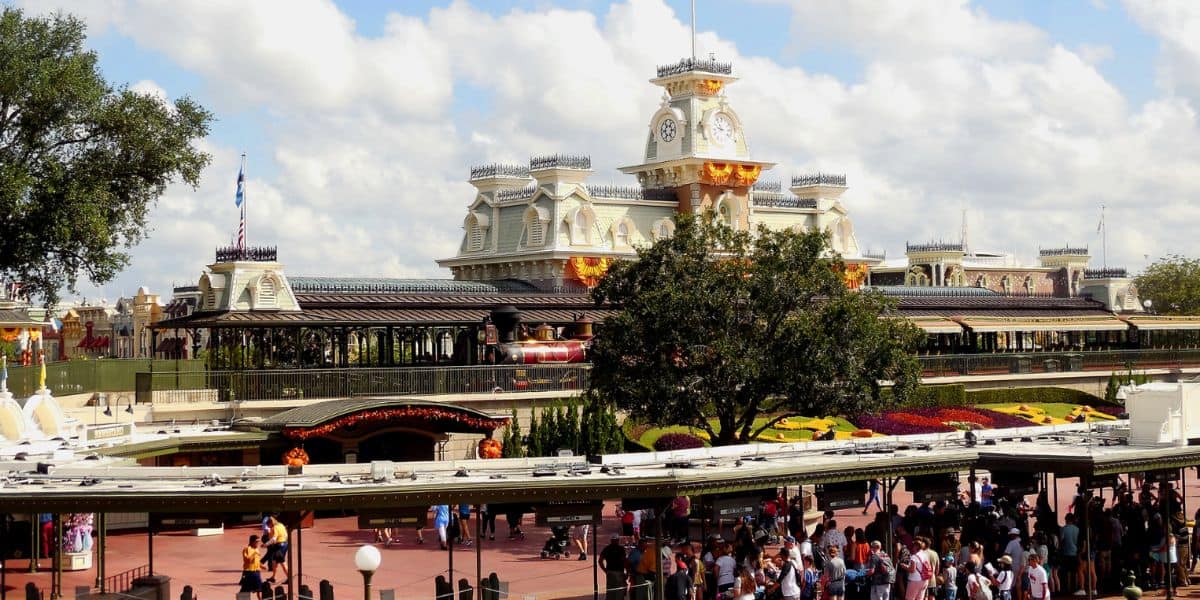
The saga began in September 2018 at Magic Kingdom in Walt Disney World. Cini entered the park carrying a large banner supporting President Donald Trump’s 2020 reelection campaign.
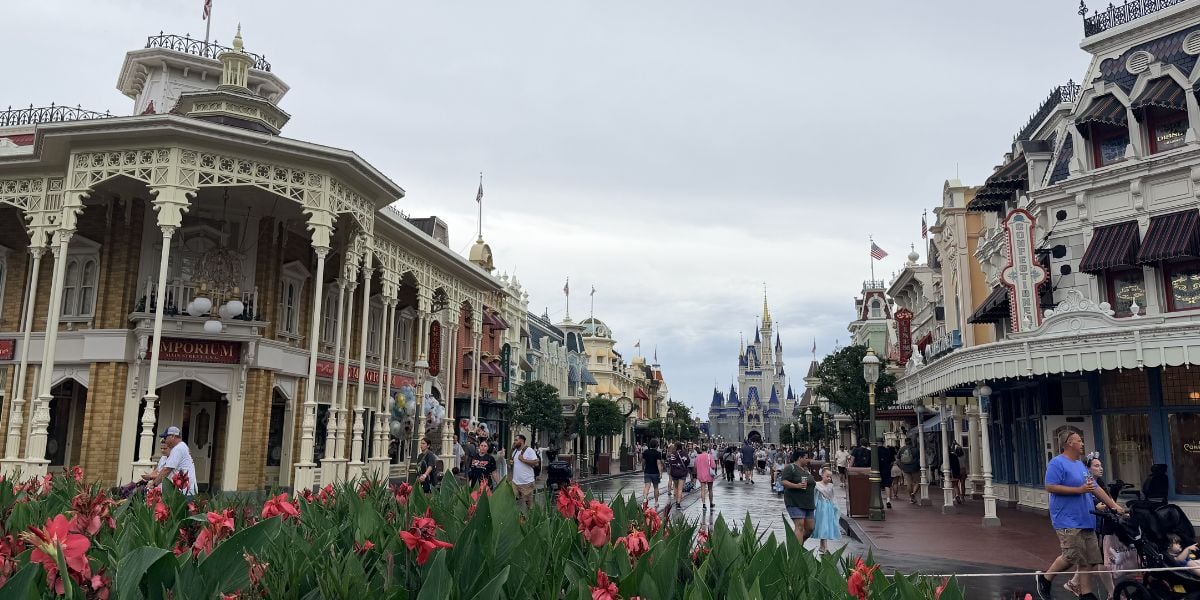
He climbed the stairs to the Main Street, U.S.A. Railroad Station and unfurled the banner across the exterior balcony railing, displaying it toward Town Square. The incident drew attention because political banners are not permitted under Disney’s theme park rules.
Park officials responded to the display. Contemporary local reporting said Cini lost his Annual Pass following the incident. However, the precise terms and duration of the initial enforcement action should be distinguished from the subsequent trespass warning.
Cini later said he was allowed to return after discussions with Disney management and an agreement concerning future banner displays. Reports described the arrangement as permitting him to return on the understanding that he would not repeat the behavior. The exact terms of that agreement have not been fully established independently.
It was a reprieve, but the situation did not remain settled for long.
Act II: Splash Mountain and the Second “Permanent” Ban (November 2018)
Less than two months later, on November 7, 2018, Cini returned to Magic Kingdom and again displayed political signs on attractions.

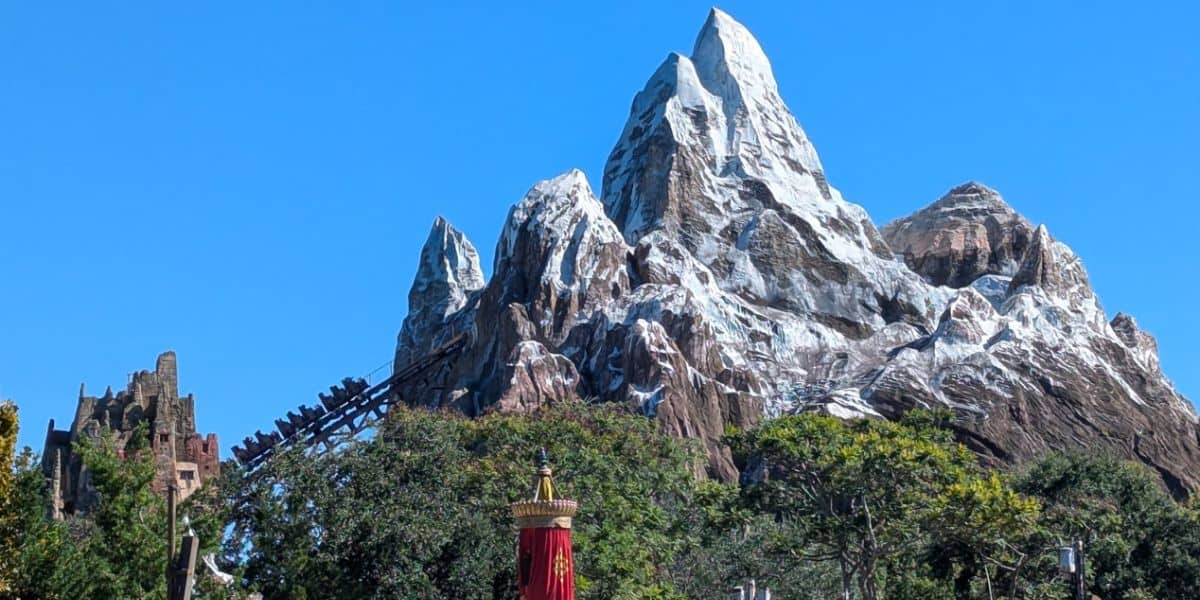
While riding Splash Mountain, the former log-flume attraction in Frontierland, Cini held up a campaign sign as his log traveled down Chickapin Hill. The ride’s on-ride photography system captured the image. Later that day, he repeated the behavior on Expedition Everest at Disney’s Animal Kingdom.
The two incidents attracted renewed attention from Disney officials. Contemporary reports said Cini was issued a trespass warning following the repeated banner displays. The notice barred him from returning to Walt Disney World property without authorization.
The reported scope of the warning included Disney’s four theme parks, its water parks, Disney Springs, resort properties, and other Walt Disney World locations. The precise legal boundaries of the notice should be determined by the document itself, rather than expanded to include every nearby roadway or property without verification.
Cini took to social media to voice his frustration, arguing that displaying a sign on a ride did not constitute inciting a crowd because, as he put it, “there was no crowd” on the ride vehicle. Disney’s response, as described in contemporary reporting, centered on repeated violations of its park rules rather than the political viewpoint expressed on the signs.
Displaying a large sign while riding an attraction can also raise operational and safety concerns. In this case, however, the documented basis for Disney’s enforcement was its rules concerning banners and demonstrations, rather than a publicly established finding that Cini’s signs had endangered other riders or interfered with the ride’s mechanical systems.
Act III: The West Coast Showdown on the Mark Twain Riverboat (February 2019)
After being trespassed from Walt Disney World, Cini turned his attention to Disneyland Resort in Anaheim, California.
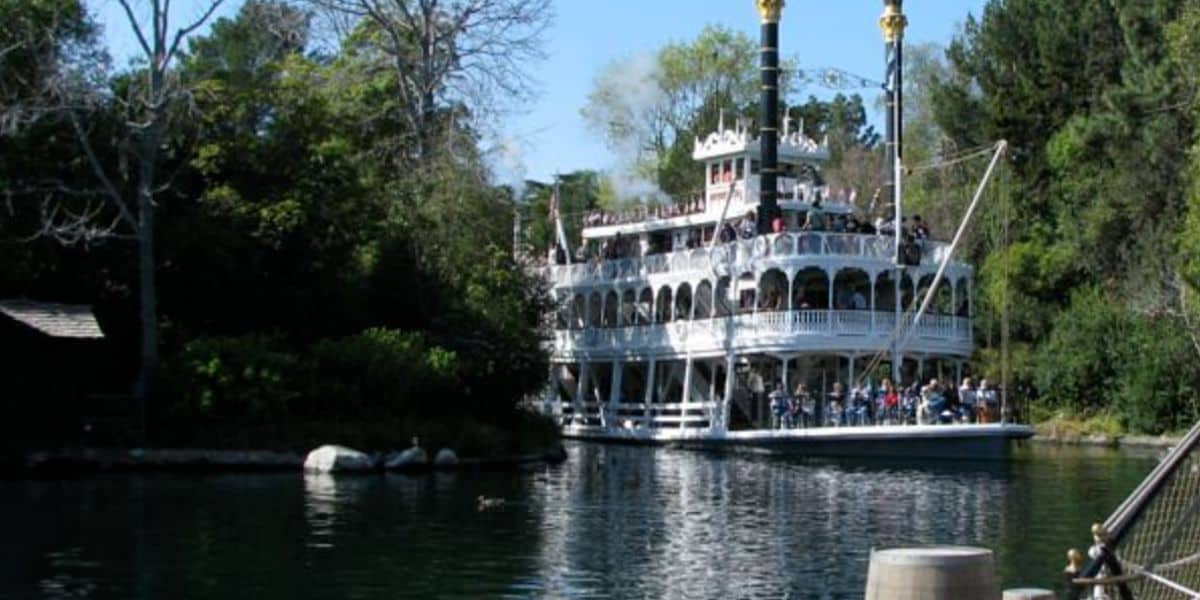
Operating under a self-styled social media campaign called “Operation Flag Drop,” Cini entered Disneyland on February 13, 2019. He made his way to Frontierland and boarded the historic Mark Twain Riverboat. As the paddle wheeler navigated the Rivers of America, Cini live-streamed himself unfurling a large pro-Trump campaign banner from the boat’s upper deck railing.
The stunt was brief. When the Mark Twain returned to the dock, Disneyland security personnel were waiting. Contemporary reporting described Cini being escorted away from the public area and taken backstage, where Anaheim police were apparently involved.

Cini was removed from Disneyland, and reports said the incident resulted in a ban from the resort. This followed the earlier trespass action at Walt Disney World and demonstrated that his repeated banner displays had consequences at both American Disney resorts.
Although the incidents occurred over several months, the available reporting does not establish that Cini received three independently documented, permanent lifetime bans. The more precise description is that he faced successive enforcement actions, including a Walt Disney World trespass warning and, later, a ban reported at Disneyland.
The Rulebook: Why Disney Cracks Down on Banners
While public discussion of high-profile bans often centers on free-speech debates, Disney’s published property rules restrict what guests may bring into its parks and what activities they may conduct there. Disney operates its theme parks as private property and reserves the right to deny admission or require guests to leave when its rules are violated.
Disney’s published rules prohibit several behaviors relevant to Cini’s case:
- Unauthorized Demonstrations and Speeches: Disney restricts unauthorized events, demonstrations, speeches, and gatherings under its property rules. Guests should consult the current wording of the applicable rules rather than assume that every political, religious, or ideological statement is categorically prohibited.
- Flags, Banners, and Signs: Disney’s theme park rules prohibit flags and banners and restrict signs and other materials in specified circumstances, including those associated with unauthorized demonstrations or commercial activity. The restrictions apply to items brought into the parks, regardless of whether the message is political or nonpolitical.
- Ride Safety Violations: Guests must follow attraction safety instructions and restrictions on prohibited items. Large signs, poles, and other objects may create safety or operational concerns, particularly on moving attractions. Disney’s rules and individual ride requirements determine which items are permitted.
- Disruption of the Guest Experience: Disney reserves the right to take action when guest behavior violates its rules, creates safety concerns, or interferes with park operations.
Whether a guest carries a banner supporting a political candidate, a social movement, a sports franchise, or an outside commercial brand, Disney’s published restrictions on prohibited banners and unauthorized demonstrations may apply. The precise response, however, depends on the conduct and circumstances; the available evidence does not establish that every banner-related violation automatically results in a permanent ban.
Anatomy of a Disney Lifetime Ban: Can Trespassed Guests Ever Return?
A Disney trespass warning is more consequential than an ordinary reminder to follow park rules. It can formally notify an individual that they are not authorized to enter or remain on specified property.
If someone returns after receiving a valid trespass warning, they may face arrest or prosecution for criminal trespass, depending on the location, the wording and scope of the warning, and the circumstances of the alleged violation. An arrest or prosecution is not automatic in every case, and the applicable legal requirements differ between Florida and California.
Modern theme park admission systems also use technology to manage tickets, prevent fraud, and facilitate entry. Disney has publicly described its use of facial recognition technology for certain admission and reentry processes. However, that does not establish that Disney’s systems automatically identify every person with a trespass warning or that all admission, payment, and reservation databases are linked to flag banned guests.
Similarly, there is insufficient publicly available evidence to conclude that Disney uses the specific combination of fingerprint recognition, payment profiling, residential-address matching, and cross-property security files described in some accounts of how bans are enforced.
A person who has received a trespass warning should not assume they can return simply because time has passed. Anyone seeking to resolve or appeal such a restriction would need to contact Disney through an appropriate official channel and obtain explicit authorization before attempting to re-enter the property. The available evidence does not establish how frequently Disney reverses trespass decisions or a standard set of criteria for reinstatement.
Cini’s story illustrates how repeated banner displays can lead to removal and trespass action under Disney’s property rules. His case also highlights the distinction between a guest’s stated political viewpoint and the conduct that a private venue says violates its policies. Rather than proving that every similar incident results in a permanent ban, the documented sequence shows that repeated behavior can prompt increasingly serious enforcement, including restrictions on returning to Disney property.