
 Credit: Edited by Inside the Magic
Disney+ carries one of the most recognizable names in family entertainment, making it easy for parents to assume they know what they’re getting when they open the app.
That assumption is becoming harder to make.
The streaming service continues expanding far beyond the movies, shows, and franchises that originally defined it. Now, Disney is promoting another upcoming release that sits on the opposite end of the entertainment spectrum from the family movies many subscribers associate with the Disney name.
For parents, the latest addition is another reminder that Disney+ isn’t necessarily the family streaming service it once appeared to be.
Disney+ Is Promoting a Very Different Kind of Release
The latest example comes directly from Disney+ itself.
On social media, Disney+ promoted the arrival of American Horror Story Season 13, announcing that it will begin streaming on the platform on September 24.
That’s a notable title to see promoted under the Disney+ banner.
American Horror Story is rated TV-MA and has built its reputation around adult themes, disturbing imagery, violence, sexual content, and other material intended for mature audiences. It’s about as far removed from traditional Disney family entertainment as a television franchise can get.
Its presence reflects what the service has gradually become as Disney has integrated more Hulu content directly into the platform.
That gives subscribers considerably more entertainment in one place. It also creates a different problem for families.

Parents Can’t Treat Every Profile the Same Way
Disney+ provides parental controls, including Junior Mode profiles designed to offer a more limited experience for younger viewers.
Those tools matter, especially for children who use the service alone.
The situation gets more complicated when families watch together.
A parent might create an adult Disney+ profile because everyone wants to browse for movies. They could be searching for Finding Nemo (2003), The Little Mermaid (1989), Marvel, or Star Wars. But an adult profile can also expose the family to recommendations and promotional artwork for programming aimed at much older viewers.
Parents still control what they select, but families may need to pay closer attention to which profile they’re using, even when an adult has the remote.
Opening Disney+ no longer guarantees that everything displayed fits the traditional Disney image.
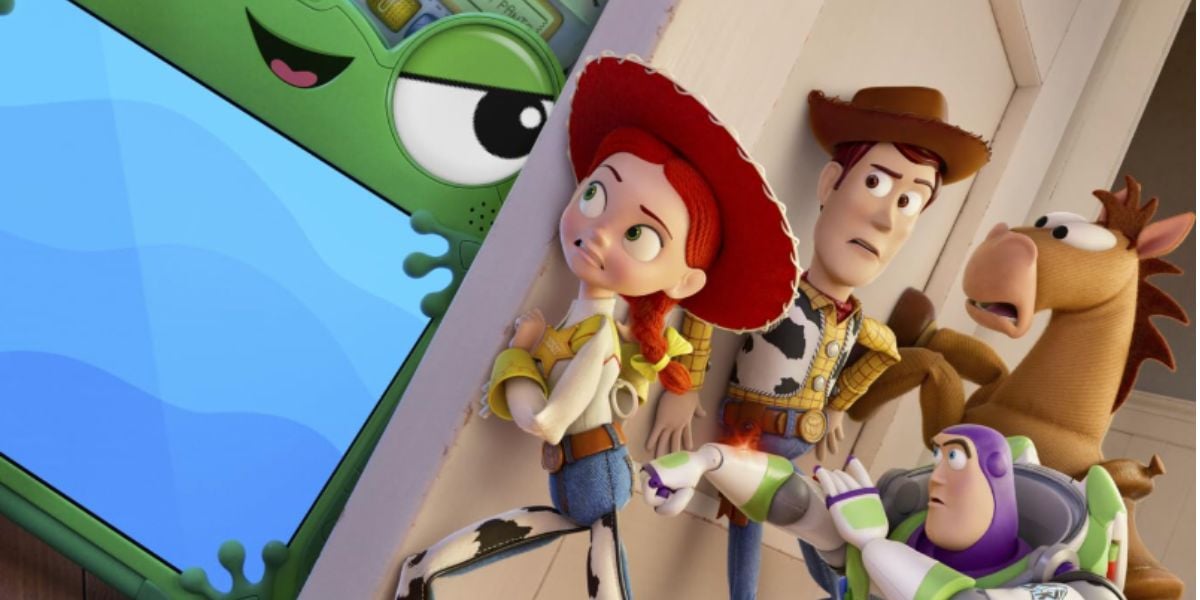
The Original Disney+ Was Much Easier to Understand
That distinction feels especially important when looking back at how Disney+ entered the streaming market.
When Disney+ launched in 2019, its identity was remarkably simple.
This was the place for Disney.
Subscribers found animated classics, Pixar favorites, Marvel adventures, Star Wars stories, National Geographic programming, and Disney+ originals. Parents could open the app and immediately understand the general type of entertainment it offered.
The service wasn’t exclusively for children. Marvel and Star Wars regularly deal with violence, death, and heavier themes.
Still, Disney+ maintained a clear identity built largely around Disney-owned franchises and broadly accessible entertainment.
The modern Disney+ looks considerably different.

Hulu Changed What Streaming Could Be
The integration of Hulu programming transformed Disney+ into something closer to a general streaming service.
Subscribers can now switch from Disney Animation and Pixar to programs with mature ratings without leaving the Disney+ app. That includes shows such as American Horror Story, which once would have felt completely separate from the platform’s identity.
The expansion goes beyond mature programming.
Disney+ can also feature licensed movies and shows associated with outside studios, including companies that compete directly with Disney. Universal-produced content, for example, can appear within Disney’s streaming ecosystem through licensing arrangements and Hulu’s broader catalog.
A larger library gives subscribers more reasons to stay within one app rather than switching between services.
For families, that convenience comes with a tradeoff.
Disney+ increasingly requires parents to think of it less as a digital Disney library and more like a broad streaming platform carrying Disney’s name.

A Disney Name Doesn’t Automatically Mean Family Content
That may be the biggest adjustment for subscribers who signed up during the platform’s early years.
Seeing the Disney+ logo naturally creates certain expectations, particularly for parents who associate Disney with family entertainment. But the content behind that logo now covers a much wider range of ratings and subject matter.
The September 24 arrival of American Horror Story Season 13 makes that especially clear.
Disney isn’t hiding the franchise in an obscure corner of the service. Disney+ is publicly promoting its arrival, showing how comfortable the company has become in positioning mature entertainment alongside its traditional catalog.
Parents don’t necessarily need to abandon the service because of that expansion. They do, however, need to understand what Disney+ has become.

Disney+ Isn’t the Same Streaming Service Anymore
Disney+ still has Finding Nemo (2003), The Little Mermaid (1989), Marvel, Star Wars, Pixar, and generations of familiar Disney entertainment.
None of that has disappeared.
What has changed is everything surrounding it.
Disney+ has evolved into a broader platform where family entertainment can sit alongside TV-MA programming and other mature releases. For some subscribers, having everything together may be convenient.
For parents, it also means the Disney name alone can no longer serve as the content filter.
As Disney+ continues expanding, families may want to pay closer attention to profiles, parental controls, recommendations, and what appears on the screen while everyone is browsing together.