Credit: Inside the Magic
When previews of former Disney CEO Bob Chapek’s tell-all memoir, Behind the Castle Walls: My Thirty Years at the Happiest Place on Earth, surfaced, the entertainment industry braced itself for a public battle. In excerpts from the book, Chapek pulled no punches—defending theme park price hikes, accusing Bob Iger of a “relentless” campaign of corporate sabotage, and alleging that Iger secretly stepped down in early 2020 because he anticipated the arrival of COVID-19.

After the memoir excerpts began circulating, attention turned to how Iger might respond. The answer arrived, but not in a defensive press release or a heated social media statement.
Instead, Iger chose the pages of Harvard Business Review to discuss executive leadership. Sitting down with Nitin Nohria, former dean of the Harvard Business School, for an in-depth conversation on power, succession, culture, and leading through upheaval, Iger offered a pointed retrospective on Disney’s 2020 succession process, acknowledged that the company may have underweighted some of his successor’s known weaknesses, and discussed the leadership qualities he believes are necessary to manage prolonged crises.
The most notable element of Iger’s interview? He delivered his assessment without once uttering the name “Bob Chapek.”
“We Discounted Them a Bit More”: Admitting Succession Flaws
When Disney’s Board of Directors appointed Chapek as CEO in February 2020, the move was presented as a planned transition of power. Chapek had served as Chairman of Disney Parks, Experiences, and Products, overseeing a parks business that employed yield management and pricing strategies to manage demand. However, in his HBR interview, Iger candidly acknowledged that the selection process was not as thorough as the company believed.
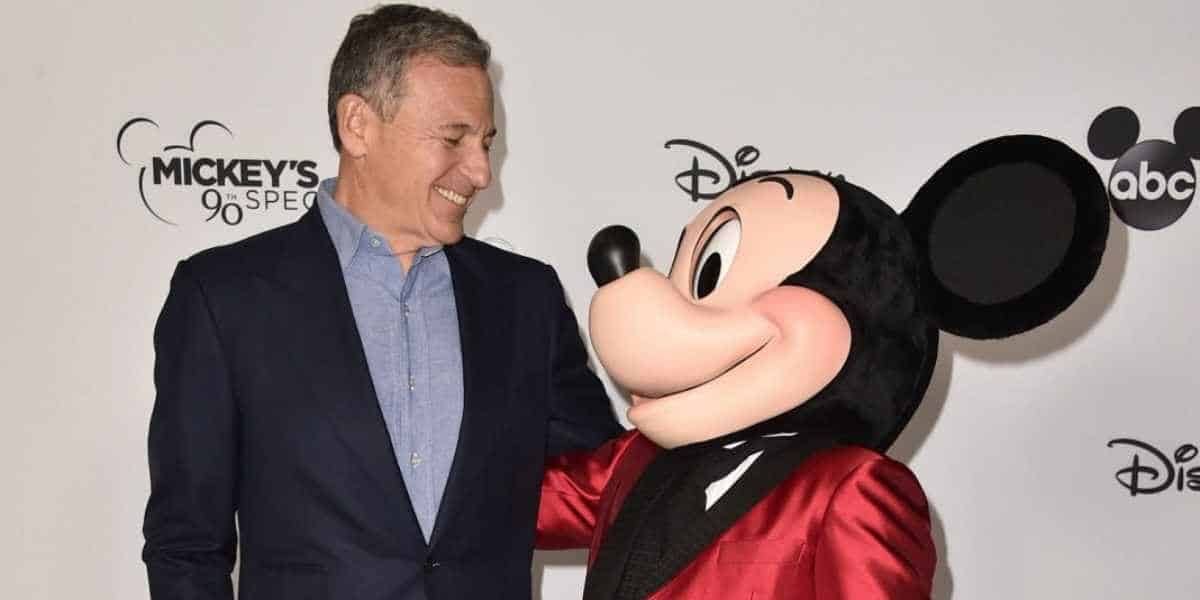
Reflecting on the decision-making that led to Chapek’s appointment, Iger admitted that familiarity created a dangerous blind spot for Disney’s board and leadership team.
“We had a process back in 2019 and ’20 when we chose my successor,” Iger explained in Harvard Business Review. “Looking back, perhaps it wasn’t as thorough as we thought, in part because we thought we knew the person extremely well. He’d worked for the company for a very long time and for me directly.”
While Chapek’s memoir portrays himself as a scapegoat trapped in an impossible snare laid by Iger, Iger’s account suggests that Disney’s leadership may have underweighted some of the weaknesses it already knew about.

“I’m not suggesting that we discounted the weaknesses, but in our zeal to check a box with succession and enable me to move on, first as executive chairman and ultimately to leave, I’m not suggesting that we ignored some of the issues, but I think we discounted them a bit more,” Iger stated.
Without ever naming Chapek directly, Iger’s words acknowledged that in Disney’s effort to complete a succession plan, the board may have discounted some known weaknesses more than it should have.
Managing “Perpetual Crisis”: Leadership Under Pressure
Chapek’s shortened 33-month tenure coincided with a series of major operational, financial, and political challenges. From global pandemic park closures to high-profile litigation with Scarlett Johansson, a Direct-to-Consumer operating loss of about $1.5 billion in a single quarter, and a major political and legal dispute with Florida officials, Chapek’s leadership was marked by constant turbulence. In his memoir, Chapek frames these events as external bad luck paired with internal backstabbing.

In his HBR interview, Iger discussed the leadership qualities he believes are necessary for executives operating in an environment of recurring crises.
“We live in a state of almost perpetual crisis, or an environment in which a crisis can occur almost on a very regular basis,” Iger observed. “I think that requires a different kind of leadership, and I don’t think we realize that at the time.”
Expanding on what it takes to guide a global brand through relentless upheaval, Iger delivered a broader critique of leadership in the face of adversity.

“Now, this is, in a way, hindsight, but I realize today that leadership needs to be capable of managing an environment in perpetual crisis,” Iger explained. “So what does that mean? I think it puts even more emphasis on stamina. It puts even more emphasis on someone’s ability to, one, admit the crisis and deal with it, but never lose hope and optimism and balance that optimism and hope with realism.”
Iger’s comments did not explicitly identify Chapek, but they offered a broader explanation of the leadership qualities he believes are necessary during prolonged periods of disruption.
Lessons Learned: Setting Up Josh D’Amaro for Success
Iger’s reflections on the 2020 transition were not merely an exercise in looking backward; they also helped explain how Disney approached its subsequent CEO succession when Josh D’Amaro took the helm in March 2026.
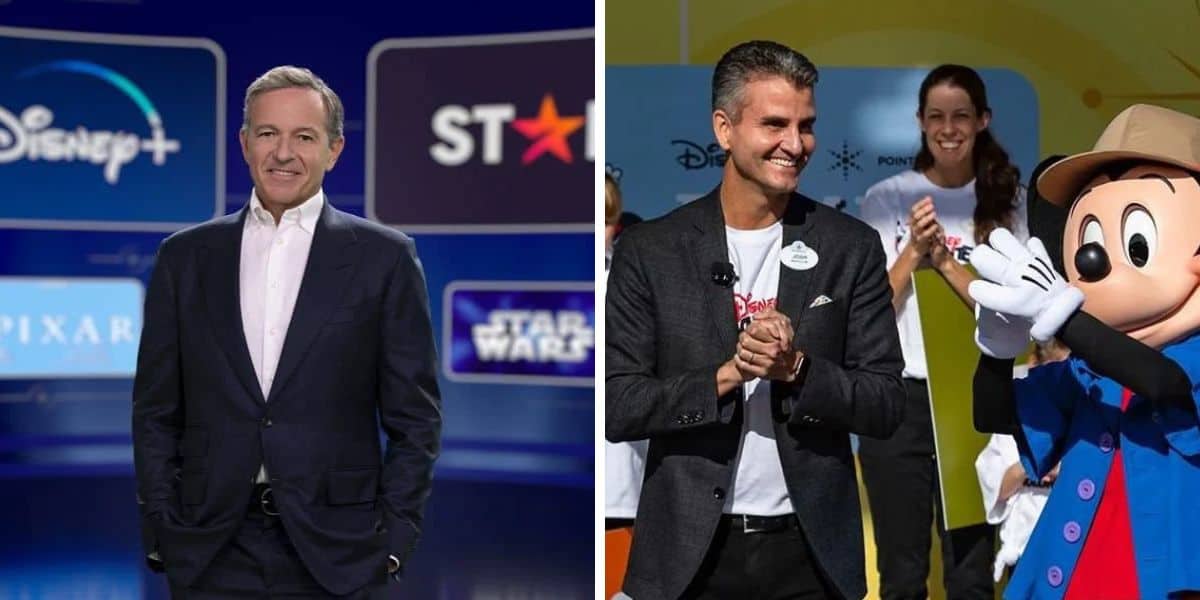
Iger explained that lessons from the earlier succession influenced the criteria Disney used to evaluate D’Amaro before handing over the keys to the kingdom.
When approaching succession the second time around, Iger noted that Disney asked tougher, more fundamental questions about executive character: “We asked ourselves some of these very questions about that person. Is he resilient? Does he have the stamina? Does he choose a good team? Is he someone who can call it what it is, meaning we’re in a real crisis, but then deal with it in a reasonable and sane and steady way, mature way?”

By contrasting these criteria with the lessons of 2020, Iger emphasized the qualities Disney considered important when evaluating D’Amaro.
Iger’s Perspective on Succession and Leadership
Where Bob Chapek’s memoir relies on explicit accusations, named grievances, and bitter score-settling, Bob Iger’s Harvard Business Review interview focused instead on leadership, succession, and managing prolonged periods of uncertainty.

By refusing to say Chapek’s name, Iger kept the conversation centered on broader principles of corporate leadership and succession rather than directly addressing the memoir point by point. Yet, behind the polished academic language, the interview makes it clear that Iger now believes Disney’s 2019-20 succession process did not fully account for weaknesses the company already knew about.